
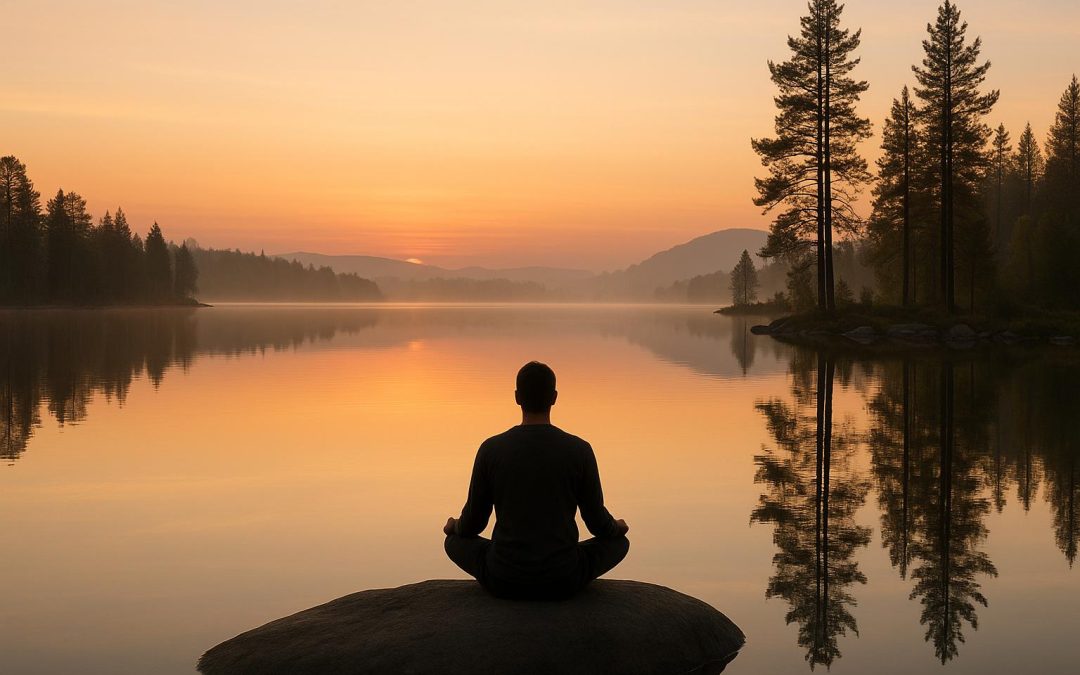
Silence isn’t just the absence of noise – it’s a tool for mental clarity, emotional balance, and physical health. In a world filled with constant stimulation, carving out moments of stillness can lower stress, improve focus, and even promote brain cell growth. Research shows that just two minutes of silence can be more calming than music, while two hours daily may boost memory and learning. Silent retreats, like those at Elohee in Georgia, offer structured ways to embrace quiet, but you can also integrate silence into everyday life with simple practices like mindful breathing, creating quiet spaces, or using meditation apps.
Key Takeaways:
- Noise raises stress hormones and impacts cognitive performance.
- Silence activates the parasympathetic nervous system, reducing stress.
- Silent retreats in nature can deepen self-awareness and calm.
- Practical steps: mindful breathing, journaling, and quiet spaces at home.
- Tools like apps (Headspace, Calm) and books (e.g., Wherever You Go, There You Are) help maintain the practice.
Silence isn’t just peaceful – it’s transformative. Start small: 10 minutes of quiet each day can reset your mind and body.
Understanding Stillness and Silence in a Busy World
What Stillness and Silence Mean
When we think of silence, it’s easy to picture a lack of sound. But in the world of wellness, silence is far more profound. Spiritual teacher Richard Rohr explains it beautifully: "Silence is the necessary space around things that allows them to develop and flourish without pushing". In this sense, silence isn’t just an absence – it’s an active presence that nurtures growth.
Silence often refers to the external world – a quiet environment free of distractions. Stillness, on the other hand, is more personal. It’s about recognizing both the noise around us and within us, without letting either take control. It’s an intentional effort to reduce unnecessary movement and find calm.
Interestingly, stillness doesn’t mean freezing in place. After all, our bodies are always in motion – our hearts beat, we breathe. True stillness is about aligning with life’s natural rhythms to create space for reflection and personal growth.
Similarly, silence isn’t just about muting the world around you. It’s a mental state, a calm detachment from the chaos of life. In this state, mental chatter quiets down, creating room for clarity and insight.
Understanding these deeper dimensions of silence and stillness helps us see why they matter so much in today’s fast-paced world.
Why We Need Stillness in Modern Life
Modern life bombards us with constant stimulation. From the moment our phones buzz in the morning to the endless stream of notifications and glowing screens, our nervous systems are on overdrive. This relentless pace keeps our bodies in a heightened state of alertness – a state meant for emergencies, not everyday living.
Stillness offers a way to reset. By engaging the parasympathetic nervous system, it slows the heart rate and reduces stress hormones. Even a brief moment of intentional stillness each morning can help regulate emotions, making us more resilient and better prepared for life’s challenges.
However, silence and stillness can sometimes feel uncomfortable. Quieting external noise often brings internal thoughts and emotions to the surface – things we might prefer to avoid. But working through this discomfort can lead to profound transformation. As Hermann Hesse put it, "Within you, there is a stillness and sanctuary to which you can retreat at any time and be yourself".
How Nature-Based Retreats Help
Silent retreats in nature provide an ideal setting to explore stillness. By stepping away from digital distractions and constant chatter, participants can reconnect with themselves on a deeper level. The natural world, with its soothing sounds and calming landscapes, creates the perfect backdrop for introspection.
Research supports the benefits of these retreats. A study from Massachusetts General Hospital found that meditation – especially in silence – boosted gray matter density in the hippocampus (key for learning and memory) and reduced gray matter in the amygdala, the brain’s stress center. Many participants describe these retreats as life-changing. Meditation teacher Ruchira Roy Chowdhury summed it up by saying, "The Silence Retreat feels like a homecoming I didn’t know I needed".
With guided meditations, yoga, and mindful walks, these retreats provide structure that helps even beginners overcome initial discomfort. They open the door to deeper peace and self-awareness, offering tools that can be carried into everyday life. In the next section, we’ll explore practical ways to bring these moments of stillness into your daily routine.
Silent Meditation Retreat: What Happens? Two Doctors Explain
The Benefits of Stillness: Mind, Body, and Soul
Science tells us that silence does more than just calm us down – it actively helps reset our minds and bodies, leading to better health and a clearer sense of self.
Mental and Emotional Benefits
Your brain doesn’t see silence as “nothing.” Instead, it treats it as an important signal. Studies show that moments of stillness activate the parasympathetic nervous system, which naturally slows your heart rate and reduces stress hormones like cortisol.
Silence also helps your mind reset. Constant noise and stimulation keep your brain on high alert, which can lead to stress and mental exhaustion. Taking a break from this cycle allows your nervous system to recalibrate, easing anxiety and mental fatigue. Brent Metcalf, a licensed clinical social worker, explains:
"When we allow ourselves to be in silence, we allow our brains to hit the reset button and be refreshed by just slowing down. This reduces stress and anxiety symptoms as well from all the chaos in our lives."
Additionally, silence helps you manage your emotions more effectively. By giving yourself space to observe your thoughts and feelings, you can respond thoughtfully rather than reacting impulsively. Clinical psychologist Supriya Blair, PsyD, captures this idea well:
"Learning to become quiet helps us refrain from expending unnecessary energy, endlessly participating in the hamster wheel of thoughts in our head."
Research backs this up. A 2021 study found that people working with background noise experienced higher cortisol levels, a clear sign of stress. These mental benefits also translate into noticeable physical improvements.
Physical Health Benefits
Silence doesn’t just calm the mind – it positively impacts the body too. A 2006 study found that two minutes of silence after listening to music lowered heart rate and blood pressure more effectively than even relaxing music. Regularly practicing stillness can lead to lasting improvements in overall health.
For example, cardiovascular health benefits significantly. When you embrace quiet moments, your heart rate slows, and your blood pressure drops, thanks to the parasympathetic nervous system. Conversely, living in noisy environments has been linked to persistent increases in heart rate and blood pressure, showing how much auditory stress affects the body.
Silence also improves sleep. External noise can disrupt rest as much as some sleep disorders do. Creating a quiet bedtime environment can pave the way for deeper, more restorative sleep.
Even your brain thrives in silence. A 2013 study published in Brain, Structure and Function revealed that two hours of silence daily stimulated cell growth in the hippocampus, the brain’s memory and learning hub. Silent environments may even speed up recovery after illness or surgery.
On top of that, your immune system gets a boost. Lower cortisol levels and reduced stress allow your body’s natural healing processes to work more effectively. As one study put it:
"Quiet time can lower blood pressure, improve immune function, and promote healing."
These physical benefits lay the groundwork for even deeper personal development.
Supporting Personal Growth
Silence creates the ideal conditions for self-reflection and growth. Without the distractions of daily life, you’re left to explore your thoughts, emotions, and inner truths – things that are often buried under constant noise.
Though it might feel uncomfortable at first, silence fosters self-discovery. Dr. Kevin Cloninger, director of Well-Being Coaching at PALM Health, explains:
"Essentially, in moments that lack specific goal-directed tasks, your brain is trying to unite the internal and external and understand your place within that. So silence, in this sense, gives us space and time to understand who we are."
Silence also sharpens your intuition. Without external noise, you become more attuned to subtle inner signals, helping you make decisions that align with your core values. This heightened awareness can also spark creativity. As Supriya Blair notes:
"Learning to ‘digest’ our thoughts and quiet the mind can help make room for sparks of creativity and inspired action."
Many people experience moments of profound insight or inspiration during periods of stillness – what some describe as “spiritual downloads”. Beyond creativity, silence builds resilience. Licensed master social worker Sarah Kaufman explains:
"When you’re sitting in stillness and silence, you become more aware of your body and mind. This can give you a lot of information that you can compassionately question and work better to understand."
This self-awareness often improves relationships, too. When you’re comfortable with your own thoughts and emotions, you’re better able to listen and respond thoughtfully in conversations.
Finally, silence helps you face life’s challenges with greater courage. By sitting with difficult emotions instead of avoiding them, you build inner strength over time. This resilience becomes a foundation for approaching life with confidence and clarity.
In short, silence isn’t just about peace and quiet – it’s a powerful tool for improving your mental clarity, physical health, and personal growth. It’s a cycle that feeds itself: the more you practice stillness, the more benefits you unlock, making it easier to embrace silence as a regular part of your life.
Practical Ways to Add Silence to Everyday Life
Bringing a little more silence into your daily routine doesn’t have to be complicated. Small, intentional changes can make a big difference, and the key is to find habits that fit naturally into your lifestyle.
Mindfulness Exercises for Beginners
Mindfulness is all about being present and observing your thoughts without judgment. Wade Brill, a mindfulness coach, explains the distinction between meditation and everyday mindfulness:
"The difference between meditation and mindfulness is that mindfulness cultivates awareness with curiosity and kindness in every moment. However, to strengthen our mindfulness muscles, we have to practice meditation. It’s like going to the gym to strengthen those muscles. But I also believe we can strengthen those muscles with informal meditation like mindful eating, email writing, or even teeth brushing."
One of the easiest ways to begin is with mindful breathing. Try inhaling for a count of five and exhaling for a count of five. This simple practice not only anchors your attention but can also help calm your nervous system. You can do this anywhere – at your desk, in your car, or before bed.
Starting your day with a few moments of deep breathing and setting a clear intention can help you approach the day with focus rather than reacting to stress immediately.
Mindful eating is another great way to incorporate mindfulness. Before you begin a meal, pause to notice your hunger cues. As you eat, focus on the flavors, textures, and sensations of each bite. Lunchtime can become a mini-meditation session.
Throughout the day, take short pauses to check in with yourself. Brill advises:
"Practice pausing and noticing throughout the day. Bring curiosity to each moment."
These small breaks help you shift from autopilot to more intentional decision-making. You could even set a reminder to take three deep breaths every few hours.
Your commute can also become a mindfulness practice. If you’re driving, practice mindful driving by taking deep breaths and extending compassion to yourself and others, even in heavy traffic. If you’re walking, try a walking meditation – pay attention to the sensations in your body and the rhythm of your steps.
As your day winds down, consider journaling to clear your mind. Simply jot down three observations from your day without analyzing them – just note and release them. You could also try a body scan, focusing on each part of your body for 30 seconds, starting at your toes and working upward.
Finally, create a dedicated space in your home for these mindful practices.
Creating Quiet Spaces at Home
Your surroundings have a big impact on your ability to find stillness. The good news? You don’t need an entire room – just a quiet corner can do the trick.
Pick a spot that feels peaceful and is away from high-traffic areas. A corner near a window can add a sense of openness with natural light. Whether it’s a section of your bedroom or a nook in your living room, the goal is to find a space that feels calming.
Minimize distractions by closing doors or using a "Do Not Disturb" sign. Keep the area free of electronics, clutter, or anything else that might pull your focus away.
For comfort, add cushions, a meditation bench, or a cozy chair. Throw in a blanket or shawl for warmth during longer sessions.
Decorate with calming elements like candles, plants, or artwork inspired by nature. Small personal touches can make the space inviting and relaxing. You might also use essential oils, candles, or incense – lavender and eucalyptus are popular choices for promoting relaxation.
A thoughtfully arranged space can make it easier to embrace moments of quiet and mindfulness.
Using Technology for Stillness
While technology often feels like a source of noise, it can also be a helpful tool for cultivating stillness. A variety of apps and tools are designed to make mindfulness more accessible, even on a tight schedule.
For example, Headspace offers guided meditation courses and an organized library, making it an excellent option for beginners. Pricing starts at $70 per year for individuals, $100 per year for families, and $10 per year for students.
Calm provides flexible timers, ambient soundscapes, sleep stories, and mood tracking for $70 per year for individuals or $100 per year for families.
If you’re looking for free options, Insight Timer has a wide range of meditations available without charge, though there’s a premium upgrade for $60 annually. The Healthy Minds Program is another free option, offering courses focused on awareness, connection, insight, and purpose. Other choices like Balance ($70/year), Aura ($60/year), and Waking Up ($130/year) cater to different preferences and needs.
As Buddhist teacher David Nichtern puts it:
"You’re just learning to pay attention".
Beyond apps, mindfulness can be woven into everyday tasks. Use waiting times or commutes to practice mindful breathing, driving, or walking. Even exercise, like yoga or running, can be an opportunity to align your breath and movement.
Turn off distractions during simple rituals like enjoying your morning coffee or tea. Pay attention to the process and savor the moment. You can also practice mindful listening by giving your full attention to conversations without judgment.
Start small – try one or two of these practices and build from there. Combining technology with mindful habits can help you create a more peaceful rhythm in your daily life.
sbb-itb-77c7b55
Finding Stillness at Elohee Retreat Center
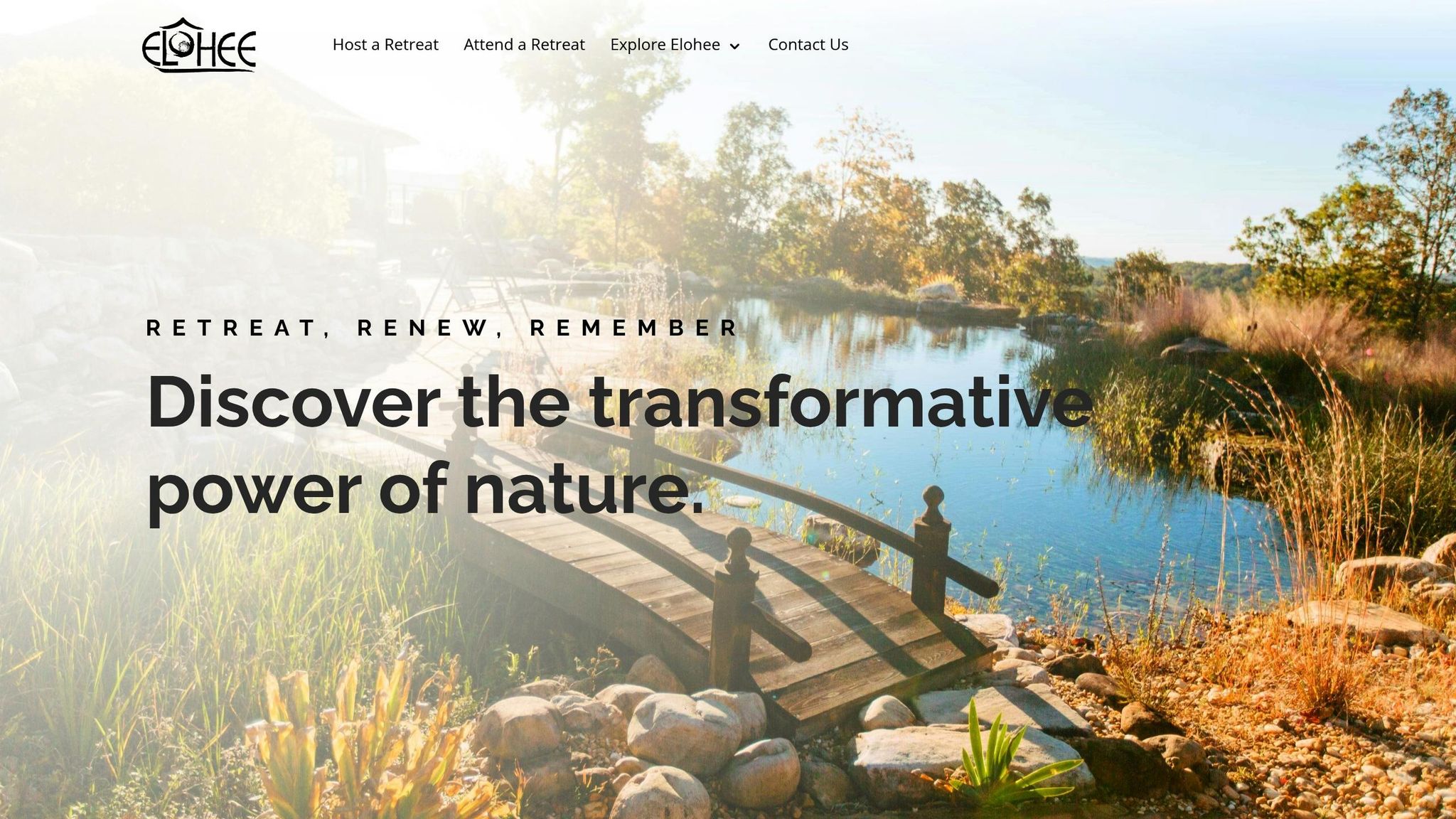
Take a step back from the demands of daily life and immerse yourself in a space designed for reflection and quiet. Elohee Retreat Center, tucked away in the Blue Ridge Mountains of North Georgia, offers a unique opportunity to connect with nature and explore the practice of stillness. With its peaceful surroundings and thoughtful amenities, this retreat center provides the perfect setting for guided experiences that nurture inner calm.
The Peaceful Setting of Elohee
Spread across 220 acres of untouched wilderness, Elohee is a haven for those seeking tranquility. Located in the heart of the Blue Ridge Mountains, the retreat center provides a serene atmosphere where the noise of modern life is replaced by the soothing sounds of nature – rustling leaves, chirping birds, and the gentle flow of water.
The property features miles of hiking trails that wind through diverse ecosystems, inviting visitors to engage in walking meditations or simply enjoy the beauty around them. Highlights include a 100-foot waterfall canyon, a reflection pond for quiet observation, and a stone fire ring for evening meditations under the stars.
"Discover the transformative power of nature."
Whether you find peace in shared reflective spaces or prefer solitude along the trails, Elohee’s environment naturally encourages a slower pace and a deeper connection with yourself.
Guided Silent Retreats
Elohee’s silent retreats offer a thoughtful mix of structure and flexibility, making them approachable even for those new to extended silence. These retreats are often part of the center’s Rest & Relaxation Weekends, helping participants disconnect from distractions and rediscover inner stillness.
One example is the "Rest & Relaxation Weekend: A Silent Invitation", scheduled for February 7–9, 2025. Led by Eve Cook, Michael Cook, and Liana N. Fiallos, this retreat invites participants to embrace silence from Friday evening through Saturday evening, with the option to share reflections afterward.
The retreat schedule includes:
- Guided yoga sessions to help participants feel grounded in their bodies
- Meditation practices to cultivate awareness and inner peace
- Forest hikes that combine gentle movement with mindful observation
- Evening contemplative bonfires, offering a quiet communal space under the stars
These retreats are designed to be welcoming and flexible. Participants can choose their level of engagement with silence, making the experience accessible and gentle. The absence of televisions and internet access ensures a distraction-free environment, though cell phone service is reliable for AT&T, Verizon, and Sprint users, allowing for emergency connectivity.
Facilities and Amenities
Elohee’s facilities are thoughtfully crafted to support both group retreats and individual reflection. The center operates three distinct areas – Landsong, Bald Mountain center, and Thanksgiving House – each offering unique accommodations and atmospheres.
- Bald Mountain facilities: Ideal for larger groups, this area can host up to 50 overnight guests across 7 cottages, maintaining a cozy, intimate feel despite its capacity.
- Thanksgiving House: Perfect for smaller gatherings, this space accommodates up to 13 guests and includes its own yoga/meditation room for private practice.
Meeting spaces cater to a variety of needs. Mandala Hall, with 1,500 square feet, is ideal for larger gatherings at $195 per night, while the smaller Forest Studio provides 600 square feet for $75 per night. Thanksgiving House rents for $991.25 per night, with an additional cleaning fee.
To complement the retreat experience, Elohee offers spa treatments, helping participants release physical tension and deepen relaxation after a day of meditation or hiking. Additionally, guided nature hikes are available for $75 per hike (up to 2 hours), providing structured opportunities to practice mindful walking while exploring the surrounding landscapes.
Elohee maintains an atmosphere of reflection by operating as an intoxicant-free facility and observing quiet hours starting at 10:30 PM. For those seeking a deeper connection with nature, primitive camping sites are also available upon request.
"It’s more than a retreat; it’s where your heart meets nature, where peace meets purpose."
With its stunning natural setting, carefully designed facilities, and supportive programs, Elohee creates an environment where stillness feels not only possible but inevitable. Whether you’re attending a retreat or simply enjoying the quiet beauty of the grounds, this is a place where you can truly reconnect with yourself.
Tools and Resources for Maintaining a Stillness Practice
Carrying the peace of a silent retreat into your everyday life requires a bit of preparation and the right tools. While retreats can set the foundation, staying connected to that sense of stillness in daily life takes intentionality. Luckily, technology, books, and simple tracking methods can help you nurture this practice long after you’ve left the retreat center.
Meditation Apps and Features
The demand for mindfulness tools has skyrocketed, with the meditation app market projected to hit $11.27 billion by 2024, growing at 14.9% annually. These apps offer accessible ways to integrate stillness into busy lives.
Here’s a look at some popular options:
- Headspace: $70/year for individuals, $100/year for families, $10/year for students
- Calm: $70/year for individuals, $100/year for families
- Insight Timer: Free (with a premium option for $60/year)
- Simple Habit: $96/year
Headspace is a favorite among beginners, thanks to its structured courses and engaging guides. Its playful animations and approachable style make it easy to get started.
Calm, on the other hand, focuses on less-structured meditations and soothing soundscapes. It’s particularly appealing to families, offering sleep stories narrated by celebrities and a dedicated kids’ section.
If you’re looking for free options, Insight Timer is a standout. It provides thousands of free guided meditations, customizable timers, and live sessions with experienced teachers. Other free apps like Healthy Minds Program and Smiling Mind offer simple, goal-oriented guidance, with the latter catering especially to younger users.
For those with packed schedules, Simple Habit delivers quick, 5-minute meditations tailored to specific situations, making it easy to weave mindfulness into your day.
When choosing an app, think about what aligns with your goals. Whether you’re starting with beginner-friendly courses, exploring sleep aids, or tracking your progress, most apps offer free trials, so you can experiment before committing.
Books on the Power of Silence
Books can provide deeper insights and inspiration as you cultivate your stillness practice. Here are some highly-regarded titles:
- "Wherever You Go, There You Are" by Jon Kabat-Zinn: A classic introduction to mindfulness meditation, offering simple and practical advice. Kabat-Zinn’s words resonate:
"Meditation is simply about being yourself and knowing something about who that is."
- "A Book of Silence" by Sara Maitland: A compelling exploration of silence, blending personal experiences with broader reflections. With 4.2 out of 5 stars on Amazon, readers praise its thought-provoking take on absolute silence.
- "Quiet Mind: One Minute Mindfulness" by David Kundtz: This book delivers brief daily reflections to help you slow down and stay mindful. It’s rated 4.5 out of 5 stars and is appreciated for its practical, bite-sized wisdom.
- "Zen Mind, Beginner’s Mind" by Shunryu Suzuki: This classic text encourages a mindset of openness and curiosity, helping readers approach their practice with fresh eyes.
- "The Untethered Soul" and "The Surrender Experiment" by Michael Singer: These books delve into letting go of limitations and trusting life’s flow, offering both inspiration and practical insights.
- "Buddha’s Brain" by Rick Hanson: A fascinating blend of neuroscience and mindfulness, this book provides tools for cultivating happiness and resilience.
- "Silence" by Erling Kagge: A thoughtful look at the role of silence in our lives, showing how it can bring clarity, gratitude, and joy.
Each of these books offers unique perspectives, whether you’re drawn to personal stories, scientific insights, or practical advice.
Tracking Progress and Building Habits
Tracking your practice can help you stay consistent, recognize patterns, and deepen your self-awareness. The key is to make your practice simple, enjoyable, and rewarding.
- Make it obvious: Use reminders like app notifications or set up a dedicated meditation space with visual cues – a cozy blanket or a meditation cushion can signal it’s time to pause.
- Make it attractive: Pair meditation with something you enjoy, like sipping tea or coffee. Joining a local meditation group can also add a social dimension to your practice.
- Make it easy: Keep your tools – timer, headphones, journal – within reach. Start small by committing to just two minutes a day to build momentum.
- Make it satisfying: Use visual progress trackers, like a meditation calendar or app features that show streaks and milestones. Small rewards can help reinforce the habit.
Journaling is another effective way to track your journey. Simply note the date, duration, and any observations about how you felt before and after meditating. Over time, this record can reveal valuable insights into your progress.
Many meditation apps include built-in tracking tools, and wearable devices can provide data on stress levels and heart rate variability, offering a tangible connection between your practice and its effects on your body.
Challenges like inconsistency or self-doubt are natural when forming a new habit. Instead of judging yourself, approach these moments with curiosity. As Dr. Judson Brewer advises:
"I would keep curiosity as the last thing for changing bad habits."
Building a stillness practice takes time, but with the right tools and gentle persistence, it can become a deeply rewarding part of your life.
Transform Your Life Through Stillness
Finding inner peace doesn’t require expensive gadgets or major lifestyle changes. Research shows that even two minutes of silence can be more calming than listening to relaxing music. This simple habit can shift the way you think, feel, and handle life’s daily stresses.
Taking time for stillness gives your brain a much-needed reset. Studies suggest that regular quiet moments can boost cardiovascular health and ease physical tension. These physical benefits create a foundation for clearer thinking and better concentration.
Silence also enhances focus. Dr. Elizabeth Lombardo explains:
"One of the reasons why silence has become such an important part of everyday life is the ability to focus when the modern world and its many noises bombard your brain all at once".
This improved focus leads to smarter decisions, higher productivity, and a stronger connection to your true self.
Incorporating stillness into your day doesn’t have to be complicated. Start with 10 minutes of silence each day – whether through meditation, sitting quietly, or taking a mindful walk in nature. Set up a quiet corner in your home for moments when life feels overwhelming. You can also practice active listening during conversations to build deeper connections with others.
For a more immersive experience, a guided silent retreat might be the answer. The Elohee Retreat Center in North Georgia offers a serene escape where you can disconnect from technology and explore the power of stillness. Nestled within 220 acres of diverse landscapes, including a 100-foot waterfall canyon, the center provides an ideal setting for self-discovery. As Amy Johnson, Ph.D., describes:
"Prolonged silence is a rare opportunity to not chase experience. It’s a chance to simply be as you are, recognizing yourself as what is always here but typically overlooked".
Silence, whether brief or extended, opens the door to profound personal growth.
FAQs
How can I incorporate moments of silence into my busy day without adding stress?
Finding moments of quiet in a busy day doesn’t have to be complicated. Start small. Take a few deep breaths or step outside for a brief, peaceful walk during a break. Carving out just 5–10 minutes in the morning, at lunch, or before bed can help you create a habit of stillness and sharpen your focus.
You can make this even easier by silencing electronic devices for a few minutes or setting up a cozy, quiet corner in your home for reflection. Even something as simple as sipping your coffee in silence can bring a sense of calm. Over time, these small changes can ease stress and bring a refreshing sense of clarity to your day.
What are the mental and physical health benefits of incorporating silence into your daily routine?
Incorporating moments of silence into your daily routine can work wonders for both your mind and body. On a mental level, taking time for stillness helps ease anxiety, sharpen focus, and improve emotional well-being. It gives your mind a chance to pause, recharge, and regain clarity, leaving you with a deeper sense of calm and balance.
Physically, silence can be just as impactful. It helps your body relax, lowers blood pressure, improves sleep, and even supports brain health by encouraging the growth of new brain cells. Plus, by reducing stress and tension, silence plays a role in promoting overall healing. Setting aside even a few quiet moments each day can be a simple yet powerful way to care for your mental and physical health.
How can silent retreats at Elohee Retreat Center enhance self-awareness and personal growth?
Silent retreats at Elohee Retreat Center offer a peaceful escape from the constant noise of everyday life, creating a space where you can turn your attention inward. These retreats encourage stillness and mindfulness, giving you a chance to sort through your thoughts, let go of stress, and reconnect with yourself on a deeper level.
Many participants report feeling more mentally clear, emotionally balanced, and in tune with their inner selves after attending. Nestled in a serene natural environment, Elohee provides the ideal backdrop for reflection, self-discovery, and renewal – a much-needed retreat from the demands of a fast-moving world.
Recent Comments