

Forest bathing, or shinrin-yoku, is a simple practice of immersing yourself in nature to relax and restore energy. Unlike hiking or exercise, it focuses on mindfulness and sensory engagement – listening to birds, feeling tree bark, or breathing in forest air. Studies show it reduces stress, lowers cortisol by 13.4%, and boosts immune health by increasing Natural Killer (NK) cell activity. Even 15–20 minutes in nature can help, but longer sessions (2–4 hours) amplify the effects.
Key benefits include:
- Stress reduction: Decreases cortisol and blood pressure.
- Immune support: Boosts NK cells and anticancer proteins.
- Mental clarity: Calms the mind by reducing overthinking.
To get started, find a quiet green space, turn off devices, and move slowly. Engage your senses – observe, touch, smell, and listen. For a deeper experience, retreats like Elohee in Georgia offer guided forest bathing sessions amidst waterfalls and ancient trees, helping you fully disconnect and recharge.
Forest bathing is accessible anywhere, even urban parks or backyards. Regular practice, even for short sessions, can improve your well-being and help you feel more connected to nature.
Introduction to Forest Bathing
The Science Behind Forest Bathing
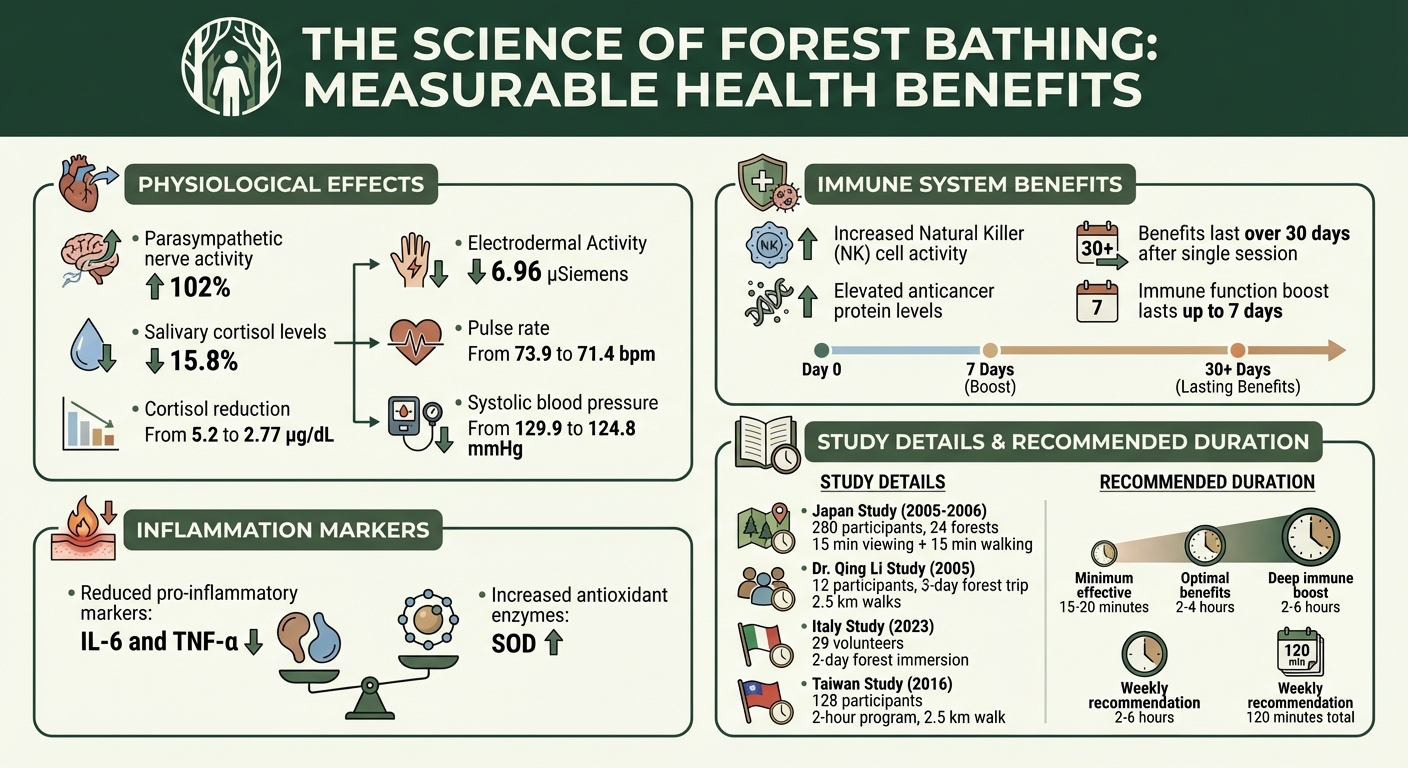
Forest Bathing Health Benefits: Scientific Data and Research Results
How Nature Affects Your Body and Mind
Stepping into a forest sparks noticeable changes in your body, helping to restore energy and reduce stress. One of the first effects is on your autonomic nervous system, which governs your stress response. Forest settings activate the parasympathetic nervous system – responsible for the "rest-and-digest" state – while calming down the sympathetic nervous system, which triggers the "fight-or-flight" response. These shifts aren’t just theoretical; they can be measured and are quite impactful.
Spending time in nature lowers the production of stress hormones like cortisol, adrenaline, and noradrenaline. At the same time, trees emit substances called phytoncides (like alpha-pinene and limonene). When you breathe these in, they work wonders for your immune system, boosting the activity and number of Natural Killer (NK) cells – immune cells that play a crucial role in fighting infections and even cancer. In fact, studies show that just one forest bathing session can enhance immune function, with increased NK cell activity and anticancer protein levels lasting for over 30 days.
Forest exposure also helps reduce inflammation and oxidative stress. It lowers pro-inflammatory markers like IL-6 and TNF-α while increasing antioxidant enzymes such as superoxide dismutase (SOD). Brain activity studies using near-infrared spectroscopy reveal that the prefrontal cortex – a part of the brain linked to stress and complex thinking – relaxes during time spent in the forest. This is evidenced by reduced oxyhemoglobin levels. As researchers Chorong Song, Harumi Ikei, and Yoshifumi Miyazaki describe:
Nature therapy is defined as a set of practices aimed at achieving ‘preventive medical effects’ through exposure to natural stimuli that render a state of physiological relaxation and boost the weakened immune functions to prevent diseases.
The physiological benefits of forest bathing are backed by a growing body of scientific evidence.
Research on Forest Bathing Benefits
Scientific studies have consistently demonstrated the remarkable benefits of forest bathing for both the body and mind. Between 2005 and 2006, researchers conducted experiments in 24 forests across Japan, involving 280 male university students. Participants spent 15 minutes viewing and another 15 minutes walking in forested areas. The results? Parasympathetic nerve activity increased by 102%, while salivary cortisol levels dropped by 15.8% compared to urban environments.
In another study led by Dr. Qing Li in September 2005, 12 healthy male employees (aged 37–55) participated in a 3-day, 2-night forest trip in Iiyama, Nagano. They walked 2.5 kilometers over two hours each day, which significantly boosted NK cell activity and levels of anti-cancer proteins. Dr. Qing Li explained:
Forest bathing trips resulted in an increase in NK activity, which was mediated by increases in the number of NK cells and the levels of intracellular granulysin, perforin, and granzymes A/B.
More recently, in August 2023, researchers from the University of Padua studied 29 volunteers during a two-day immersion in Italy’s Casentino forest. They observed a drop in salivary cortisol levels from 5.2 μg/dL to 2.77 μg/dL and a decrease in Electrodermal Activity by 6.96 μSiemens. Similarly, in July 2016, a study at Taiwan’s Xitou Nature Education Area involved 128 middle-aged and elderly participants in a 2-hour program that included a 2.5-kilometer walk. Results showed a reduction in pulse rate from 73.9 to 71.4 bpm and a decrease in systolic blood pressure from 129.9 to 124.8 mmHg.
These findings highlight how forest bathing can rejuvenate both your physical health and mental well-being.
How to Practice Forest Bathing
Preparing for Your Forest Bathing Session
Start by selecting a peaceful, green space where you can escape the noise of everyday life. This could be a nearby wooded park, a botanical garden, or even a backyard with plenty of trees and plants. While a full session typically lasts around two hours, you might notice positive effects in as little as 10–20 minutes. For deeper benefits, such as boosting your immune system, some experts recommend spending two to six hours immersed in nature.
Before you head out, switch off all electronic devices. This isn’t about snapping photos or checking notifications – it’s about fully immersing yourself in the moment. Pack a few essentials: water, snacks, insect repellent, a small first aid kit, and layered clothing, including a rain jacket for unexpected weather. Let someone know your plans and when you expect to return.
Approach your time in nature with no specific goals other than being present. As Rose Lawrence, a Certified Forest Therapy Guide, advises:
The main thing to keep in mind while practicing is to go slowly.
With this mindset, you can begin to tune into the natural world around you.
Engaging Your Senses in the Forest
Once you’re surrounded by trees, slow down – way down. Guided forest bathing walks often cover less than a quarter mile over several hours. The key is to engage your senses one at a time to deepen your connection with the environment. Listen closely to the sounds around you – the chirping of birds, the rustling of leaves. Look for "komorebi", the dappled sunlight filtering through the trees, or take in the intricate patterns of branches and leaves.
Touch the textures of the forest, from the rough bark of a maple tree to the smooth surface of birch. If you’re comfortable, remove your shoes and feel the earth beneath your feet. Breathe deeply and take in the scents of pine needles, soil, or crushed twigs – these are rich in phytoncides, natural compounds that can benefit your health. Find a quiet spot that feels inviting and sit there for at least 20 minutes, allowing your mind and body to settle.
To help your body relax, try a calming breathing exercise: inhale for two counts and exhale for four. Gary Evans, Director of the Forest Bathing Institute, explains:
When the exhale is slower than the inhale, it sends a physiological message to your body that says: ‘I’m safe. I can relax. It’s OK.’
Reflecting After Your Session
As your session winds down, take a moment to reflect on your experience. This reflection helps solidify the benefits and brings a sense of mindfulness to your daily life. Think about what stood out to you – maybe it was a specific sound, color, or texture. These details can offer insight into your emotional state.
To keep the benefits alive, consider integrating a short mindfulness practice into your routine. Spend five minutes focusing on your breath, gently redirecting your attention whenever your mind wanders.
The physical effects of forest bathing, like increased immune cells and anti-cancer proteins, can last up to seven days. To maintain this connection to nature, try journaling about your experience or using sensory reminders like forest sound recordings or tree-based essential oils when you can’t make it back to the woods right away.
sbb-itb-77c7b55
Forest Bathing at Elohee Retreat Center
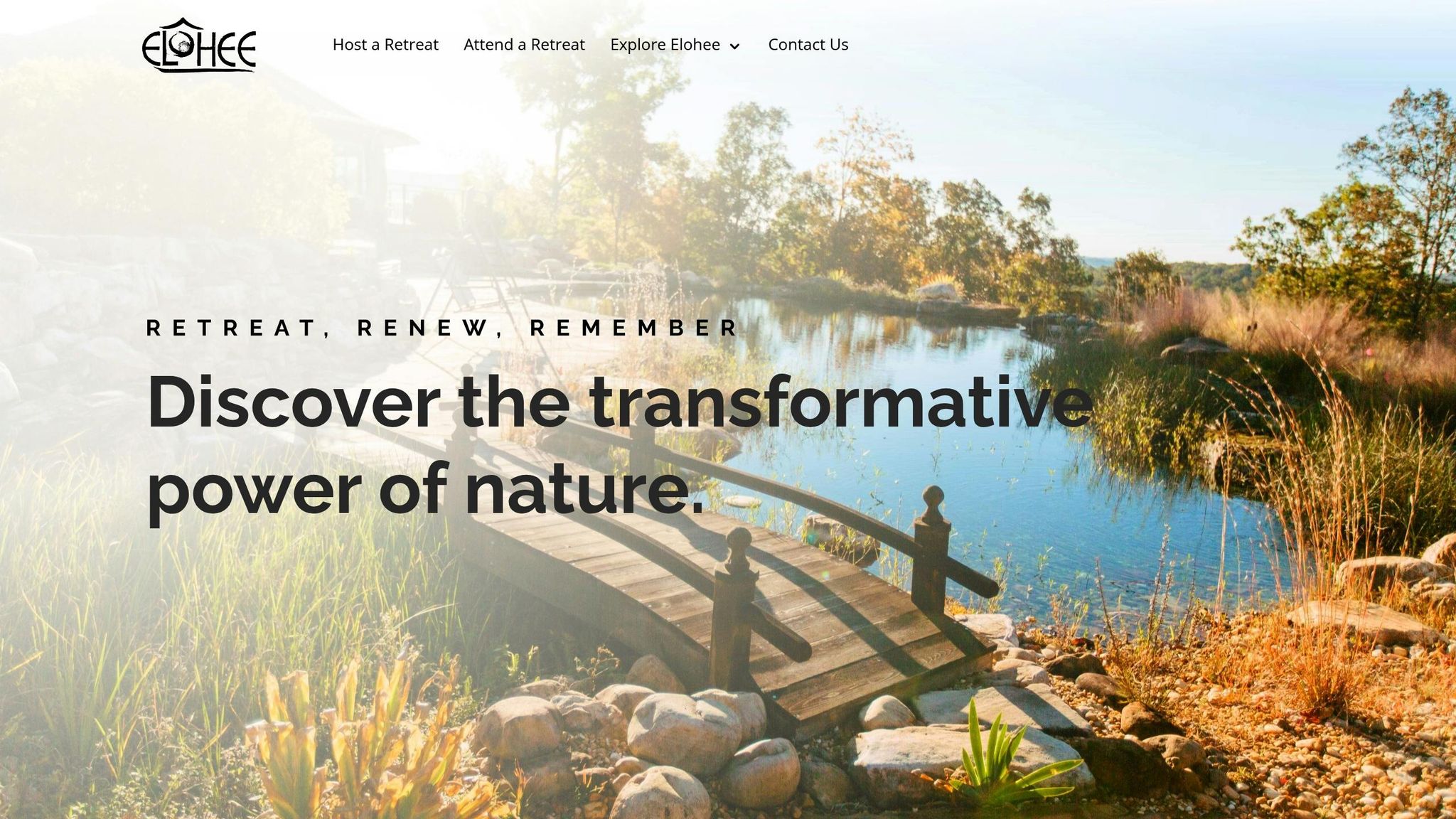
Elohee Retreat Center offers the perfect setting for forest bathing, providing a serene, distraction-free environment that supports deep relaxation and renewal.
Why Elohee Is Ideal for Forest Bathing
Nestled across 220 acres in the Blue Ridge Mountains, Elohee is a haven of natural beauty. Its diverse ecosystems range from lush, shaded valleys to sunlit ridges, offering a variety of landscapes to explore. One of the standout features is a 100-foot waterfall, where the cascading water becomes a focal point for your senses, creating a grounding and calming experience.
The retreat also boasts over two miles of trails that weave through these rich ecological areas. Highlights include the Reflection Pond, perched atop Bald Mountain with stunning panoramic views, and a 400-year-old Grand Hemlock tree that exudes a sense of timelessness and connection to the natural world. For those seeking a dedicated space for mindfulness, the Forest Studio provides an ideal setting for nature-based practices.
Elohee’s intentional design enhances every aspect of forest bathing. From the soothing sounds of the waterfall to the ancient Grand Hemlock releasing phytoncides – compounds known to boost well-being – every element invites you to engage fully with your surroundings. The absence of televisions and internet access ensures you can completely disconnect from digital distractions, allowing you to focus on the present moment and rejuvenate your energy. As Wendell Berry beautifully puts it:
While we live our bodies are moving particles of the earth, joined inextricably both to the soil and to the bodies of other living creatures.
Guided Forest Bathing at Elohee
Elohee takes forest bathing to the next level with guided sessions designed to deepen your connection to nature. These sessions blend mindfulness techniques with sensory exploration, encouraging you to experience the forest at a slow, deliberate pace rather than treating it as a physical workout. Activities often include guided meditations, mindfulness exercises, journaling, and quiet reflection.
From the moment you arrive, Elohee ensures a seamless transition into its tranquil environment. Guests are transported from a secure parking area to their accommodations, allowing them to leave behind the distractions of daily life immediately. This thoughtful approach helps you fully embrace nature’s restorative power, setting the stage for meaningful and revitalizing experiences amid the forest.
Making Forest Bathing a Regular Practice
Forest bathing works best when it becomes a regular part of your life, especially since most of us spend so much time indoors. The great thing is, you don’t need hours of free time or access to an untouched forest to make this happen. Even in a bustling city, you can create a meaningful connection with nature.
Forest Bathing in Urban Settings
City living doesn’t have to limit your ability to enjoy forest bathing. Local parks, botanical gardens, tree-lined streets, or even your backyard can serve as your nature sanctuary. The key is to engage your senses and move slowly, just as you would in a forest. Rose Lawrence, a Certified Forest Therapy Guide, explains:
The main purpose of forest bathing is to cultivate a nature connection that allows you to see all the nature around you… even in an urban environment.
One way to deepen this connection is through "place tending." Pick a nearby green spot and visit it regularly. Over time, you’ll start noticing its seasonal changes, the different birds that come and go, and how the light shifts throughout the day. Small adjustments to your routine – like choosing a route to work that passes through a park instead of busy streets – can also help you incorporate nature into your daily life.
When stepping outside isn’t an option, bring nature indoors. Studies suggest that diffusing tree-based essential oils, like cypress or cedar, can deliver up to 40% to 50% of the health benefits of actual forest bathing. You can also add potted plants to your home, let in natural light by keeping curtains open, and play forest soundscapes to recreate the experience. Even these small efforts can help restore your energy and sense of balance.
By weaving green moments into your day, you can enjoy the healing effects of nature, no matter where you live.
Building a Weekly Forest Bathing Routine
Research suggests that spending at least 120 minutes in nature per week can significantly boost your health and well-being. You don’t have to block off two hours at once – shorter sessions of 20 to 30 minutes spread across the week work just as well. Certified Forest Therapy Guide Suzi Minor highlights:
even taking a 10 minute nature break can be beneficial.
Treat your time in nature like any other important appointment – schedule it and stick to it. After each session, take a few moments to jot down your observations and feelings in a journal. This reflection not only helps you stay consistent but also lets you track how nature is impacting your overall well-being. Remember, moving slowly and being fully present deepens the calming effects of forest bathing. Over time, this regular practice can become a powerful way to recharge and reconnect.
Conclusion: Restore Your Energy Through Nature
Forest bathing provides a science-supported way to recharge in our mostly indoor lives. This practice has been shown to reduce stress and improve immune function, helping shift your body from a state of fight-or-flight to one of deep relaxation. Whether you’re feeling stressed, worn out, or disconnected, spending unhurried time in nature can help restore balance and calm.
The beauty of this practice is its accessibility – any natural setting can deliver these benefits. Even brief visits to a nearby park can make a difference, and over time, the effects build. For those seeking a more immersive experience, the Elohee Retreat Center offers 220 acres of serene nature, complete with trails and a breathtaking 100-foot waterfall canyon. Their guided forest bathing sessions are designed to help you break free from habits like rushing or overthinking, encouraging a deeper connection with your surroundings.
Incorporating this practice into your routine can lead to lasting renewal. Start small – visit a local green space and take in the details around you. Notice how sunlight dances through the leaves, run your fingers across the rough bark of a tree, or listen to the gentle rustle of wind in the branches. As Rachel Carson beautifully put it, "There is something infinitely healing in the repeated refrains of nature". Make those refrains a part of your week, and watch as your energy, focus, and sense of well-being steadily improve.
FAQs
What makes forest bathing different from hiking or walking in nature?
Forest bathing is all about slowing down and immersing yourself in nature with intention. Unlike hiking or walking, which often focus on physical effort or getting somewhere, this practice encourages you to stop, take a deep breath, and truly engage your senses. It’s about noticing the rustle of leaves, the earthy scent of the forest floor, or the way sunlight filters through the trees.
The goal is simple: to calm your mind, ease stress, and cultivate a sense of peace by connecting with the natural world in a thoughtful, unhurried way.
What health benefits do the natural compounds released by trees provide during forest bathing?
When you immerse yourself in forest bathing, trees release natural compounds known as phytoncides. These compounds have antimicrobial properties that can boost your immune system by increasing the activity of natural killer cells. The result? Potential benefits like lower blood pressure, reduced stress, improved mood and sleep, and a stronger defense against illness.
Being surrounded by trees and nature also encourages relaxation and fosters a sense of well-being, offering a perfect way to refresh both your body and mind.
How can I practice forest bathing in a city setting?
Forest bathing, or shinrin-yoku, isn’t limited to remote woodlands – it can easily fit into urban life with a few thoughtful adjustments. Start by taking leisurely walks in nearby parks, along tree-lined streets, or through any accessible green spaces. Let your senses take the lead: notice the vibrant colors, listen to the rustling leaves or birdsong, feel the textures of bark or grass, and take slow, intentional breaths to ground yourself.
If stepping outside isn’t always an option, bring a touch of nature indoors. Add houseplants to your space, decorate with natural materials, or play calming forest sounds to create a peaceful atmosphere. For those seeking a more immersive experience, places like the Elohee Retreat Center in North Georgia offer guided forest walks and tranquil surroundings to help you fully connect with nature. With these simple steps, you can embrace the calming essence of forest bathing, even in the heart of a bustling city.
Recent Comments