
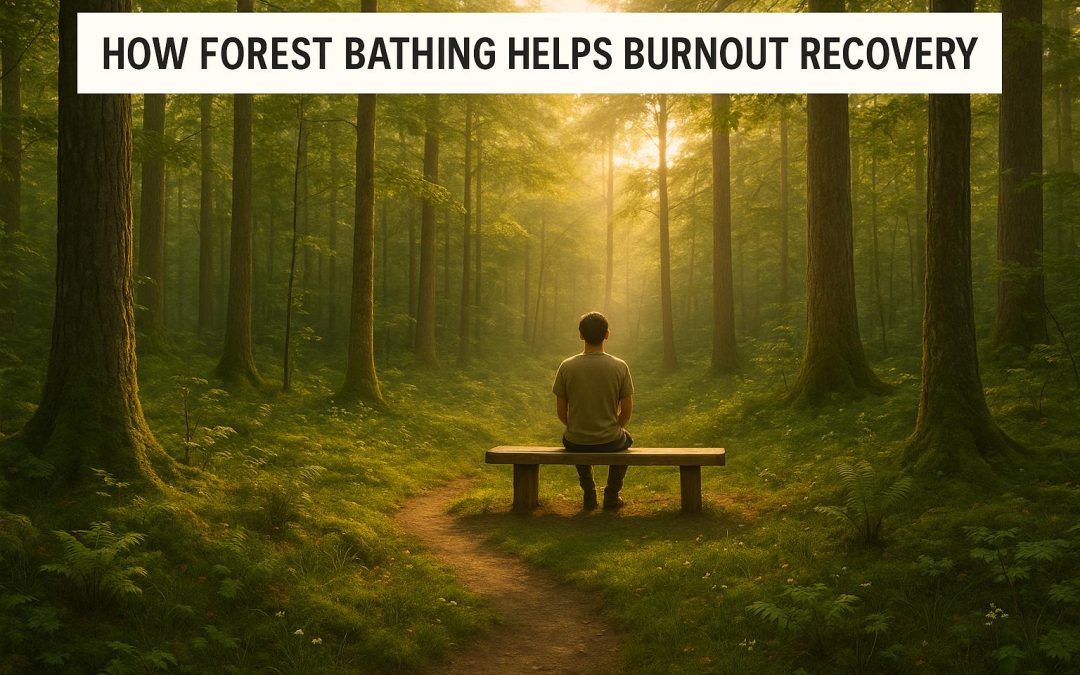
Feeling burned out? Forest bathing might be the answer. This practice, known as shinrin-yoku, is a slow, mindful walk through nature that uses all your senses to reduce stress and improve well-being. Unlike hiking or jogging, forest bathing is about connecting with nature, not fitness goals. Here’s why it works and how to start:
- Burnout Signs: Constant fatigue, trouble focusing, irritability, and emotional distance.
- Nature’s Benefits: Lowers stress hormones, boosts mood, and promotes mental clarity.
- How It Helps: Combines mindfulness, movement, and nature to heal both body and mind.
- Getting Started: Choose a peaceful spot, wear comfortable clothes, and engage your senses – sight, sound, touch, smell, and even taste.
Want a deeper experience? Retreat centers like Elohee in North Georgia offer serene trails, waterfalls, and guided programs for forest bathing and self-care. Start small with 15-30 minute sessions twice a week, and watch your stress melt away.
Forest Bathing’s Impact on Burnout
Physical Health Effects
Forest bathing supports physical health by combining gentle movement with relaxation. This practice can help alleviate physical symptoms of burnout while restoring the body’s energy levels. It’s not just about feeling physically better – it also contributes to improved mental health.
Mental Health Benefits
Spending time in nature through forest bathing can uplift mental well-being by engaging all the senses. Being surrounded by nature helps quiet an overactive mind and brings emotional balance, which is crucial for recovering from burnout. This makes it a powerful tool compared to other stress-relief methods.
Comparing Stress Relief Methods
What makes forest bathing stand out is its mix of movement, mindfulness, and nature. This approach addresses both mental and physical aspects of burnout, offering a well-rounded path to recovery. Its combination of these elements provides a structured way to regain balance and well-being.
Getting Started with Forest Bathing
Finding Your Forest Bathing Location
Choose a peaceful natural setting far from urban distractions. Look for areas with native trees, clear trails, and possibly flowing water. A great option for beginners is a retreat center. For example, the Elohee Retreat Center in the Blue Ridge Mountains of North Georgia offers a serene environment with trails through natural woodlands, a 100-foot waterfall canyon, and breathtaking mountain views spread across 220 acres of untouched land. It’s conveniently located about 90 miles north of Atlanta and 90 miles west of Greenville, SC. Once you’ve selected your spot, gather the right items to make the most of your forest bathing experience.
What to Bring and Wear
Being comfortable is key to fully enjoying forest bathing. Here’s a quick guide to what you’ll need:
| Category | Essential Items | Purpose |
|---|---|---|
| Clothing | Loose, weather-appropriate layers | Keeps you comfortable and adapts to the weather |
| Footwear | Sturdy walking shoes or boots | Ensures stability and protects your feet |
| Comfort Items | Small cushion or mat, water bottle | Makes sitting easier and keeps you hydrated |
| Safety | Basic first aid kit, insect repellent | Prepares you for minor issues like bug bites |
| Optional | Journal, camera (silent mode) | Lets you record thoughts or capture moments |
Basic Forest Bathing Techniques
Forest bathing is more than just walking through the woods – it’s about immersing yourself in nature and fully engaging your senses. Try these simple practices to get started:
-
Mindful Breathing
Find a quiet spot to sit or stand and focus on your breathing. Take slow, deep breaths, paying attention to how the forest air feels compared to the air in a city or indoor space. -
Sensory Engagement
Tune into your surroundings by focusing on one sense at a time:- Sight: Notice the different shades of green, the way sunlight filters through the leaves, or the patterns on tree bark.
- Sound: Listen to birds, rustling leaves, or the sound of water flowing nearby.
- Touch: Run your fingers over tree bark, moss, or leaves to feel their textures.
- Smell: Breathe in deeply and take note of the earthy, fresh scents around you.
- Taste: If safe, notice any subtle flavors in the air, like the freshness after rain.
-
Mindful Movement
Walk slowly and intentionally, pausing often to take in your surroundings. Let yourself fully absorb the sights, sounds, and sensations of the forest as you move.
Making Forest Bathing a Habit
Setting a Forest Bathing Schedule
Getting into the habit of forest bathing can help with burnout recovery and overall well-being. Start small – try 15-30 minute sessions twice a week. Over time, you can gradually extend the duration as you get more comfortable. The goal is to create a routine that feels natural and stress-free.
Here’s an example of a beginner-friendly weekly schedule:
| Time of Day | Duration | Activity Type | Best For |
|---|---|---|---|
| Early Morning (6-8 AM) | 20 minutes | Quick nature walk | Starting the day calmly |
| Lunch Break (12-1 PM) | 15 minutes | Mindful sitting | A mid-day reset |
| Evening (5-7 PM) | 30 minutes | Full forest bathing | Relaxing after a busy day |
Forest Bathing in Cities
If you live in an urban area, finding time in natural settings might seem tricky. But even in cities, you can experience forest bathing by exploring local green spaces. Parks, gardens, and tree-lined streets can all provide moments of connection with nature.
Here are ways to make the most of urban green spaces:
- Visit parks during quieter times to avoid distractions.
- Seek out hidden corners in botanical gardens for solitude.
- Walk along tree-lined streets early in the morning.
- Use rooftop gardens or courtyards as peaceful retreats.
- Plan a nature-focused route for your daily commute.
Incorporating these practices into your routine can make forest bathing accessible, even in a busy city.
Combining Nature and Self-Care
For a deeper experience, pair forest bathing with self-care activities. Places like Elohee Retreat Center offer programs that blend nature with practices like yoga, meditation, and journaling.
Here are some ideas to enrich your sessions:
- Do gentle yoga poses while surrounded by nature.
- Practice mindful breathing during your walks.
- Write about your thoughts and feelings while sitting outdoors.
- Use the sounds of nature for guided meditation.
- Take thoughtful photos to capture calming moments.
Retreat centers often provide structured programs that combine these practices, making it easier to fully immerse yourself in the experience.
sbb-itb-77c7b55
Forest Bathing at Retreat Centers
Why Choose a Retreat Setting
Attending a retreat offers a focused space to step away from daily stress and recharge. These settings are designed to help you disconnect and concentrate on recovery in a peaceful environment.
| Feature | Benefit |
|---|---|
| Immersive Experience | Time surrounded by nature, free from urban distractions |
| Expert Guidance | Programs led by experienced professionals |
| Purpose-Built Spaces | Areas tailored for reflection and inner peace |
| Community Connection | Opportunities to share experiences with others on similar journeys |
| Extended Duration | Days of uninterrupted time to connect with nature |
Elohee Retreat Center: Natural Healing Space
Elohee Retreat Center, located in the Blue Ridge Mountains of North Georgia, exemplifies how a retreat can support forest bathing and recovery. With 220 acres of untouched land, it offers a perfect mix of diverse ecosystems and thoughtful amenities to promote healing.
"It’s more than a retreat; it’s where your heart meets nature, where peace meets purpose."
Here’s what makes Elohee stand out:
- Scenic Trails: Explore miles of paths through native forests.
- Water Features: Relax by a stunning 100-foot waterfall canyon.
- Quiet Areas: Spaces for reflection and solitude.
- Comfortable Accommodations: Bald Mountain facilities for up to 50 guests.
- Private Retreat Options: Thanksgiving House for smaller, intimate groups.
The Landsong area adds to the experience with indoor and outdoor dining spaces, a stone fire ring, and a serene reflection pond. Spa services, Mandala Hall, and the Forest Studio provide additional support for mindfulness and relaxation practices. Elohee’s combination of natural beauty and well-designed amenities creates an ideal setting for forest bathing and personal renewal.
What is Forest Bathing? The Science Behind Stress Relief)
Next Steps
Ready to make forest bathing a part of your burnout recovery? The steps below will help you get started and build a lasting practice.
| Getting Started | Implementation |
|---|---|
| Find Local Nature | Look for parks, forests, or green spaces near your home or workplace. |
| Session Duration | Gradually aim for 2-hour sessions as you get more comfortable. |
| Basic Equipment | Wear comfortable walking shoes, dress for the weather, and bring a water bottle. |
| Frequency | Begin with two sessions per week and adjust based on your schedule. |
Use this table as your go-to guide to kick off your practice. Once you’re comfortable, try incorporating these ideas:
- Morning Practice: Start your day with a calming walk in nature before heading to work.
- Lunch Break Reset: Spend your lunch break outdoors for a quick recharge.
- Weekend Immersion: Dedicate longer sessions to explore nature on weekends when you have more time.
For a more immersive experience, the Elohee Retreat Center in North Georgia offers 220 acres of diverse ecosystems, miles of trails, and a stunning 100-foot waterfall canyon – perfect for a deeper connection with nature.
FAQs
How can forest bathing support recovery from burnout?
Forest bathing, or immersing yourself in nature, can be a powerful tool for burnout recovery by helping to reduce stress, improve focus, and restore emotional balance. Spending time in a forest environment has been shown to lower cortisol levels (the stress hormone), promote relaxation, and enhance overall well-being.
Unlike some other stress-relief methods, forest bathing encourages a deeper connection with nature, which can foster mindfulness and a sense of calm. It’s a practice that doesn’t require special equipment – just a quiet natural setting where you can slow down, breathe deeply, and take in the sights, sounds, and smells around you. For those seeking a serene space to experience forest bathing, Elohee Retreat Center in North Georgia offers an ideal environment with its lush trails, diverse ecosystems, and tranquil surroundings.
How can I practice forest bathing in a busy city lifestyle?
Even in a bustling urban setting, you can incorporate forest bathing into your routine with a few simple steps. Start by visiting a nearby park, botanical garden, or any green space where you can connect with nature. Leave your phone behind or set it to silent to minimize distractions. Take a slow, mindful walk, focusing on your senses – notice the sounds, smells, and textures around you.
If time is limited, even a short 10–15 minutes of mindful breathing or sitting under a tree can provide benefits. For a more immersive experience, consider planning a weekend trip to a serene location like the Elohee Retreat Center in North Georgia, where you can fully embrace the healing power of nature. Remember, the goal is to slow down, be present, and let nature recharge your mind and body.
What can I expect from a forest bathing retreat at Elohee Retreat Center, and how does it support burnout recovery?
A forest bathing retreat at Elohee Retreat Center in North Georgia provides a peaceful space to reconnect with nature and rejuvenate your mind and body. Nestled within 220 acres of diverse ecosystems, the center features serene walking trails, a 100-foot waterfall canyon, and cozy accommodations designed to promote relaxation.
This retreat encourages mindfulness and stress reduction by immersing you in nature’s calming rhythms. The tranquil environment supports emotional healing, fosters self-discovery, and helps restore balance, making it an ideal experience for those recovering from burnout.
Recent Comments