
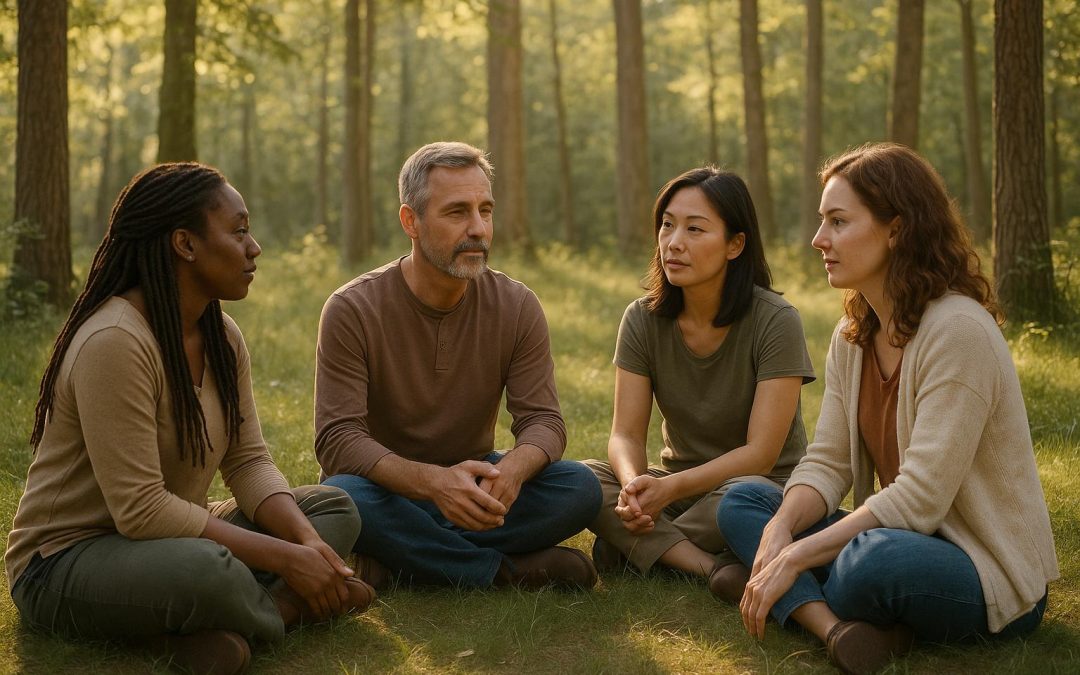
Spending time in nature while reflecting as a group offers powerful mental, emotional, and social benefits. Combining the tranquility of natural settings with shared discussions helps reduce stress, improve mood, and strengthen connections among participants. This approach is backed by research showing that natural environments enhance focus, emotional balance, and group cohesion.
Key Takeaways:
- Nature reduces stress: Time outdoors lowers blood pressure, stabilizes heart rate, and decreases stress hormones.
- Emotional well-being improves: Green spaces help manage anxiety and encourage open, meaningful conversations.
- Social bonds grow stronger: Group reflection in natural settings fosters a sense of connection and belonging.
- Elohee Retreat Center: Located in North Georgia, it provides an ideal space for these activities with its forest trails, waterfall canyon, and serene environment.
Why It Works:
- Attention Restoration Theory: Nature helps the brain recover from fatigue, boosting focus and mindfulness.
- Biophilia Hypothesis: Humans have an innate connection to nature, which enhances emotional and social experiences.
- Research-backed benefits: Studies confirm that group activities in nature improve mental health, resilience, and community bonds.
Elohee Retreat Center exemplifies these principles, offering programs designed to blend mindfulness, movement, and reflection in a natural setting. From quiet walks to group discussions by a waterfall, these experiences support personal growth and collective well-being.
Mental and Emotional Benefits of Group Reflection in Nature
Stress Relief and Mental Focus
Spending time in nature has been shown to lower blood pressure, stabilize heart rate, and reduce stress hormones. These physiological effects create the perfect environment for reflective group discussions, allowing participants to engage more deeply and meaningfully. In this setting, the natural world acts as a calming backdrop, helping participants focus and reflect without the distractions or pressures often found in indoor spaces.
Nature also serves as what researchers refer to as a "safe space". Surrounded by greenery, participants feel more at ease sharing their thoughts and emotions openly. Beyond emotional comfort, these settings have cognitive benefits, such as improving short-term memory. These combined effects – both physical and mental – lay the groundwork for more impactful group discussions.
"Our relationship with nature – how much we notice, think about and appreciate our natural surroundings – is critical in supporting good mental health and preventing distress." – Mental Health Foundation
Research highlights that just two hours a week in green spaces can lead to noticeable improvements in overall health and psychological well-being. For group reflection, this means that regular sessions in nature can amplify these benefits over time, helping participants manage stress better and focus more effectively. These mental advantages naturally elevate the quality of group reflection.
Improved Emotional Health
Nature doesn’t just calm the body – it also helps balance emotions. Time spent in natural environments has been linked to healthier emotional responses. In group settings, this often translates to participants being more open to rethinking difficult experiences and reframing challenges in a healthier way. The surrounding greenery acts as a form of emotional support, easing stress and encouraging emotional growth.
Natural settings not only boost positive emotions but also reduce negative ones. Many people report that being in nature allows them to express emotions they might otherwise suppress, leading to more balanced and healthier emotional patterns over time.
"Spending time in nature has cognitive benefits, but it also has emotional and existential benefits that go beyond just being able to solve arithmetic problems more quickly." – Cynthia Frantz, PhD, Professor of Psychology and Environmental Studies at Oberlin College in Ohio
Research also shows that children raised in areas with abundant green space are less likely to develop psychiatric disorders later in life. In fact, those with minimal green space exposure during childhood face a 55% higher risk of mental health issues compared to their peers with greater access to nature. This highlights the potential of nature-based group activities not just as a way to improve emotional health, but also as a preventive measure. These emotional benefits naturally enhance the depth and quality of group reflection.
Building Community and Social Support
Beyond individual benefits, nature also strengthens social bonds. Studies reveal that exposure to green spaces fosters social cohesion, which includes shared values, positive relationships, and a sense of belonging. When groups reflect together surrounded by trees, water, or open skies, participants often feel a greater sense of connection – not just with each other but with the world as a whole.
Communities with more green space tend to have stronger social ties and a greater sense of community. In group reflection scenarios, natural settings encourage focused and meaningful interactions, helping to build relationships and reduce feelings of isolation. For example, one study found that participants who spent just five minutes sitting in a park reported feeling more connected to something larger than themselves. This demonstrates how even brief nature-based activities can nurture a sense of belonging and mutual support.
"I took a walk in the woods and came out taller than the trees." – Henry David Thoreau
Nature-based group activities do more than boost individual well-being – they also encourage deeper social connections. These settings break down barriers, allowing participants to form authentic bonds and offer one another support. In turn, these stronger social ties enhance the group reflection process, creating a positive cycle of connection and growth. The sense of community fostered by nature becomes an essential part of the reflective experience.
Getting a Nature Fix
How Nature-Based Group Reflection Works
To understand why nature-based group reflection has such a profound impact, we need to explore the science behind our connection to nature. Three main theories shed light on this: Attention Restoration Theory, the role of social interactions in natural settings, and the Biophilia Hypothesis.
Attention Recovery and Mindfulness
Nature has a unique way of creating the perfect environment for reflective conversations by helping the mind recover and focus. According to Attention Restoration Theory (ART), spending time in nature helps the brain recover from mental fatigue. Unlike the constant demands of urban settings, natural environments are effortlessly engaging, allowing the brain to recharge and regain clarity.
One key element of this recovery is "soft fascination", which refers to the gentle, effortless attention we give to natural stimuli. This kind of engagement helps the mind rest and improves focus. Nature also meets four critical conditions for mental restoration: it provides a break from daily demands, offers soft fascination, gives a sense of being part of something larger, and aligns with personal preferences. Together, these factors create the perfect setting for mindfulness and deeper self-awareness.
But the benefits don’t stop at individual focus. Nature also enhances how we interact with others, making group dynamics more meaningful.
Social Interaction in Natural Settings
Nature doesn’t just help individuals – it changes how groups connect. Outdoor environments naturally break down barriers, making it easier for people to bond. Whether surrounded by trees, water, or open skies, the shared experience fosters a sense of unity that transcends differences.
In these settings, storytelling and reflection often feel more natural. People are more likely to share personal stories and open up about vulnerabilities, thanks to the calming and timeless atmosphere of the outdoors. Without the constraints of formal structures or tight schedules, conversations flow more freely.
Even brief exposure to nature can improve social connections. For instance, studies have shown that viewing natural scenes can lower stress during high-pressure moments, like exams. This reduction in stress creates space for better listening and more authentic interactions within groups.
The physical nature of outdoor settings also plays a role. Activities like walking together on trails or sitting in a circle on the ground encourage movement and create a dynamic, engaging experience. These elements make outdoor group sessions feel more relaxed and interactive compared to traditional indoor formats.
Biophilia Hypothesis and Emotional Connection
Building on these social benefits, the Biophilia Hypothesis explains why nature-based group reflection resonates so deeply. This theory, introduced by biologist Edward Wilson, suggests that humans have an innate connection to nature and other living things. Wilson described biophilia as "the innately emotional affiliation of human beings to other living organisms".
This natural bond means that when groups gather in nature, they tap into an evolutionary need to connect with the living world. This sense of connection fosters comfort and belonging, strengthening group cohesion.
The Biophilia Hypothesis also highlights the mental health benefits of spending time in nature. For example, people who spend at least two hours a week in natural settings report better health and well-being. This emotional connection to nature encourages openness and vulnerability, which are essential for meaningful group reflection.
In group settings, the effortless engagement and sense of connection that nature provides lead to organic and spontaneous conversations. Insights emerge naturally, without the need for forced introspection.
sbb-itb-77c7b55
Research Studies on Group Reflection in Natural Settings
Recent studies have taken a closer look at the impact of group reflection in nature, building on its well-documented mental and social benefits. This growing area of research uses a variety of methods and participant groups to explore how reflecting together in natural environments can lead to meaningful outcomes. The findings provide a solid scientific basis for understanding why this combination is so effective.
Research Methods Overview
To understand the effects of nature-based group reflection, researchers rely on both quantitative and qualitative methods. Qualitative approaches, such as group and individual reflection exercises, are often used to develop group skills and deepen awareness of group dynamics. Grounded theory plays a key role in analyzing data from these practices, helping uncover recurring themes and insights.
On the other hand, traditional psychological methods, including surveys, case studies, experimental setups, and both naturalistic and structured observations, are frequently employed. By combining these approaches, researchers gain a more complete picture of how these interventions influence participants. This mixed-method strategy makes it possible to capture both measurable outcomes and the nuanced experiences of those involved.
Study Participants and Locations
The research spans a wide range of participants and settings, showing how versatile and impactful these interventions can be. University students have been a key focus. For example, one study involved 130 students who engaged in online training and group reflection activities.
The medical field has also embraced group reflection. A review of 66 studies in medical education highlighted its use among junior doctors, residents, specialists, medical students, and allied health professionals. These studies emphasize how group reflection can improve communication, emotional well-being, and collaborative learning.
Professional development settings have also explored the benefits of group reflection. Managers from various industries have used it to refine leadership skills and enhance team dynamics. The COVID-19 pandemic spurred unique studies as well, such as an Italian study conducted in late 2020, where 130 university students participated in online group reflections to examine group dynamics during a challenging period.
Key Research Results
The findings consistently highlight the positive effects of group activities in natural settings. One standout result is that group walks in nature can significantly boost mental health, even offsetting the negative effects of stressful life events. Data on mental health further emphasizes the importance of such interventions, which address challenges faced by millions worldwide.
Another key insight is the link between a sense of connection to nature and reduced levels of depression and anxiety. Studies on group dynamics reveal that participants often gain a deeper understanding of roles, group climate, and participation, which strengthens group cohesion. Additionally, high-quality natural spaces – those rich in biodiversity, with plenty of trees, plants, and peaceful surroundings – are associated with better well-being outcomes.
Frequent exposure to nature appears to play a crucial role in building resilience. Researchers Ottosson and Grahn observed:
"Access to nature in everyday life seems to have a buffering effect on people’s mental state… If people in crisis have many nature experiences, they tend to experience an improved state of health".
These findings not only support the benefits of nature-based group reflection but also align with the mission of spaces like Elohee Retreat Center, which aims to nurture growth and well-being. Together, the research paints a clear picture: group reflection in natural settings enhances individual mental health, strengthens group bonds, and provides a valuable tool for fostering resilience and emotional balance.
Practical Applications at Elohee Retreat Center
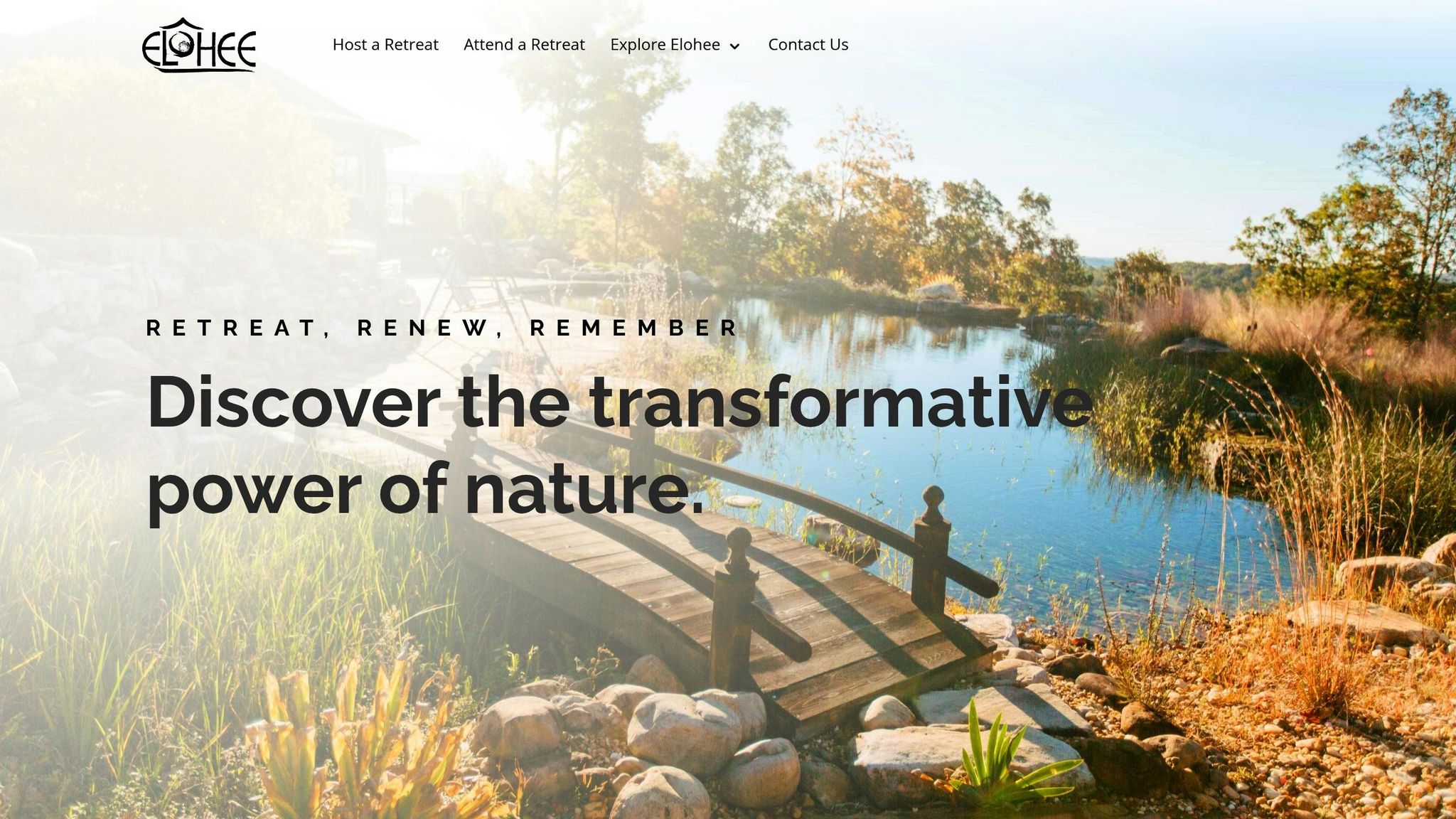
Research has shown that spending time in nature enhances mental and emotional resilience. Elohee Retreat Center, with its sprawling 220-acre property, is a perfect example of how natural environments can support these benefits. The center’s unique landscape provides the backdrop for a variety of activities and programs designed to nurture well-being.
Elohee’s Natural Features for Reflection
Elohee’s diverse ecosystems and thoughtfully designed spaces encourage reflection and connection. Studies suggest that environments with rich biodiversity, lush greenery, and tranquil surroundings promote a sense of calm and well-being. At Elohee, a 100-foot waterfall canyon offers a serene escape, while miles of forest trails provide opportunities for quiet walks or more active reflection. For those seeking relaxation, the on-site spa facilities are another option.
The center also includes spaces like Mandala Hall and the Forest Studio, which are intentionally designed to keep guests visually and physically connected to the natural world. These spaces not only reduce stress but also enhance emotional wellness by fostering a deeper connection with the surrounding environment.
Group Activities and Retreats at Elohee
Elohee’s programs combine mindfulness, movement, and community connection to help participants manage stress and build emotional strength. For example, "A Weekend in the Woods" incorporates mountain yoga to promote self-awareness, while the "Sacred Grit Men’s Retreat" focuses on mindful masculinity and fostering meaningful group connections. Other retreats, such as "Rest and Relaxation Weekend", "Breathe Retreat: Return to Yourself", and "Inviting Spaciousness: A Mindful Living Retreat", include practices like deep breathing and mindfulness exercises. These programs cater to a range of needs, from stress relief and emotional healing to personal and spiritual growth.
Research Alignment with Elohee’s Mission
Elohee’s mission aligns closely with research showing that connecting with nature can alleviate depression and anxiety. Engaging the senses in natural settings has been found to strengthen a feeling of connectedness. By hosting groups of up to 50 participants, Elohee also fosters the kind of social interactions that studies suggest are key to building community and social support in outdoor environments.
Conclusion: The Power of Group Reflection in Nature
Spending time in nature, especially as part of a group, offers profound benefits for psychological, emotional, and social health. Research consistently highlights how this practice does more than just alleviate stress – it creates lasting positive changes that carry over into everyday life.
Key Research Findings
The science behind nature-based group reflection is undeniable. Studies reveal that being in nature boosts happiness, encourages positive social interactions, and fosters a sense of purpose, all while reducing mental distress. For example, group walks in natural settings have been shown to significantly enhance mental well-being compared to similar activities in urban or indoor environments.
These benefits aren’t just short-term. Research also indicates that children who grow up in areas with more green spaces are less likely to develop psychiatric disorders later in life, showcasing nature’s role in promoting lifelong mental wellness.
"You can boost your mood just by walking in nature, even in urban nature. And the sense of connection you have with the natural world seems to contribute to happiness even when you’re not physically immersed in nature." – Dr. Lisa Nisbet, psychologist at Trent University
Natural environments also encourage self-reflection, spiritual growth, and a renewed sense of purpose. This makes them an ideal setting for retreats and therapeutic programs focused on personal transformation and healing.
These insights highlight the unmatched potential of nature to support holistic well-being.
Elohee as a Center for Growth
Elohee Retreat Center is a living example of these findings in action. Founded by Eve Cook during her own journey through cancer, Elohee was born from a deep belief in nature’s ability to heal and transform. Cook’s personal experience mirrors the research, as she explains:
"Being here on this land, surrounded by this beautiful energy and having something to live for by creating Elohee, is a huge blessing. I can’t not share it with people."
Situated on 220 acres of diverse landscapes – including a 100-foot waterfall canyon and miles of forest trails – Elohee hosts 80 to 90 retreats each year. These retreats offer the exact type of immersive experiences that studies have shown to alleviate stress and foster meaningful connections. The center’s design and mission align perfectly with the research, creating a space where nature and community come together to promote lasting change.
For over a decade, Elohee has exemplified how the healing power of nature can be harnessed to support personal growth and collective well-being. It stands as a powerful reminder of what’s possible when we combine scientific insights with intentional practices in the natural world.
FAQs
What makes nature-based group reflection unique compared to indoor sessions?
Nature-based group reflection brings something special to the table that indoor settings often miss. Time spent in natural surroundings has been linked to improved focus, better memory, and enhanced emotional health. The calming sights and sounds of nature, combined with its peaceful atmosphere, naturally encourage deeper self-awareness and help build stronger connections – with both others and the world around us.
Unlike the confines of indoor spaces, outdoor environments spark curiosity and ease stress, creating a sense of grounding that helps participants feel more open and present during reflection. These qualities make nature-based group reflection a truly enriching way to nurture personal growth and mental clarity.
What activities are typically part of a nature-based group reflection session at Elohee Retreat Center?
A group reflection session at Elohee Retreat Center invites participants to immerse themselves in nature while nurturing mindfulness. Activities often include leisurely, mindful walks along tranquil trails, breathing exercises to center the mind, and sensory engagement to fully take in the beauty of the surroundings – the rustle of leaves, the chirping of birds, or the texture of moss underfoot.
Participants are also encouraged to pause for quiet moments of observation, giving space for personal reflection and shared insights with the group. These practices create an atmosphere of calm, encourage self-awareness, and strengthen a sense of connection with both nature and each other.
What are the long-term mental health benefits of participating in group reflection in nature?
Spending time in nature while reflecting in a group setting can bring incredible benefits to mental health and emotional well-being. This practice helps ease feelings of stress, anxiety, and depression, while encouraging calmness, happiness, and creative thinking. It also plays a role in boosting self-esteem, building social connections, and nurturing emotional strength over time.
When done regularly, these group reflections deepen our connection to the natural world, which is known to help reduce stress and improve overall mental health. By blending the comfort of community with the rejuvenating effects of nature, this activity provides a space for meaningful emotional growth and lasting well-being.
Recent Comments