
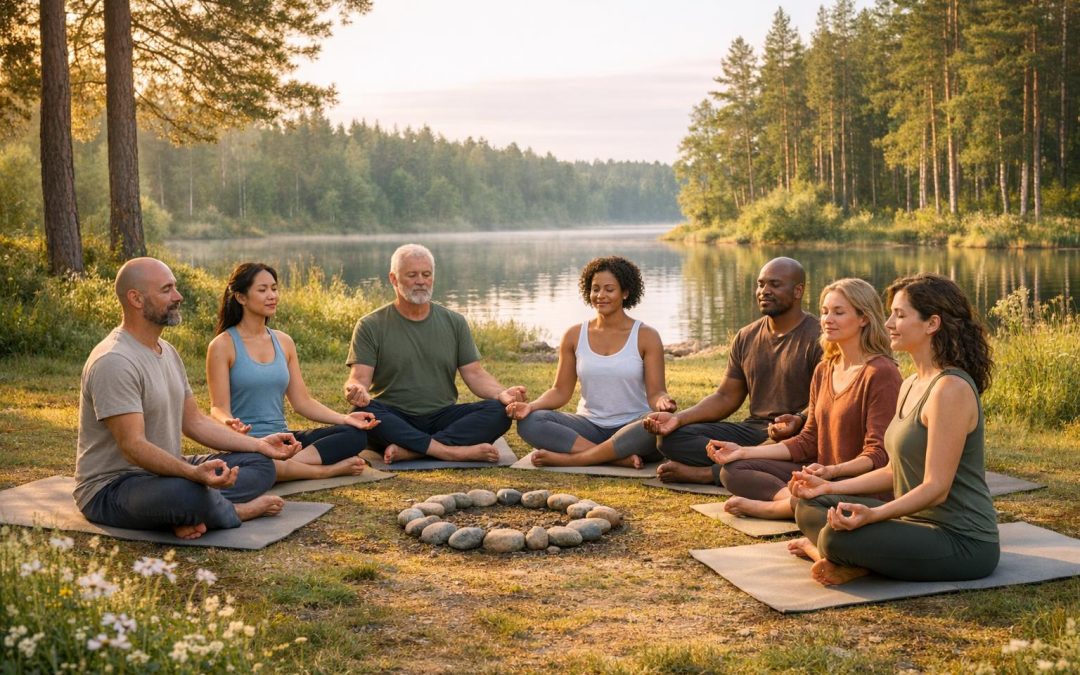
Group meditation in nature combines mindfulness with the calming power of outdoor environments. It reduces stress, improves mood, and fosters a sense of connection. Here’s why it works:
- Nature’s Impact: Spending time outdoors lowers cortisol (stress hormone), reduces blood pressure, and boosts immune health through exposure to phytoncides (tree-released compounds).
- Group Energy: Meditating with others builds emotional connection, trust, and a shared sense of humanity.
- Healing Effects: Participants often experience better sleep, reduced anxiety, and improved focus after meditating in natural settings.
To organize an outdoor meditation session:
- Choose a Quiet Location: Parks, beaches, or forest areas with minimal distractions work best.
- Prepare Supplies: Provide cushions, mats, and weather-appropriate clothing.
- Structure the Session: Include grounding exercises, breathwork, and reflection time.
For a deeper experience, consider hosting retreats at venues like Elohee Retreat Center, which offers serene landscapes and tailored spaces for group meditation.
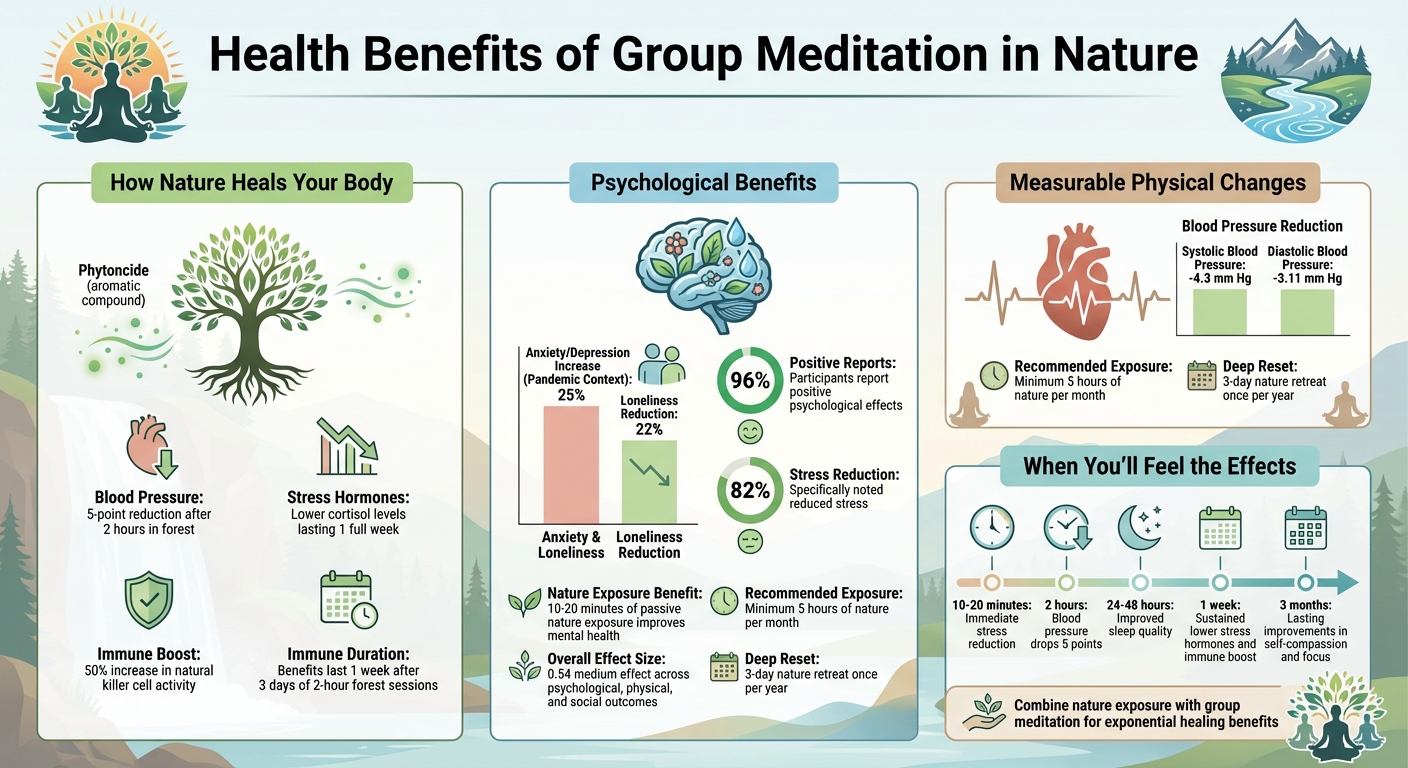
Health Benefits of Group Meditation in Nature: Key Statistics and Outcomes
Grounding Meditation to Connect with Nature’s Wisdom | Mindful Movement
sbb-itb-77c7b55
Why Group Meditation in Nature Supports Healing
Blending meditation with nature and group practice taps into multiple pathways for healing. Nature isn’t just a calming backdrop – it actively influences your body and mind, enhancing meditation’s effects. Let’s dive into how nature impacts our well-being and why meditating in a group strengthens connection.
How Nature Affects the Body and Mind
Spending time in nature does things for your body that indoor environments simply can’t match. For instance, a two-hour session in a forest can reduce blood pressure by 5 points and keep stress hormones lower for an entire week.
One reason for this is phytoncides – aromatic compounds released by trees. When you breathe these in during outdoor meditation, they not only smell good but also help reduce stress and improve sleep. A three-day stretch of spending two hours daily in the forest can even boost immune health markers for a full week.
Nature also works wonders for your mind. Researchers describe this as "soft fascination", where natural environments are engaging but don’t demand constant focus, unlike urban settings. This allows the brain’s executive functions to recharge. As Rachel Kaplan from the University of Michigan puts it, natural settings are "enticing but not demanding". The sights, sounds, and textures of the outdoors gently engage your senses, helping to restore mental energy without causing fatigue.
To enjoy these benefits, aim for at least five hours of nature exposure each month. For a deeper reset, consider a three-day nature retreat once a year.
How Shared Meditation Builds Connection
While nature supports physical and mental health, meditating with others in these settings adds a unique layer of emotional and social healing. Group meditation outdoors creates a sense of shared experience that goes beyond what you might feel meditating alone. Participants in group retreats often describe feeling deeply connected, as if they’re "on the same wavelength" with others. This fosters trust and acceptance. Researchers call this sense of unity "common humanity" – the realization that you’re not alone in your struggles.
James, a retreat participant, described it beautifully:
You felt a community. Even though you did not see or speak to them, there was still this sense of community, because you felt you were doing this together, and you were not alone, and it was okay to feel the feelings that you had.
The data supports these experiences. Mindfulness practices in natural settings show a medium effect size of 0.54 across psychological, physical, and social outcomes. Even immune function improves – natural killer cell activity can increase by up to 50% after meditating in a forest.
Meditating in nature also encourages prosocial behaviors. Spending time outdoors has been shown to boost empathy, cooperation, and generosity toward both friends and strangers. Much of this stems from the feeling of "awe" that comes from being surrounded by vast natural beauty. Dr. Leif Hass explains that awe reduces self-focus, making people more generous and cooperative. Experiencing this as a group fosters collective resilience, shifting individuals from feelings of despair to a shared sense of possibility. This underscores the transformative power of well-designed outdoor group meditation sessions.
How to Plan a Group Meditation Session Outdoors
Hosting an outdoor group meditation can be a deeply rewarding experience, but it requires careful planning. The key is to focus on three main aspects: choosing the right location, preparing your group and supplies, and structuring the session. By handling these details, you allow participants to immerse themselves in the practice without being distracted by logistical concerns.
Selecting the Right Location
Finding the perfect spot means balancing peace and accessibility. Look for areas where your group can meditate undisturbed – like a quiet park corner, a secluded backyard, or a serene beach. A flat, stable surface is essential to help participants maintain good posture without constant adjustments. Think wooden decks, smooth stones, or other level spaces.
To elevate the experience, consider locations with natural focal points. Reflection ponds, waterfalls, or even a gentle stream can enhance the calming atmosphere. For instance, the Elohee Retreat Center in Sautee Nacoochee, Georgia, provides breathtaking options like Bald Mountain, a 100-foot waterfall canyon, and a tranquil reflection pond, all paired with practical amenities like gated parking and car-free zones.
Privacy and weather protection are other important factors. Natural barriers such as trees or hedges can create a sense of seclusion, and portable screens can help if the space feels too exposed. For minor background noise, soothing elements like wind chimes or rain chains can help create a more meditative ambiance.
Once your location is set, focus on preparing your group and gathering the necessary supplies.
Preparing Your Group and Supplies
Clear communication is crucial. If you’re new to hosting, start small – limit the group size and keep the session brief (5–10 minutes) to build confidence and familiarity . Professionals can manage larger groups of 10–50 participants, but it’s best to grow gradually.
Comfort plays a big role in maintaining focus. Make sure everyone has access to meditation cushions, yoga mats, or blankets. Encourage participants to dress appropriately for the weather – light, breathable clothing for warm days or layers for cooler temperatures. If the session is in a sunny area, sunscreen is a must. Comfortable shoes are also important, especially if the location requires a short hike.
A timer is indispensable for keeping the session on track, and if you’re using guided audio, keep the volume low enough to blend with the natural surroundings. As the Calm Editorial Team notes:
Natural environments help reset our attention systems. Away from screens and urban noise, the brain can relax and replenish its capacity to focus.
With the group prepared, you can now focus on crafting a meaningful and connected meditation experience.
Structuring Your Meditation Session
A well-structured session combines different practices to create a rich, healing experience. Start with grounding exercises near a natural feature like a pond or waterfall to help participants settle in. Follow this with focused activities such as breathwork or sound therapy using Tibetan bowls. Wrap up with a reflection circle, where participants can share their thoughts, reinforcing the sense of community that makes group meditation so impactful.
Let nature guide the session. For example, the sound of a waterfall can enhance sound meditation, while a still pond is perfect for moments of quiet reflection. If sitting still proves difficult for some, incorporate gentle stretches or mindful swaying to foster a deeper connection with the environment and the group.
Some venues, like Elohee’s Forest Studio or Mandala Hall, come equipped with all the essentials, including communal spaces like tea houses for post-meditation discussions. Yoga educator Kemiko Lawrence shared her thoughts on her group retreat experience:
It was truly a blessed and sacred time for all of us. Elohee definitely delivered on retreat, renew and remember.
Hosting Group Meditation at Elohee Retreat Center
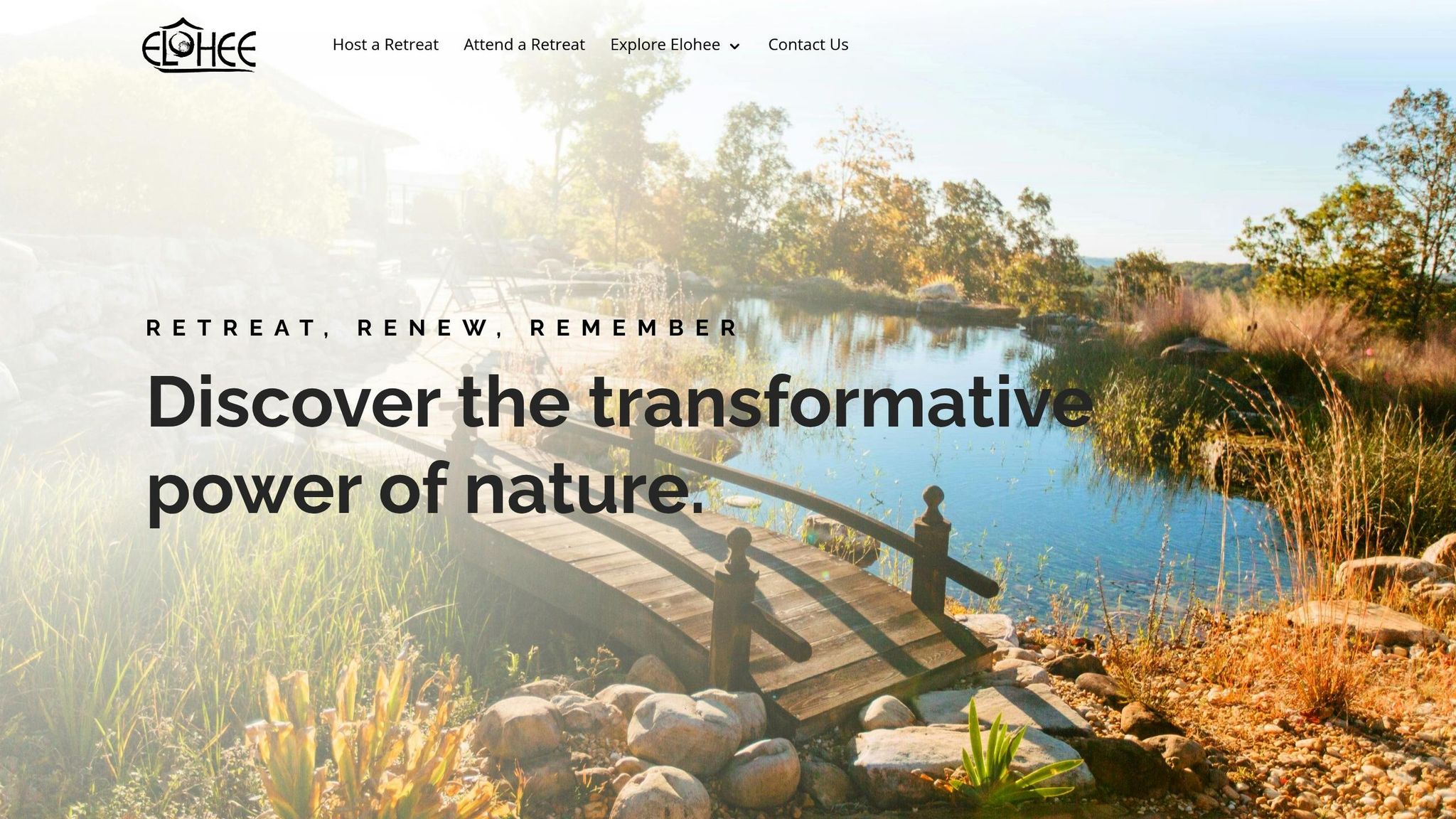
What Elohee Retreat Center Offers
Nestled in Sautee Nacoochee, Georgia, the Elohee Retreat Center stretches across 220 acres of diverse landscapes, including miles of trails and a stunning 100-foot waterfall canyon. These natural elements provide a serene backdrop for meditation, creating what researchers call "Being Away" – a mental and physical distance that promotes restoration.
Unlike many retreat venues, Elohee features two thoughtfully designed spaces: Mandala Hall and Forest Studio. These areas are crafted to harmonize group dynamics while maintaining a deep connection to the outdoors. With their peaceful atmosphere and comfortable setups, they help participants – especially beginners – minimize distractions and fully engage with the meditative experience. Both spaces also encourage post-meditation reflection, offering opportunities for participants to share insights and deepen their practice.
The retreat’s waterfall canyon is a standout feature. The sound of flowing water naturally aligns with brain rhythms, helping to slow down racing thoughts and calm the mind. Additionally, the negative ions generated by the waterfall are known to boost alertness and provide therapeutic effects. Groups can incorporate walking meditation here, using the sound of the cascading water as an auditory anchor to ground their focus.
These elements combine to create an environment primed for deep healing, making Elohee an exceptional choice for group meditation retreats.
Why Elohee Works Well for Healing Retreats
Elohee’s natural setting is ideal for fostering what meditation teachers call "soft fascination" – a state where the effortless beauty of nature captures attention, allowing the mind to unwind from stress. This is especially important in today’s world, where anxiety and depression have surged by 25% during the pandemic. Remarkably, even 10 to 20 minutes of passive exposure to nature can significantly improve mental health.
Buddhist scholar and meditation teacher Willa Blythe Baker captures this connection beautifully:
Nature, like a meditation practice, can act as a canvas that reflects the vastness of our inner world, a space where thoughts are like passing clouds in an expansive sky.
When groups meditate together in a natural setting like Elohee, the shared energy often amplifies the experience, leading to deeper insights and emotional connections compared to solo practice. Research supports this, showing that group meditation can reduce feelings of loneliness by 22% and even lower blood pressure by 4.3 mm Hg systolic and 3.11 mm Hg diastolic.
Elohee’s unique combination of natural beauty and purpose-built spaces not only supports individual healing but also strengthens the collective energy that makes group meditation so powerful.
Evaluating the Results of Group Meditation in Nature
Measuring Emotional and Physical Changes
Tracking the effects of group meditation in nature helps participants see the progress they’ve made, both mentally and physically. One straightforward way to do this is by using pre- and post-session surveys. Ask participants to rate their anxiety, stress, and focus levels on a scale from 1 to 10 before and after the session. This approach provides immediate, measurable data to compare across sessions, giving a clear picture of mental shifts.
For a more in-depth evaluation, you might consider the Five Facet Mindfulness Questionnaire (FFMQ). This tool was used in a March 2023 study by Dorthe Djernis and Jesper Dahlgaard from the University of Copenhagen. Their five-day nature-based mindfulness program involved university students dealing with high stress (PSS ≥ 16). The results revealed lasting improvements in self-compassion, focus, and awareness, with benefits persisting even three months after the program ended.
Physical changes are equally telling. Keep an eye on markers like blood pressure, heart rate, and muscular tension. Participants can also perform a post-meditation body scan to notice areas where tension has eased. Additionally, encourage them to monitor their sleep quality for the next 24 to 48 hours. Studies suggest that meditating in nature often leads to better sleep patterns.
Shifts in brain chemicals like dopamine, oxytocin, and endorphins can also be observed through self-reported feelings of reward, bonding, and pain relief. Many participants describe feeling recharged, energized, or even blissful – effects that go beyond simple relaxation and are unique to nature-based meditation.
These measurable results lay the groundwork for understanding the deeper, more personal aspects of healing.
Collecting Participant Reflections
Quantitative data is essential, but personal reflections add depth and context to the results. Gathering participant feedback immediately after the session ensures that insights are fresh and unfiltered. As Heartfulness Guide Daaji explains:
Égrégore is not just an idea; its effects can be experienced… when a large number of people who share the same thought come together to meditate, the effect is not just additive; it becomes exponential.
This collective energy can fade quickly as people return to daily life, so it’s important to capture reflections before the meditative state dissipates.
Use tools like written comment cards or short digital surveys to collect feedback on stress reduction, emotional changes, and feelings of connection. For example, in a small study of nature-based mindfulness walks, 96% of participants reported positive psychological effects, with 82% specifically noting reduced stress. Pay close attention to comments about interconnectedness. Many participants describe feeling part of a larger "web of life" or experiencing a profound sense of unity.
For ongoing programs, provide participants with logbooks to document their experiences. These journals serve as valuable tools for follow-up discussions and help track long-term benefits over weeks or months. A participant named Laura from a nature-based mindfulness study summed up her experience beautifully:
Nature doesn’t need to control either, it is just there, with conditions as they are.
These reflections often reveal subtle, personal insights that standardized surveys might miss, offering a richer understanding of both individual and shared healing experiences.
Conclusion
Group meditation in nature combines physical, mental, and spiritual healing into a practice that feels both grounding and uplifting. Research shows that just 10 minutes in a natural environment can lower stress hormones, and when you add the collective energy of group meditation, these effects become even more pronounced. It’s a powerful way to harness the calming influence of nature while deepening mindfulness through shared intention.
Meta-analyses highlight the medium effect (0.54) of nature-based mindfulness practices on key aspects of well-being. Participants often report lasting benefits, including improved blood pressure, better mood, greater emotional resilience, and sharper cognitive abilities. These findings point to the incredible potential of practicing group meditation in natural settings to revitalize both mind and body.
To make the most of this practice, consider a space designed for healing and reflection. The Elohee Retreat Center in North Georgia’s Blue Ridge Mountains offers an ideal setting. With its diverse landscapes and thoughtfully created meditation spaces, it provides a perfect backdrop for group mindfulness sessions.
The combination of nature’s calming presence and the shared focus of group meditation fosters a deep sense of connection and renewal. Meditation teacher Willa Blythe Baker beautifully captures this synergy:
Nature, like a meditation practice, can act as a canvas that reflects the vastness of our inner world, a space where thoughts are like passing clouds in an expansive sky.
Start small – gather a few friends and pick a natural spot that speaks to you. This accessible path to healing through group meditation in nature offers benefits that ripple far beyond what you might imagine.
FAQs
How is meditating in nature different from indoors?
Meditating outside allows your senses to come alive, creating a stronger bond with the world around you. The fresh air, rustling leaves, or the warmth of the sun can make relaxation and mindfulness feel more natural. Spending time in nature also encourages you to slow down and truly immerse yourself in the moment, making meditation even more soothing and restorative.
What if I’m uncomfortable meditating in a group?
If the idea of meditating in a group feels a bit daunting, starting with solo practices in nature might be a better fit. Simple activities like a walking meditation, focusing on your breath, or just sitting quietly outside can help you ease into the practice at your own speed. Places like the Elohee Retreat Center offer peaceful natural spots where you can meditate privately and comfortably. Meditation is deeply personal, so start where you feel most comfortable and consider joining group sessions when you’re ready.
How do I handle weather and bugs during an outdoor session?
When setting up, pick a spot that offers some protection – like a shaded area or a place naturally shielded from wind and rain. Dressing appropriately can make a big difference too. Long sleeves and pants not only keep you comfortable but also help protect against bugs and weather. To further keep insects at bay, consider using repellents or natural alternatives. If possible, plan your activities for early mornings or late evenings when bugs tend to be less of a nuisance.
Recent Comments