

Retreats offer more than a break from daily life – they’re backed by science as a way to improve mental and physical health. Research shows that spending time in nature can reduce stress, lower blood pressure, and improve mood. Wellness retreats combine mindfulness, meditation, and nature-based activities to create a setting for emotional healing and clarity.
Key findings:
- Health Benefits: Lower cortisol, reduced anxiety, and improved cardiovascular health.
- Mental Well-Being: Nature exposure linked to fewer depression symptoms and better focus.
- Popularity: U.S. wellness tourism hit $255 billion in 2022, with demand rising 30% from 2021–2022.
- Short-Term Gains: 20 minutes in nature can lower stress hormones; 3-day retreats reduce anxiety and inflammation.
Retreats like Elohee in Georgia highlight these benefits by integrating mindfulness practices with natural settings, offering tools for long-term well-being.
I Did An 8 Day Meditation Retreat To Rewire My Brain For Joy – Here Are My Biggest Takeaways
Research on Nature-Based Retreats
Spending time in nature isn’t just a pleasant escape; it’s a proven way to improve both mental and physical health. Studies consistently reveal that being surrounded by nature triggers changes in the body that support healing and overall well-being.
Research-Backed Health Benefits
One standout study published in the Journal of Alternative and Complementary Medicine followed participants during a 7-day retreat. The results were striking: participants shed an average of 3.5 pounds, trimmed 1.1 inches off their waistlines, and saw significant drops in blood pressure – systolic pressure decreased by 16.1 mmHg and diastolic by 9.3 mmHg. These findings highlight how even short retreats can lead to measurable cardiovascular benefits.
But you don’t need a week-long retreat to see results. Research published in Frontiers in Psychology found that spending just 20 minutes in nature can lower stress hormone levels. This is a powerful reminder that even brief moments outdoors can have a meaningful impact on your stress response.
A broader meta-analysis supports these findings, showing that exposure to green spaces leads to improvements in various health markers. Participants experienced a 0.05-point reduction in salivary cortisol levels, a 2.57-beat-per-minute drop in heart rate, and a 1.97 mmHg decrease in diastolic blood pressure. Additionally, enhanced heart rate variability – a sign of better cardiovascular health and stress management – was observed.
"It’s well-known that getting outdoors in nature can be good for people’s health and well-being, but until now we’ve not been able to say how much is enough. Two hours a week is hopefully a realistic target for many people, especially given that it can be spread over an entire week to get the benefit." – Mathew White, European Centre for Environment & Human Health at the University of Exeter
The mental health benefits go even further. Time in nature has been shown to increase endorphin and dopamine levels, which are essential for happiness and well-being. Regular access to green spaces is linked to lower risks of depression and improved focus and attention.
Interestingly, people who feel a deeper connection to nature report greater eudaimonic well-being – a sense of fulfillment and purpose that goes beyond fleeting happiness. This suggests that nature-based retreats can provide not just temporary relief but also a foundation for long-term life satisfaction.
These findings paint a clear picture: nature has the potential to improve health on multiple levels, offering benefits that extend to people of all backgrounds and lifestyles.
Benefits Across Different Groups
The positive effects of nature aren’t limited to one group or age range – they apply across the board. For example, a large study in Denmark found that children growing up in areas with more green space had a lower risk of developing psychiatric disorders later in life, including depression, mood disorders, and even schizophrenia. On the other hand, children with limited green space exposure faced a 55% higher risk of mental health challenges. This highlights the lasting impact of nature exposure during formative years.
Adults, too, see consistent benefits. Data from the meta-analysis shows that access to green spaces reduces the risk of type II diabetes by 28%, all-cause mortality by 31%, and cardiovascular mortality by 16%. These numbers represent significant improvements in health outcomes for thousands of people.
The global mental health crisis underscores the importance of these findings. Depression affects over 264 million people worldwide, while anxiety disorders impact 3.6% of the global population. Alarmingly, anxiety cases have surged by 55% from 1990 to 2019, now affecting 301 million individuals globally.
During the COVID-19 pandemic, the value of nature became even clearer. In the UK, 45% of people reported that visiting green spaces helped them manage pandemic-related stress. This real-world evidence shows that nature can be a powerful tool for resilience, even during crises.
"You can boost your mood just by walking in nature, even in urban nature. And the sense of connection you have with the natural world seems to contribute to happiness even when you’re not physically immersed in nature." – Lisa Nisbet, PhD, Psychologist at Trent University
Nature-based therapies are emerging as a promising way to address mental health challenges like stress, depression, and anxiety. What’s particularly encouraging is that these benefits aren’t limited to pristine wilderness – urban green spaces can also provide meaningful improvements in mental health and overall well-being.
How Retreats Create Inner Peace
Retreats help cultivate inner peace by initiating psychological and biological shifts that restore mental clarity and emotional balance.
Effects of Natural Settings
Spending time in nature brings profound changes to both mind and body, creating a foundation for inner peace. According to Attention Restoration Theory (ART), being in natural environments encourages effortless, involuntary attention, giving your brain a chance to recharge without the strain of constant focus. On the other hand, urban settings demand heightened attention to filter out distractions, which can be mentally exhausting.
Stress Reduction Theory (SRT) further explains that nature activates the parasympathetic nervous system, which governs the "rest and digest" response. This reduces stress and lowers autonomic arousal, helping the body and mind relax. Not all natural settings have the same impact, though. Research suggests that awe-inspiring landscapes provide more pronounced emotional and restorative benefits compared to more ordinary natural environments. Beyond stress relief, being in nature has also been linked to better attention, improved mood, reduced risk of mental health issues, and even greater empathy and cooperation.
"Stress reduction and attention restoration are related."
– Lisa Nisbet, PhD, Psychologist at Trent University
When mindfulness practices are layered onto these natural benefits, the potential for achieving inner peace becomes even greater.
Mindfulness and Meditation in Nature
Mindfulness practices in natural settings can significantly boost well-being. Programs like Mindfulness-Based Stress Reduction (MBSR) allow participants to deepen their meditation and breathing techniques without the usual distractions of daily life.
For example, a Nature Mindfulness Retreat held in the Blue Ridge Mountains in May 2024 combined therapeutic yoga, guided meditation, nature-based mindfulness exercises, and psychoeducational sessions. Participants engaged in activities like sensory-focused nature connections, reflective journaling, and evidence-backed meditation techniques, gaining tools to nurture inner peace and emotional balance.
Scientific studies back these methods, showing that mindfulness can ease symptoms of anxiety, depression, and PTSD while building emotional resilience. The combination of nature’s calming influence with structured mindfulness practices creates an ideal setting for emotional healing and mental clarity.
Structured Environment and Activities
The environment and structure of a retreat are key to fostering inner peace. Retreats offer a safe, distraction-free space where participants can focus entirely on emotional healing and self-discovery. Without the interruptions of daily life – like smartphones or work – attendees can fully immerse themselves in the process.
Guided activities, such as reflective exercises and therapeutic sessions, help participants tackle emotional challenges with the support of trained facilitators. Group therapy, for example, encourages social connection and emotional regulation, while individual sessions provide personalized guidance. These structured settings are designed to promote a sense of calm and long-term tranquility.
Daily practices like yoga, meditation, and nature walks create a soothing rhythm that supports relaxation and introspection. Personalized care plans ensure that each participant receives tailored support, and the strong relationships built with facilitators often contribute to lasting success.
"Emotional healing is a journey toward achieving emotional wellness and mental clarity."
– Ross Hackerson, An Affair Of The Heart
Retreats often integrate a variety of therapeutic approaches, from cognitive-behavioral techniques to holistic practices. Participants may also explore relaxation methods like aromatherapy and massages, which they can continue using after the retreat. This multi-faceted approach ensures that the peace and balance achieved during the retreat can be carried forward into everyday life.
sbb-itb-77c7b55
Retreat Tools and Techniques You Can Use
The mindfulness practices taught at retreats can seamlessly be woven into your daily life. These tools, inspired by evidence-based retreat methods, help maintain a sense of calm and balance beyond the retreat setting.
Guided Meditation and Breathing Methods
Combining mindfulness with nature can bring a profound sense of calm. Nature-based mindfulness practices encourage acceptance, nonjudgment, and relaxation, blending traditional techniques with the soothing presence of the natural world.
Try starting with "Breathing with Nature." Sit comfortably near a tree, plant, or even a houseplant if you’re indoors. Focus on your breath: inhale to a count of four and exhale to a count of four, continuing this rhythm for 10–20 minutes. This simple practice helps center your mind and body.
Other techniques include Fire Gazing, where you focus on the gentle flicker of a candle or flame for three minutes, and Mindful Listening with Plants, which involves observing a plant’s details while practicing slow, steady breathing. Herbalist Robin Rose Bennet explains, “all plants are consciousness altering,” underscoring their calming influence.
Forest Bathing and Mindful Walking
Engaging your body in mindful movement outdoors can deepen your connection to nature and yourself.
Forest bathing, also known as Shinrin-yoku in Japan, involves immersing yourself in nature by engaging all your senses. Unlike a brisk hike, this practice encourages you to slow down and savor your surroundings. Studies show that forest bathing can reduce stress hormones and even boost immunity.
To begin, silence your phone and walk slowly, focusing on one sense at a time. Find a peaceful spot that captures your attention – a park or garden works perfectly. Pay attention to the feel of the ground beneath your feet, the sound of rustling leaves, and the scents of the plants around you.
"In every walk with Nature one receives far more than he seeks." – John Muir
If walking isn’t an option, simply sitting quietly in a natural setting and focusing on your senses can be just as effective. For those without outdoor access, similar mindfulness exercises can be done indoors with the help of a plant.
Creative and Reflection Activities
Creativity can be a powerful companion to mindfulness, offering new ways to explore your inner world.
Journaling is a versatile tool for self-reflection. Use prompts to explore your thoughts, untangle emotions, and gain clarity about your experiences.
For a hands-on approach, try Nature Mandala Creation. Gather natural materials like leaves, stones, and twigs to craft a mandala. Focus on the process rather than the outcome, allowing your intuition to guide you.
Another soothing practice is the Mindful Water Cleanse. Visit a body of water and engage your senses – listen to its sounds, feel its temperature, and notice its texture. Imagine any negativity washing away with the water. If natural water isn’t accessible, a bowl of water at home can serve as a substitute.
Visualization Practices are another way to find calm. Picture your favorite natural setting in vivid detail, engaging all your senses. As you take deep breaths, let the imagery bring a sense of peace and relaxation.
These practices not only nurture a connection to nature but also promote inner calm, focus, and happiness. Research shows they can reduce stress, anxiety, and depression while enhancing resilience and emotional balance. Making these techniques part of your routine helps sustain the sense of peace retreats aim to cultivate.
Case Study: Elohee Retreat Center’s Wellness Methods
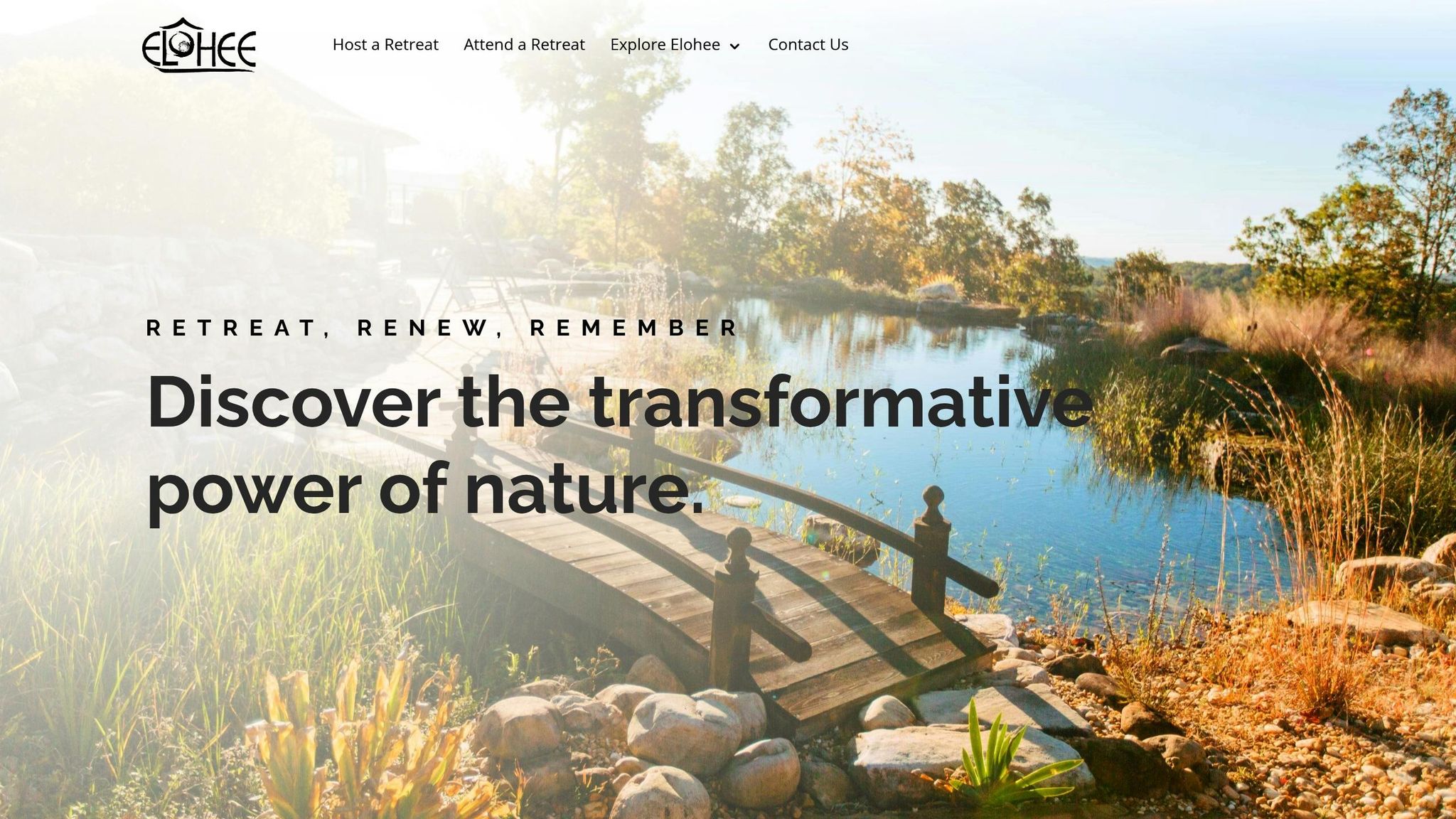
Elohee Retreat Center in North Georgia showcases how research-backed wellness practices can be seamlessly integrated into a serene, natural environment. By combining evidence-based techniques with a thoughtfully designed setting, the center creates a space where visitors can nurture their mental health and find inner peace.
Elohee’s Natural Setting
Tucked away in the Blue Ridge Mountains, Elohee spans 220 acres of breathtaking landscapes that include native woodlands, winding trails, and a 100-foot waterfall canyon. These natural features create a variety of ecosystems that promote well-being [41, 16].
Located within reach of Atlanta and Greenville, Elohee offers an escape into green spaces – a proven method for improving mental health. The property includes distinctive areas such as Landsong, Bald Mountain Center, and Thanksgiving House, alongside accommodations for up to 50 guests, meeting spaces, and a spa. Every aspect of the center is designed to help visitors unplug from the stresses of daily life.
"Our relationship with nature – how much we notice, think about and appreciate our natural surroundings – is critical in supporting good mental health and preventing distress."
– Mental Health Foundation
Wellness Practices at Elohee
Elohee provides a variety of wellness programs, including group mindfulness-based stress reduction (MBSR) sessions and daily mindfulness exercises. Studies analyzing over 200 cases have shown that mindfulness-based therapy is highly effective in reducing stress, anxiety, and depression.
Forest bathing is another key activity, taking full advantage of Elohee’s wooded trails and diverse ecosystems. Mr. Daniel McNickle, an Advanced Placement Psychology teacher at the Bronx High School of Science, highlights its benefits:
"Forest bathing, a simple method of being calm and quiet amongst the trees, is associated with a number of markers of well-being. Many research studies have proven that nature stimulates a pleasure point in the brain."
Elohee’s mindfulness programs provide relief from anxiety and depression, often achieving results comparable to antidepressant treatments – but without the side effects. Participants can engage in focused-attention meditation, which involves concentrating on specific stimuli like the sound of water or their breath, as well as open-monitoring meditation, which encourages awareness of the surrounding environment.
Retreat Activity Comparison
Elohee’s diverse activities are grounded in scientific research, offering measurable benefits for mental and emotional health. Here’s how specific retreat practices align with proven outcomes:
| Activity Type | Primary Benefits | Research Evidence | Duration Impact |
|---|---|---|---|
| Forest Bathing | Reduces stress hormones, stimulates pleasure points | Physiological improvements shown in studies | Optimal at 2+ hours weekly |
| Group Meditation | Lowers anxiety (ES 0.38), improves depression (ES 0.30) | Supported by findings from 200+ studies | Most effective over 8 weeks |
| Nature Walking | Enhances attention span, reduces mental distress | Residents near green spaces report lower distress | Best with daily practice |
| Waterfall Meditation | Boosts focus, induces "soft fascination" states | Natural settings encourage creative thinking | Brief exposures beneficial |
| Mindful Breathing | Reduces pain (ES 0.33), manages stress | Evidence supports stress relief | Effective with daily practice |
The 100-foot waterfall canyon at Elohee serves as a unique backdrop for meditation. The sound of cascading water acts as natural white noise, helping participants quiet racing thoughts and improve sleep patterns.
Research published in Environmental Science & Technology underscores the importance of time spent in nature, noting that two or more hours per week in natural settings significantly reduces anxiety and depression. Elohee’s programs are structured to maximize this exposure, ensuring guests have ample opportunities to experience the therapeutic effects of the natural world.
Conclusion: Research Supports Retreats for Inner Peace
Scientific studies show that retreats can significantly improve mental health and foster inner peace. A systematic review of 21 studies involving 2,912 participants revealed moderate reductions in depression, anxiety, and stress, with effect sizes ranging from 0.45 to 0.49 (Hedge’s g). These findings highlight the lasting mental and physical health benefits of retreat experiences.
"Meditation retreats are moderately to largely effective in reducing depression, anxiety, stress and in ameliorating the quality of life of participants." – PubMed
In a six-week longitudinal study, participants reported sustained improvements in wellness, sleep, mood, and stress levels following their retreat experience. Similarly, a 2021 Georgetown study demonstrated that a five-day trauma-informed retreat provided quicker and longer-lasting relief from depression, stress, and PTSD compared to traditional treatments. Another study involving 95 healthy participants found that just three days of a mindfulness retreat reduced stress and anxiety scores while also lowering inflammatory markers like IL-6 and IL-8.
"Retreat experiences can lead to substantial improvements in multiple dimensions of health and well-being that are maintained for 6 weeks." – PMC
Retreats that combine mindfulness practices with time spent in nature appear to amplify these benefits. For example, children with access to green spaces are 55% less likely to develop psychiatric disorders later in life. This growing body of evidence positions retreats as a promising non-pharmacological option for reducing stress and improving mental health.
For Americans looking for proven methods to achieve inner peace, retreats offer more than just a temporary escape – they provide a research-supported pathway to long-term emotional resilience. By blending mindfulness with the restorative power of nature, retreats offer a transformative approach to well-being that leaves lasting effects.
FAQs
How do retreats support lasting mental health and emotional well-being?
Retreats offer lasting mental health benefits by equipping participants with habits like mindfulness and stress management that continue to support them long after the experience. They provide a unique environment for emotional healing, self-reflection, and personal growth, often leading to greater resilience and a deeper sense of inner calm.
Studies suggest that retreats can strengthen emotional connections, boost self-awareness, and improve relationships – key factors in fostering long-term mental and emotional well-being. Research also highlights how these experiences can enhance overall quality of life and promote emotional balance, with effects that endure well beyond the retreat itself.
What are the most effective retreat activities for relieving stress and anxiety?
Retreats provide a range of activities aimed at easing stress and anxiety. Some of the most impactful options include guided meditation, mindfulness exercises, and yoga. These practices are known to promote relaxation and improve mental clarity. Simply spending time in nature – whether it’s strolling through a forest or soaking in peaceful scenery – can also work wonders for calming the mind.
Additional practices like deep breathing techniques, progressive muscle relaxation, and gentle movements such as tai chi can further enhance relaxation. These activities not only help the body unwind but also support emotional balance, making them excellent tools for finding inner peace.
Can you experience the benefits of nature-based retreats while living in a city with limited green spaces?
Even in the heart of a bustling city, surrounded by concrete and skyscrapers, you can still tap into the calming effects of nature. Urban parks, community gardens, green corridors, and even small patches of trees offer a chance to escape the daily grind and recharge.
Studies show that spending time in these green spaces – no matter how small – can help lower stress levels, improve mental clarity, and boost your overall mood. Whether it’s taking a leisurely stroll through a park, meditating under the shade of a tree, or simply enjoying a quiet moment in a garden, these interactions with nature can make a real difference in your mental and emotional well-being.
Recent Comments