
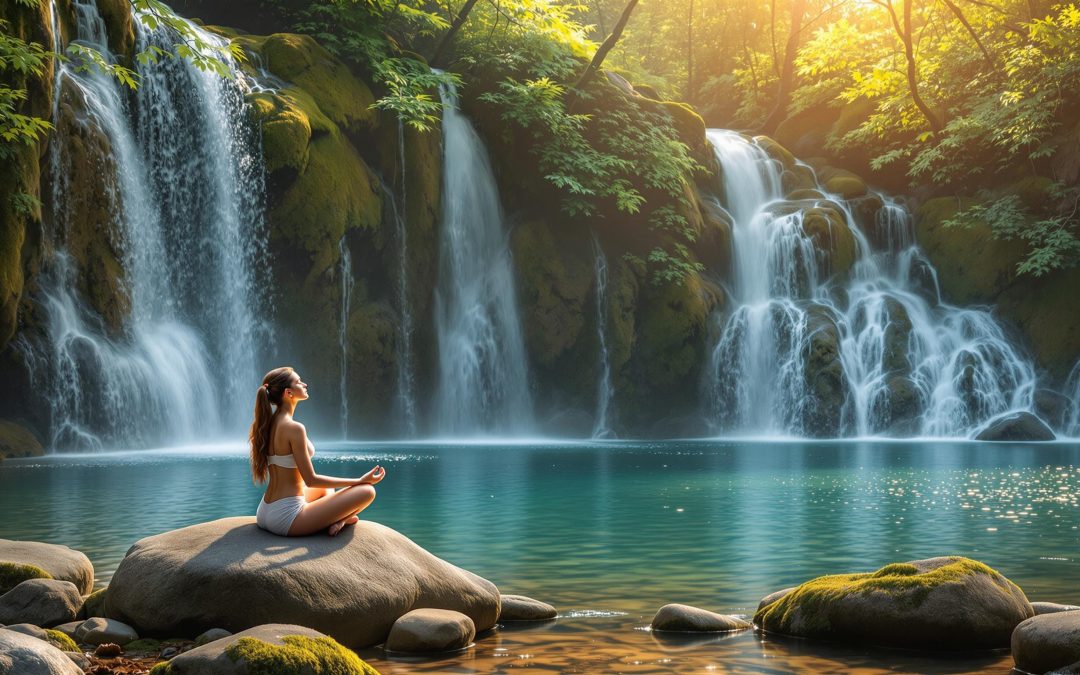
Waterfall meditation offers a simple way to relax, focus, and rejuvenate your mind and body. Here are the six key benefits:
- Lower Stress Levels: Negative ions near waterfalls help reduce stress hormones like cortisol and promote relaxation.
- Sharper Mental Focus: The sound and energy of flowing water improve concentration and mental clarity.
- Better Mood Management: High levels of negative ions boost serotonin, helping to reduce anxiety and improve emotional balance.
- Natural Inspiration: The sights, sounds, and energy of waterfalls stimulate creativity and fresh thinking.
- Mind-Body Renewal: The calming environment supports healing, reduces tension, and aligns your body’s rhythms.
- Natural Sleep Support: The soothing sound of waterfalls acts as white noise, promoting deeper and more restful sleep.
Whether you’re a beginner or experienced in meditation, practicing near a waterfall can enhance your mindfulness and overall well-being. For those without access to a natural waterfall, recordings of waterfall sounds can provide similar benefits.
10 Minute Guided Meditation for Healing | The Healing Waterfall
1. Lower Stress Levels
Meditating near waterfalls offers a calming atmosphere and natural sounds that help ease stress. The area around waterfalls is rich in negatively charged ions, including Lenard’s ions, which are known to boost serotonin levels, support the immune system, and regulate the autonomic nervous system.
When practicing meditation in these settings, you’ll often experience physical changes like a slower heart rate, reduced skin conductance, and calmer breathing. These are clear signs that your body is entering a deeply relaxed state.
Research also shows that the sound of water alone can lower cortisol levels, even before facing stressful situations. This makes meditating near waterfalls an excellent option for managing ongoing stress. Keep in mind, individual experiences may differ – adjust your approach if it feels uncomfortable. These physical effects can also help you achieve a more focused meditative state.
2. Sharper Mental Focus
The environment around waterfalls provides a natural setting that can improve mental clarity and concentration during meditation. As water flows over rocks, it generates friction, electric charges, and vibrations. At the same time, the mist from the falls increases negative ion levels. Combined with the steady sound and rich sensory experience, these elements help sharpen focus.
Research indicates that spending time in waterfall environments can boost focus and lower perceived stress. Even light physical activity, like hiking to the meditation spot, can enhance these mental benefits.
"As the water tumbles down the rocks it creates turbulence which actually purifies the water…the water crashing over rocks also becomes more energized." – Lucky Sheep
For the best experience, sit close enough to feel the mist but far enough to remain comfortable while meditating. This balance between the waterfall’s energy and the peaceful surroundings creates an ideal space for focused meditation.
Check out the next section, "How to Start Waterfall Meditation", for practical tips on getting started.
3. Better Mood Management
Meditating near a waterfall can help regulate your mood, and research backs this up. The environment around waterfalls creates a calming space for meditation while triggering natural processes that support emotional balance.
A major factor is the high concentration of negatively charged ions, also known as Lenard’s ions, found near waterfalls. Regular fresh air contains about 2,000 to 3,000 negative ions per cubic centimeter, but waterfalls can produce tens of thousands. This dramatic difference may positively influence emotional well-being.
A 2021 study published in Frontiers in Psychology revealed that participants who spent time near waterfalls reported lower levels of anxiety and depression. The researchers noted that the natural surroundings contributed to biological responses that improved immune function and helped balance the nervous system.
Waterfall meditation supports mood improvement in several ways:
- Boosts Serotonin: Negative ions near waterfalls are thought to increase serotonin levels, which play a key role in mood regulation.
- Reduces Stress: Studies show that spending time near waterfalls can significantly decrease stress. One study even reported a marked reduction in stress markers (p = 0.000, R² = 0.615) for those exposed to a waterfall environment compared to control groups.
- Visual Appeal: The sight of cascading water naturally lifts the spirit and connects us to the beauty of nature.
Combining these effects with regular meditation amplifies the benefits. The constant flow of water can act as a natural point of focus, helping you stay centered during mindfulness exercises. For the best experience, pick a comfortable spot where you can enjoy the waterfall without feeling overwhelmed by its power. Next, let’s look at how waterfalls inspire creativity and fresh ideas.
sbb-itb-77c7b55
4. Natural Inspiration
Waterfall meditation provides an environment where cascading water encourages renewal and fresh ideas. Studies suggest that the interaction between falling water and rocks generates electrical charges through friction, creating conditions that can boost creative thinking.
The area around a waterfall stimulates multiple senses, enriching the meditative experience:
- Natural Energy: As water flows over rocks, it captures subtle environmental cues and energizes the surroundings with each cascade.
These processes not only refresh the air but also inspire creativity during meditation.
At Elohee Retreat Center, the 100-foot waterfall canyon serves as a striking visual focus, inviting meditators to connect with nature on a deeper level.
To fully benefit, find a spot where you can safely feel the mist from the falls. The combination of negative ions in the air and the soothing sounds of flowing water creates a rich, multi-sensory experience.
The secret to drawing inspiration from waterfall meditation lies in engaging all your senses. Instead of merely sitting by the falls, seasoned practitioners suggest:
- Deeply breathing in the mist
- Watching the water’s endless movement
- Feeling the subtle vibrations beneath you
- Listening to the varied tones of falling water
"As the water tumbles down the rocks it creates turbulence which actually purifies the water…the water crashing over rocks also becomes more energized." – Lucky Sheep
This immersive approach can lead to what some describe as a "reset of consciousness", clearing entrenched thought patterns and opening the mind to fresh perspectives. The continuous energy of the waterfall serves as a reminder that inspiration is always flowing, offering a foundation for deeper meditation.
5. Mind-Body Renewal
Waterfall meditation offers a powerful way to refresh both your body and mind by activating natural healing processes.
Spending time near waterfalls can enhance healing by boosting antioxidants like glutathione peroxidase and superoxide dismutase while also reducing inflammation.
The electrical charges produced by falling water might help align your body’s internal rhythms, aiding cellular repair and releasing built-up tension.
The combination of negative ions, water’s natural frequencies, and focused meditation works together to cleanse not just your body, but also your mind and emotions, promoting ongoing renewal and balance.
At Elohee, many participants achieve an Alpha brainwave state, which is associated with a steady heart rate and deep relaxation. This state encourages cellular repair and can create lasting benefits over time.
Up next, discover how waterfall meditation can naturally improve your sleep.
6. Natural Sleep Support
Waterfall meditation can help improve sleep by combining soothing sounds with calming physiological effects. The low-frequency sounds (20–200Hz) created by falling water help create an environment ideal for rest and relaxation.
Dr. Lidiya Angelova explains how this works:
"The sound of a waterfall or ocean waves is calming and repetitive, which creates the perfect environment for deep sleep."
The continuous flow of water acts as natural white noise, which helps block out disruptive sounds that could interfere with your sleep. This steady background noise not only reduces interruptions but also signals your body that it’s time to rest.
For those who don’t have access to a natural waterfall, recordings of waterfall sounds can provide similar benefits. These recordings help create a connection to nature and encourage the relaxation needed for better sleep.
The calming sounds of a waterfall offer a natural way to improve sleep without relying on artificial aids. By working with your body’s natural relaxation responses, this method supports deeper rest and recovery.
Check out the next section for tips on how to include waterfall meditation in your daily routine.
How to Start Waterfall Meditation
Kick off your waterfall meditation journey by preparing yourself and choosing the right environment for a calming experience.
Finding the Right Spot
The location you choose plays a big role in how effective your meditation will be. For instance, places like Elohee Retreat Center in North Georgia, with its stunning 100-foot waterfall canyon, offer an ideal setting. When deciding on your spot, keep these points in mind:
- Distance and Comfort: Start at a distance that feels comfortable. The sound and energy of moving water can affect individuals differently, so begin farther away and gradually move closer as you adjust.
- Safety First: Look for a dry and stable area to sit. Rocks near waterfalls can be slippery, so prioritize safety. Pick a spot with a clear view of the waterfall while minimizing distractions from other visitors.
Once you’ve found your spot, focus on getting both your body and mind ready.
Getting Ready
1. Physical Preparation
Make sure you have everything you need to stay comfortable:
- A waterproof pad to sit on
- Comfortable clothing
- A light blanket or shawl for warmth
- Water to stay hydrated
2. Mental Preparation
Set the tone for your meditation by:
- Defining your intention for the session
- Being mindful of your sensitivity to the energy of moving water
- Silencing or removing any distracting devices
- Taking a few deep breaths to center yourself
3. Starting Your Practice
The sound and vibrations of flowing water can help release tension and negative emotions through its calming frequencies. Begin with short sessions of about 10-15 minutes to see how your body responds.
If you’re new to this practice, joining a guided session or retreat can be helpful. Experienced instructors can teach you techniques and guide you through the unique aspects of waterfall meditation. Adjust your practice based on how you feel, and let the experience unfold naturally.
Next Steps
Ready to dive into waterfall meditation? Here’s how you can start incorporating it into your daily life and plan for a more immersive experience.
Turn your daily shower or bath into a mindful water meditation. Dim the lights, eliminate distractions, and focus on the sound and feel of the water. Let its rhythm guide your thoughts and help you relax.
Plan a Waterfall Visit
If you’re looking for a more immersive experience, consider visiting one of these breathtaking waterfalls in the U.S.:
- Multnomah Falls, Oregon: A stunning 611-foot cascade with easy-to-access viewing areas.
- Fall Creek Falls, Tennessee: At 256 feet, it’s known as the tallest waterfall in the eastern U.S.
- Akaka Falls, Hawaii: A 442-foot beauty surrounded by lush tropical scenery.
Tips for Starting Your Practice
When you’re ready to practice at a waterfall, keep these guidelines in mind:
- Begin with 10-15 minute sessions to ease into the experience.
- Pick a safe, stable spot with a clear view of the waterfall.
- Bring a waterproof pad or blanket for comfort.
- Pay attention to how your body reacts to the water’s energy and adjust as needed.
For a guided experience, check out Elohee Retreat Center, home to a 100-foot waterfall canyon. They offer expert-led sessions designed to deepen your connection to nature and enhance your practice.
Recent Comments