
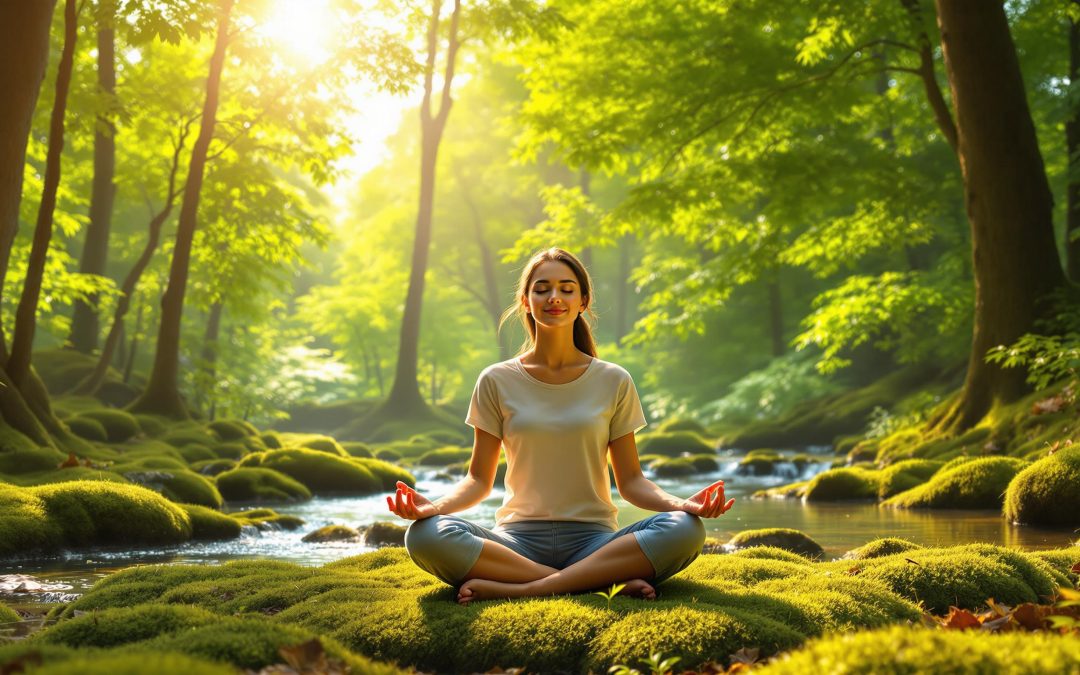
Meditating in nature can help you feel calmer, more focused, and connected to the world around you. Here are five beginner-friendly meditation practices you can try outdoors:
- Walking Meditation: Slowly walk on a straight path, focusing on each step and the sensations around you.
- Listening to Nature: Sit quietly and tune into natural sounds like birds, wind, or flowing water.
- Tree Meditation: Pick a tree, observe its details, and connect with it through touch, sight, and breath.
- Breathing with Nature: Sync your breath with natural rhythms like ocean waves or rustling leaves.
- Nature Appreciation: Engage all your senses to fully experience and appreciate your surroundings.
Quick Overview:
- Walking Meditation: Combines mindfulness with movement.
- Listening to Nature: Focuses on sound for relaxation.
- Tree Meditation: Promotes grounding by connecting with a tree.
- Breathing with Nature: Aligns your breath with nature’s rhythms.
- Nature Appreciation: Uses all senses to deepen your connection to the outdoors.
Each practice is simple, requires no special equipment, and can be done in your backyard, a park, or any natural setting. Start small with just 5–10 minutes a day and see how it enhances your mindfulness journey.
1. Walking Meditation Outdoors
How to Practice Walking Meditation
Walking meditation blends mindful awareness with gentle movement, making it a great option for those who find sitting still challenging. To start, pick a straight, level path about 10–20 yards long with a smooth surface. This setup helps you focus on the practice without distractions.
Here’s a simple guide to get started:
- Path Length: 10–20 yards
- Session Duration: 15–30 minutes
- Hands: Held together in front
- Gaze: Focused about 2 yards ahead
- Walking Pace: Slow and intentional
Once you’ve set up, the next step is learning how to keep your attention steady with each movement.
Keeping Focus While Walking
Pay close attention to every step you take. Meditation teacher John Cianciosi describes the experience beautifully:
"Experiencing the simplicity and peace of being with one step at a time – with nothing else to do and nowhere to go – can be truly liberating. Each mindful step takes you toward the infinite wonder of the world of reality."
Notice how your feet touch the ground, the rhythm of your steps, and the sounds or scents around you. If your mind starts to wander, gently bring it back to the present moment. Elaine Smookler, from The Centre for Mindfulness Studies in Toronto, offers this perspective:
"We’re so used to walking in what we call automatic pilot, basically being tuned out and just letting the body go. You may notice that this feels a little strange to be so intentional about walking. That’s okay."
Take occasional pauses to feel the connection between your feet and the earth, grounding yourself in the present.
Why It Works for Newcomers
Walking meditation is especially helpful for beginners because it keeps both your body and mind engaged. Unlike seated meditation, walking prevents restlessness or drowsiness by involving movement and keeping your eyes open. The outdoor environment naturally stimulates your senses, making it easier to stay present and build mindfulness skills.
2. Listening to Nature
Finding Focus in Natural Sounds
Natural soundscapes can anchor your meditation practice. Choose a safe, comfortable outdoor spot where you can sit or lie down. These sounds naturally help you stay present in the moment.
"Mindfulness is essentially a deep-listening practice that cultivates a profound quality of receptivity. Listening is a beautiful doorway to the present moment, a tuning into what’s here."
Places like forest edges, gardens, streams, or open meadows work well for this practice. These settings make it easier to immerse yourself in mindfulness as you explore the art of deep listening.
Once you’ve found your spot, let the sounds of nature guide you through the steps of focused listening.
How to Listen Deeply
Here’s a simple way to start deep listening meditation:
- Sit comfortably and either close your eyes or lower your gaze.
- Tune in to all the sounds around you, near and far.
- Observe these sounds without labeling or judging them.
- If your mind drifts, gently refocus on the natural soundscape.
Benefits of Sound-Based Practice
Meditating with natural sounds has been shown to offer real advantages. A 2017 study published in Scientific Reports revealed that listening to sounds like bird songs or flowing water improved both attention and working memory.
Here are some key benefits:
| Benefit | Description |
|---|---|
| Stress Reduction | Lowers cortisol levels when exposed to calming natural sounds |
| Cognitive Support | Enhances attention span and working memory |
| Better Sleep | Encourages healthier sleep patterns |
| Mental Refreshment | Reduces mental fatigue and boosts focus |
| Emotional Balance | Triggers endorphins, which naturally improve mood |
"Nature sounds are therefore an important component of nature-based mindfulness, a practice that has gained significant popularity in recent years for its ability to reduce stress, improve concentration, and enhance emotional regulation."
Even short sessions with natural soundscapes can make a difference, especially for beginners. Over time, regular practice can lead to better mental clarity and a greater sense of emotional well-being.
3. Tree Meditation Guide
Step-by-Step Tree Visualization
Tree meditation helps you connect with nature while promoting mindfulness. Follow these steps to get started:
-
Finding Your Tree
Take a mindful walk in a natural setting. Let your intuition guide you to a tree that feels inviting or meaningful to you. -
Initial Connection
Stand a short distance away and take in the tree’s features – its height, shape, and how it fits into its surroundings. Take a moment to set your intention quietly. -
Deepening the Practice
Move closer and find a comfortable spot, either standing or sitting at the tree’s base. Close your eyes or keep a soft gaze, focusing on your breath. Notice the rhythm you share with the tree. Use your senses to strengthen this connection.
Using Your Senses
Engaging your senses can enhance your experience with the tree. Here’s how:
| Sense | Practice |
|---|---|
| Sight | Observe the details of the bark, the shape of the leaves, and sunlight patterns. |
| Touch | Feel the bark’s texture, the smoothness or roughness of leaves, and the roots. |
| Sound | Listen to the rustling leaves and the sound of branches swaying in the breeze. |
| Smell | Take in the earthy scents of bark, soil, and nearby plants. |
| Intuition | Sense the tree’s energy, stability, and presence. |
"As soon as you see something, you already start to intellectualize it. As soon as you intellectualize something, it is no longer what you saw." – Shunryu Suzuki
Connecting with Your Environment
After engaging your senses, expand your awareness to the environment around the tree:
- Lean against the trunk and feel its solid, grounding presence.
- Observe the small ecosystem that thrives around the tree.
- Watch how animals, insects, and other plants interact with it.
- Reflect on the tree’s role in the larger natural world.
"Tree meditation…is a way to strengthen our connection with nature and deepen our understanding of difficult emotions like grief." – Lin Wang Gordon
Incorporating this practice regularly can enhance your connection with nature and bring clarity to your emotions.
sbb-itb-77c7b55
4. Breathing with Nature
Outdoor Breathing Practice Steps
Find a peaceful outdoor spot where you feel at ease – perhaps a quiet garden, a clearing in the woods, or a secluded beach. This will be your meditation space.
-
Setup and Positioning
Sit comfortably in a stable position with your spine straight but relaxed. Rest your hands on your knees or lap. Set a timer for 10–15 minutes if you’re just starting out. -
Initial Grounding
Feel the ground beneath you and notice the sensation of the air on your skin. Let the natural sounds around you – like rustling leaves or distant birdsong – become part of your awareness. -
Beginning the Practice
Take three deep breaths to settle in, then let your breathing return to its natural rhythm. Keep your eyes softly open, gazing downward.
Once you’ve settled, try syncing your breath with the rhythms of the natural world around you.
Matching Nature’s Rhythm
Mindful breathing, like walking meditation or attentive listening in nature, can bring a deeper sense of connection to the environment. Nature provides a variety of rhythms you can align your breath with:
| Natural Element | Breathing Pattern |
|---|---|
| Ocean Waves | Match your breath to the wave flow |
| Wind in Trees | Breathe in time with the breeze |
| Bird Calls | Let calls guide your breathing |
| Rustling Leaves | Sync your breath with their sound |
This practice helps you feel more in tune with the natural world, creating a calming and grounding experience.
Stress Reduction Effects
Breathing meditation in nature has been shown to support both mental and physical health. Studies suggest that this method can:
- Lower blood pressure and reduce cortisol levels
- Boost oxygen intake thanks to fresh air
- Sharpen focus and mental clarity
- Encourage deeper relaxation
"When you listen to falling rain, walk in a forest, turn your face to the sun, interact with the animal or plant kingdoms, you are connecting with the life-giving energy in the universe known as Nature." – John Stamoulos
This approach works well alongside other nature-based mindfulness techniques, helping you breathe in calmness and exhale tension.
15 Minute Nature Meditation For Beginners
5. Nature Appreciation Practice
Nature appreciation takes mindfulness to another level by engaging all your senses. While earlier techniques focus on movement or sound, this practice immerses you fully in the natural world.
Steps for Nature Appreciation
This method encourages a stronger connection with nature while promoting inner calm. Here’s how to get started:
-
Find Your Spot
Choose a quiet outdoor location – a garden, park, or forest clearing works well. Sit or stand in a relaxed position that helps you stay present and attentive. -
Initial Settling
Take slow, deep breaths to release tension. Feel the air as it flows in and out of your body. -
Open Awareness
Let your attention naturally shift between the sights, sounds, and sensations around you. Avoid forcing focus on one thing; instead, observe what naturally draws you in.
This approach differs from walking or breathing exercises by encouraging a complete sensory experience.
Engaging All Five Senses
Fully appreciating nature means involving all your senses. The table below suggests simple ways to connect with the environment through each sense:
| Sense | Practice | Natural Elements |
|---|---|---|
| Sight | Observe colors, patterns, movement | Leaves, clouds, water ripples |
| Sound | Listen to the natural sounds | Birds, wind, rustling trees |
| Touch | Feel textures | Bark, grass, stones |
| Smell | Notice scents in the air | Flowers, pine needles, earth |
| Taste | Savor subtle flavors | Fresh air, morning dew |
Spend 1–2 minutes focusing on each sense, then allow them to blend together for a more holistic experience.
Mental Health Benefits
This practice isn’t just about mindfulness – it can also improve mental well-being. Studies show that hospital patients with views of trees often feel more positive and recover faster. Here are some key benefits:
- Stress Relief: Natural sounds, like birdsong, can reduce anxiety and help you recover from stress more quickly.
- Mood Boost: The fragrances of blooming plants can enhance calmness and alertness.
- Stronger Connection: Regular practice sharpens mental clarity and fosters emotional stability.
"We need our Grand Mother, the Earth – her air to fill our lungs, her living things to feed us, her awe to keep our souls warm." – Georgina Miranda
Even dedicating just 10–15 minutes daily to this practice can lead to noticeable improvements in your mood and focus.
Conclusion: Getting Started
Nature meditation is straightforward and brings a sense of calm and connection with daily practice. Even a few minutes each day can help you feel more grounded.
Daily Practice Tips
Incorporating meditation into your routine can be simple with these ideas:
| Time | Practice | Location |
|---|---|---|
| Morning | Breathing with Nature | Balcony or garden |
| Lunch Break | Walking Meditation | Urban park or courtyard |
| Evening | Sound Meditation | Backyard or neighborhood trail |
Dress appropriately for the weather and pack any essentials you might need. Short sessions – just 5 to 10 minutes – can still have a meaningful impact on your mindfulness journey.
Next Steps for Beginners
Once you’ve built a habit, try these approaches to expand your practice:
- Try New Settings: Experiment with meditating in different natural spaces. Urban parks, gardens, or even quiet trails can all offer unique experiences. Find what feels most calming to you.
-
Stay Focused on the Present: The Calm Editorial Team highlights the simplicity of outdoor meditation:
"The beauty of outdoor meditation lies in its simplicity and accessibility. It’s easy to practice, and anyone can do it! The fresh air, natural light, and sounds of the outdoors can make your meditation feel more energized and grounded and can deepen your connection with the world around you."
Let your practice flow naturally with the environment around you, adapting to the weather and seasons.
"Meditating outdoors is a great way to invigorate your practice and keep it going strong." – Mindworks Team
Every session is an opportunity to connect with nature in a fresh way, shaped by the unique elements of the day.
Recent Comments