Forest rituals connect us to ancestral wisdom by blending nature, spirituality, and cultural practices. Here’s how they work:
- Sacred Spaces: Forests are revered across cultures as bridges between the physical and spiritual worlds, with trees, stones, and water symbolizing ancestral energy.
- Healing Practices: Rituals like forest bathing (Shinrin-Yoku) reduce stress, improve mental health, and foster a connection to nature.
- Seasonal Ceremonies: Autumn and winter rituals, such as gratitude offerings and candlelit vigils, align with nature’s cycles to honor ancestors.
- Sustainable Practices: Indigenous methods, like cultural burning and sustainable forestry, preserve biodiversity while maintaining spiritual traditions.
🌲 Breath of the Ancients | Tai Chi Forest Ritual 🌙🪈
How Forests Connect Us to Ancestral Practices
Forests around the world have long been regarded as sacred spaces where the natural and spiritual realms intertwine. Across diverse traditions, they stand as powerful symbols of enduring spiritual connections and ancestral wisdom.
Forests as Sacred Spaces Across Cultures
In Celtic traditions, sacred groves known as "nemeton" were central to druidic rituals. These groves were believed to be places where the boundary between worlds was the thinnest.
"The Druids – for so their magicians are called – held nothing more sacred than the mistletoe and the tree that bears it, always supposing that tree to be the oak. But they choose groves of oaks for the sake of the tree alone, and they never perform any of their rites except in the presence of a branch of it."
– Pliny the Elder
This highlights the profound reverence for these natural sanctuaries as spaces of spiritual significance.
In North America, Indigenous cultures have upheld similar practices for generations. In 2005, the Southern Sierra Miwuk Nation and the Tuolumne Band of Me-Wuk collaborated with Yosemite National Park firefighters to conduct a prescribed burn in Yosemite Valley. This traditional practice, carried out after ceremonial preparations, helped manage invasive species while encouraging the growth of plants essential to their traditions. Frank Kanawha Lake, a Research Ecologist with the USDA Forest Service, describes this connection:
"Cultural burning links back to the tribal philosophy of fire as medicine. When you prescribe it, you’re getting the right dose to maintain the abundance of productivity of all ecosystem services to support the ecology in your culture."
– Frank Kanawha Lake
In Estonia, the Maausk movement continues the tradition of sacred forests, where villagers leave offerings for their ancestors, blending spiritual practices with ecological preservation. Similarly, Amazonian tribes hold ceremonies to connect with the forest for guidance and healing, reinforcing their deep ties to the natural world. The Menominee people of Wisconsin have practiced sustainable logging for over 150 years, guided by spiritual principles rooted in their creation stories. This approach not only protects animal habitats but also ensures economic stability.
Across these traditions, forests are more than just settings – they are living archives of ancestral knowledge, where natural elements like trees, stones, and water hold spiritual significance.
Natural Elements as Spiritual Symbols
Within these sacred spaces, elements of nature serve as profound symbols of ancestral energy and wisdom. Trees, for instance, represent nourishment, transformation, and fertility. In ancient Celtic traditions, certain trees were seen as direct links to ancestral power.
The reverence for trees was so strong that ancient Irish laws imposed severe penalties for harming them. For example, in 1099 C.E., the Cenél nEógain cut down the Ulaid’s sacred tree, the Craeb Telcha, as an act of conquest. In retaliation, the Ulaid destroyed the sacred trees of Telach Óc in 1111, underscoring how deeply these natural elements were tied to cultural identity and power.
Stones and water also hold spiritual value. Stones often mark sacred boundaries and serve as focal points in rituals, while water – through springs and streams – acts as a medium for spiritual communication. The discovery of nearly 200 wooden sculptures at Sequana’s sanctuary, named for the Celtic goddess of the Seine River, demonstrates how water features became central to ancestral offerings.
For many Indigenous cultures, trees are seen as ancestors themselves – guardians and keepers of collective knowledge. Forest ecologist Suzanne Simard explains this perspective:
"Our aboriginal people view themselves as one with nature. They don’t even have a word for ‘the environment,’ because they view trees and plants and animals, the natural world, as people equal to themselves."
– Suzanne Simard
This worldview helps explain why Indigenous peoples, who make up only four percent of the global population, are responsible for protecting 80% of the planet’s remaining biodiversity. Their practices seamlessly integrate conservation with spirituality, treating the forest as a community of living spirits.
Even today, the power of these natural symbols endures. In 1999, a "fairy bush" in Ireland was so revered that it led to the rerouting of a motorway, showing how ancient beliefs about sacred natural elements continue to shape modern decisions.
Setting Up Sacred Spaces in the Forest
Creating a sacred space in the forest calls for thoughtful preparation and a deep sense of respect for nature. Before stepping into this sacred work, take time to prepare your mind and body, gather the materials you’ll need, and set clear intentions. These steps ensure your ritual unfolds smoothly while honoring the traditions you’re embracing. Below, we’ll walk through practical steps to help you create a meaningful forest ritual space.
Making Ancestral Altars with Natural Materials
Crafting an ancestral altar using materials from the forest helps bridge the physical and spiritual worlds. By working with nature’s offerings, you create a connection to the earth while inviting the presence of ancestral spirits.
Begin by finding a stable surface, such as a flat stone or a fallen log, to act as the foundation for your altar. Gather natural items like stones, leaves, branches, or feathers that catch your eye and resonate with your intentions. You can also decorate your altar with gifts from the forest – fallen petals, pine needles, or pinecones – symbolizing your gratitude for nature’s abundance.
When collecting these items, approach the process with mindfulness. Quietly ask permission from the forest before taking anything. This could be as simple as pausing near an item, mentally requesting consent, and waiting for a sign – like the rustle of leaves or the call of a bird. This intentional practice fosters a sense of harmony and respect, deepening your spiritual connection.
Grounding and Cleansing Before Rituals
After setting up your altar, grounding and cleansing are essential steps to align both yourself and your space with the energy of the forest. Skipping these steps can leave energy stagnant, making it harder to connect with the wisdom of the earth.
To ground yourself, remove your shoes and stand barefoot on the forest floor. Feel the earth beneath you and imagine roots growing from the soles of your feet, anchoring you deep into the soil. Picture a tree rising from your body, blending your energy with the strength and stability of nature. This visualization helps you stay centered and protected during your ritual.
Cleansing comes next. If regulations allow, you can burn dried herbs like sage or cedar to clear unwanted energy. White sage, in particular, is often used for its purifying qualities. Wave the smoke gently around your body and altar, imagining stagnant energy dissolving into the air. If burning herbs isn’t an option, sound can also serve as a cleansing tool. A bell, drum, or even your voice can help mark the beginning of your sacred work.
"Grounding is about protection. It’s about staying present enough to guard our own house, and to ask our guides to join us in that." – Mary Ann DiMarco
Using Elohee’s Natural Features for Sacred Work
The natural wonders of the Elohee Retreat Center provide an inspiring backdrop for ancestral rituals. With its 100-foot waterfall canyon and miles of forest trails, the center offers a variety of settings to amplify the energy of your sacred work.
The forest trails, winding through diverse landscapes like dense woods and open meadows, offer quiet spots perfect for connecting with your ancestral roots. Each area carries its own unique energy, allowing you to choose a location that aligns with your intentions and the guidance you seek.
Water features, including streams and the magnificent waterfall, bring another layer of cleansing and renewal to your rituals. Flowing water is believed to wash away old patterns and emotions, making room for fresh energy. Placing your altar near these water sources can deepen their purifying effects, enhancing your connection to both nature and your ancestors.
Elohee’s commitment to ecological care ensures that the land remains vibrant and spiritually alive. This thoughtful stewardship creates a welcoming environment for ancestral spirits, enriching the meaning and effectiveness of your rituals.
Before beginning your work in these sacred spaces, take a moment to ask permission from the land’s guardian energies. Pause and listen for a sign – perhaps a shift in the breeze, a bird’s song, or a feeling of calm assurance. This practice helps you honor the land and its spiritual presence, ensuring your ritual is supported by the surrounding energies.
sbb-itb-77c7b55
Seasonal Forest Rituals for Ancestor Honoring
Nature’s rhythms have always guided human traditions, and our ancestors deeply understood this connection. By aligning your rituals with the changing seasons, you can strengthen your bond with those who came before you. Each season offers a unique energy, and the forest’s transformations provide a meaningful backdrop for ancestral practices.
Autumn and Winter Ancestor Ceremonies
Autumn is a particularly powerful time to connect with your ancestors. The Autumn Equinox, or Mabon, represents a balance between light and dark – a moment of harmony before the descent into winter. It’s a time to reflect on life’s cycles, celebrate the harvest, and honor the interconnectedness of nature and spirit. This equilibrium mirrors the space between the physical and spiritual realms, making it an ideal time for ancestral work.
One way to celebrate this season is through a Harvest Gratitude Ritual, where you gather seasonal produce like apples, pumpkins, and corn to create an altar. These items symbolize the abundance your ancestors helped cultivate. Express gratitude for their sacrifices and the foundation they built for your life today. This ritual serves as a bridge, connecting past and present through shared appreciation.
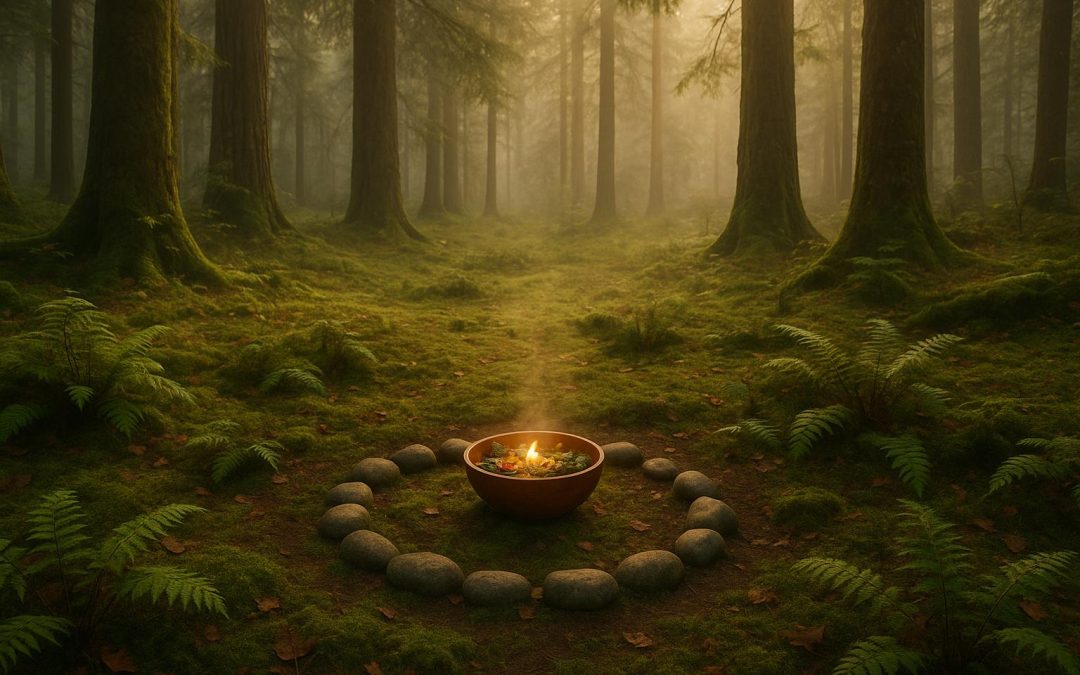
For a more introspective practice, try the Balance and Reflection Ritual. Use smooth stones to represent the equinox’s harmony. As you hold the stones, reflect on areas in your life that feel unbalanced. Call upon your ancestors for guidance, just as they sought balance in their own lives. Arrange the stones in a circle around your altar, creating a sacred space for your ancestral connection.
As the season deepens into November, the forest begins to rest, conserving its energy for winter. This quiet atmosphere is perfect for grounding and reflection. The Grounding Ritual involves standing barefoot on the forest floor, taking deep breaths, and releasing the stresses of the year. As you do, invite the strength and wisdom of your ancestors to fill you, grounding yourself in their enduring support.
Winter, with its long nights, offers a different kind of energy. Candlelit ceremonies take on special significance during this time. In Gaelic tradition, Samhain marked the thinning of the veil between worlds, when ancestral spirits were believed to return home. Offerings of food were left to honor and welcome them. You can embrace this tradition by holding candlelit vigils in the forest. The flickering flames can guide ancestral spirits and light your path forward.
Another meaningful winter practice is the Silent Supper ritual. Prepare traditional dishes such as stews, bread, and preserved fruits, and eat in contemplative silence. This creates a space to feel the presence of your ancestors in the stillness around you. Afterward, leave a portion of the meal at the base of an old tree as an offering, recognizing the continued guidance of your ancestral lineage.
Working with Elohee’s Seasonal Changes
Elohee’s landscapes offer a diverse and dynamic setting for seasonal rituals, allowing you to deepen your connection to your ancestors throughout the year.
In autumn, the old-growth forests at Elohee become particularly resonant for ancestral ceremonies. The towering trees, with their deep roots and centuries of life, hold the energy of countless generations. Performing rituals beneath these ancient trees can amplify your intentions, as their wisdom and presence enhance your connection to the past.
Water features like Elohee’s creek beds and the 100-foot waterfall add another layer of meaning to your rituals. The waterfall’s continuous flow serves as a reminder of the life force that connects you to your ancestors. Even in winter, when the surrounding landscape rests, the waterfall remains vibrant, creating a striking contrast between stillness and movement. This makes it an ideal spot for Winter Preparation Rituals, where you can set intentions for the months ahead while drawing strength from your ancestral roots.
Elohee’s forest trails, which wind through various elevations and ecosystems, offer unique opportunities for seasonal practices. Higher elevations reveal the early changes of autumn, while sheltered valleys retain summer’s warmth a bit longer. Whether you seek the stark introspection of bare winter branches or the transformative energy of autumn’s colors, Elohee’s diverse landscapes can align with your ritual’s purpose.
For extended winter ceremonies, spaces like the Forest Studio provide shelter from harsh weather while maintaining a connection to nature. These covered areas ensure that your ancestral work can continue uninterrupted, even in challenging conditions.
Elohee’s dedication to caring for the land ensures that its landscapes remain vibrant and spiritually alive throughout the year. This thoughtful stewardship creates a welcoming environment for ancestral spirits, enriching your rituals and deepening your connection to the wisdom of the past.
Methods for Connecting with Ancestral Wisdom
The forest offers a unique gateway to tap into the wisdom of those who came before us. By blending ancient traditions with contemporary practices, we can create meaningful connections between the past and present. Below, we explore how forest bathing, earth-conscious offerings, and group ceremonies serve as powerful ways to engage with ancestral wisdom.
Forest Bathing for Ancestral Connection
Forest bathing, or shinrin-yoku, is more than just a walk in the woods – it’s a way to immerse yourself in nature and connect deeply with ancestral energies. Originating in Japan in 1982 as a health practice, forest bathing also draws on ancient Shinto and Buddhist traditions that recognize the spiritual and healing power of the natural world.
When practiced with intention, forest bathing can help you access ancestral memories. Different forests carry their own histories and cultural imprints, and spending time in these spaces can foster a profound sense of connection to local heritage. To begin, walk slowly among the trees, breathe deeply, and allow yourself to enter a meditative state. The earthy scents and tranquil surroundings can evoke a sense of unity with nature’s life force. Studies show that even 20 minutes in nature can lower stress levels, with 120 minutes per week offering the best results for mental and physical well-being.
This mindful practice not only reduces stress but also strengthens your bond with the environment, creating a space to honor your ancestors while appreciating the interconnectedness of life.
Making Earth-Friendly Offerings
Offerings are a timeless way to honor ancestors and align with the cycles of nature. The most meaningful offerings often come from your own hands and heart, emphasizing intention over material value.
Growing or gathering items for your offerings deepens the ritual’s significance. Seeds, nuts, sunflowers, and amaranth are excellent choices, symbolizing growth and continuity across generations. You might also create a natural fire blend using dried cedar branches, juniper berries, rose hips, and pine needles.
Biodegradable offerings are another thoughtful way to give back to the earth. Items like milk, oats, honey, fruit, nuts, and grains can be buried to enrich the soil. If you use seeds, ensure they are native to your region to avoid harming the local ecosystem. Water offerings are also powerful – collect water from a river or sacred spring and pour it slowly at the base of an old tree while speaking your ancestors’ names. For written messages, consider biodegradable materials like cotton muslin or rice paper.
Lifestyle changes can also serve as offerings. Acts such as recycling, volunteering for conservation projects, or planting native trees are long-lasting ways to honor both your ancestors and the planet.
Group Ceremonies for Shared Healing
Group ceremonies bring people together to amplify the energy of ancestral connection. These gatherings, often referred to as ancestral healing circles, focus on connecting with ancestors, mending family wounds, and exploring intergenerational healing.
Spaces like the Mandala Hall and Forest Studio at Elohee Retreat Center provide ideal settings for these ceremonies, offering shelter while maintaining a deep connection to the surrounding forest. The natural acoustics of these spaces enhance practices like drumming and chanting, which help participants enter meditative states and connect with the spirit world.
One inspiring example of group healing is the National Healing Forests Initiative. Launched in 2015 by Patricia Stirbys and Peter Croal, this movement began with a healing walk in Ottawa and has since grown to include 26 Healing Forests across Canada by 2024. Patricia Stirbys explains:
"By establishing a Healing Forest, anyone can take that first step to bring people together, help them reflect on this country’s tragic past and connect with nature and each other."
Group ceremonies often include rituals, storytelling, and guided meditations to honor ancestral ties. Participants are encouraged to share family stories and reflections, creating opportunities for emotional release and healing. The forest setting itself enhances these experiences, helping participants feel grounded and connected to the land.
Through these shared practices, group ceremonies become a space for collective healing and deeper understanding, bridging the gap between past and present in a way that feels both personal and universal.
Conclusion: Honoring Ancestors Through Nature
Forest rituals provide a meaningful way to preserve ancestral wisdom while fostering personal growth. These traditions not only deepen our connection to nature but also highlight the critical role Indigenous communities play in safeguarding biodiversity. It’s remarkable to note that Indigenous peoples, who make up less than 5% of the world’s population, are responsible for protecting 80% of the planet’s biodiversity on their lands.
The lessons of ancestral knowledge extend far beyond rituals, offering guidance for everyday life. As Biraci Jr Yawanawá, Leader of the New Hope Village, so eloquently states:
"The breath that ‘man’ seeks today is in the ancestral knowledge of his own history, and in the reconnection with nature. The simple way of living today is a luxury that is available to everyone, and it’s the way the Yawanawa people have lived forever."
This reconnection feels urgent in the face of today’s environmental challenges. For example, Indigenous lands in Brazil account for 23% of the Amazon, yet they maintain a deforestation rate of just 1%. This stands as a powerful testament to how ancestral practices can contribute to a more sustainable future.
Forest rituals also address the sense of disconnection many feel in modern life. Benki Piyako, President of the Yorenka Tasorentsi Institute, reflects on this disconnection:
"Human disconnection was brought upon by the way we have been educated, resulting in these chaotic times."
By turning to nature and ancestral practices, people can begin to heal this divide and rediscover a more harmonious way of living.
Places like Elohee Retreat Center bring these ancestral lessons to life in modern settings. Spanning 220 acres of lush, sacred land, Elohee features natural wonders like a 100-foot waterfall canyon and serene forest trails – perfect for engaging in ancestral work. The center’s Mandala Hall and Forest Studio provide spaces for ceremonies while staying immersed in the natural world. Past retreats, such as the R.A.W. (Radically Awakened Woman) program, have incorporated practices like "The Great Mothers Star Constellation Ceremony" and "Ancestor Fire | The Sol Walk", helping participants connect with their lineage through earth-based healing. Similarly, their Introduction to Shamanism retreats have shown how forest environments can deepen ancestral bonds, teaching participants not only to honor their heritage but also to forge a stronger relationship with nature and its elements.
FAQs
How do forest rituals support biodiversity and a healthy ecosystem?
Forest rituals play a key role in preserving biodiversity and maintaining the balance of ecosystems. These traditions often center around sacred areas, which are treated as sanctuaries for wildlife and plants. By restricting activities like resource extraction and land development in these spaces, communities create safe havens where nature thrives. As a result, regions tied to such practices often enjoy richer biodiversity.
Many of these rituals are deeply rooted in traditional ecological knowledge – wisdom passed down through generations. This knowledge includes practices like conserving water, improving soil health, and safeguarding native species. By combining spiritual customs with environmental care, forest rituals honor ancestral traditions while actively contributing to the protection of ecosystems for the future.
How can I create a sacred space in the forest for ancestral rituals?
To create a sacred space in the forest for ancestral rituals, begin by selecting a quiet, undisturbed spot that resonates with you – somewhere that feels peaceful or significant. Look for natural elements like trees, rocks, or open areas that can act as focal points for your ritual. Prepare the space by gently clearing away debris and using tools like sage, incense, or other purifying items to cleanse the area symbolically.
Once the space feels ready, set your intentions. You can do this by arranging natural materials such as stones, flowers, or branches to form a circle or an altar. Include personal items that honor your ancestors – these could be family heirlooms, photographs, or objects that hold symbolic meaning. Before starting your ritual, take a moment to ground yourself. Sit quietly, breathe deeply, and allow yourself to connect with the surrounding nature.
For those seeking an inspiring setting to deepen their connection with nature and ancestral practices, the Elohee Retreat Center in North Georgia offers a tranquil environment. With its waterfalls, walking trails, and peaceful accommodations, it provides the perfect backdrop for reflection and spiritual connection.
How can I use forest rituals to connect with ancestral wisdom in my daily life?
Incorporating forest rituals into your daily routine can be a heartfelt way to honor your ancestors and tap into their wisdom. One simple practice is setting up an ancestral altar. Use items like family photos, cherished heirlooms, or natural elements from the forest – think leaves, stones, or pinecones. You might also add offerings your ancestors would have valued, such as favorite foods or small symbolic items.
Seasonal rituals are another way to strengthen this connection. During winter, for example, you could spend time in quiet reflection or meditate outdoors, focusing on your lineage and inviting their guidance into your life. These rituals not only help you feel rooted in your heritage but also deepen your connection to the natural world.
If you’re looking for a peaceful space to explore these practices, the Elohee Retreat Center in North Georgia might be the perfect spot. Spread across 220 acres of diverse landscapes, it features tranquil spaces, a stunning 100-foot waterfall canyon, and miles of trails – an ideal setting for reconnecting with nature and ancestral traditions.
Recent Comments