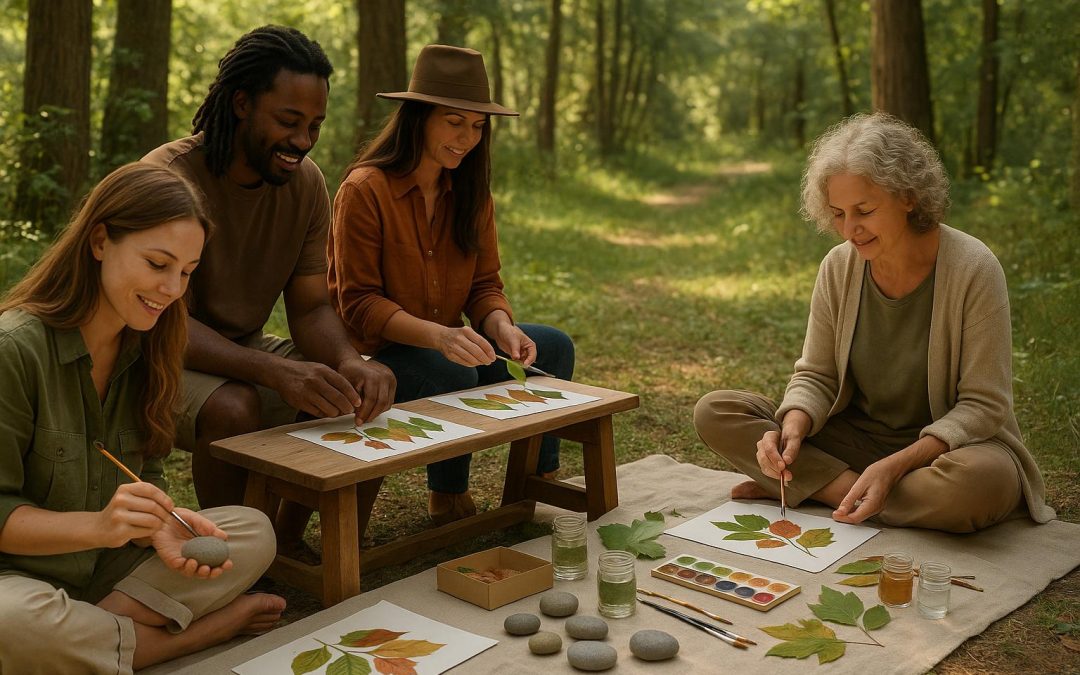
Eco-art combines creativity with nature, offering activities that promote relaxation, mindfulness, and a deeper connection to the environment. Here are five eco-art projects perfect for nature retreats, each designed to suit different skill levels and retreat durations:
- Leaf Printing Workshops: Create unique prints using leaves and natural fabrics. Beginner-friendly and adaptable for short or long sessions.
- Natural Dye Creation: Turn plants and kitchen scraps into vibrant, eco-friendly dyes. Suitable for all skill levels and retreat lengths.
- Rock Balancing and Land Art: Craft temporary sculptures with stones and branches. Minimal impact and ideal for both short and extended retreats.
- Botanical Mandalas: Arrange flowers, leaves, and seeds into symmetrical patterns. Easy for beginners and great for mindfulness.
- Eco-Sculpture Installations: Build large-scale art with recycled materials. Best for longer retreats and collaborative efforts.
These projects not only enhance creativity but also encourage sustainable practices and a stronger bond with nature.
Natural Leaf Imprint Note Card Eco Art Activity
Quick Comparison
| Project | Impact on Nature | Materials Needed | Skill Level | Retreat Duration |
|---|---|---|---|---|
| Leaf Printing Workshops | Low impact, uses natural materials | Leaves, fabric, mordants | Beginner-friendly | Short to long |
| Natural Dye Creation | Very low impact, uses plant waste | Plants, kitchen scraps, mordants | Beginner to intermediate | Medium to long |
| Rock Balancing and Land Art | Minimal impact, temporary creations | Stones, branches | All levels | Very flexible |
| Botanical Mandalas | Zero impact, uses fallen materials | Petals, leaves, seeds | Beginner-friendly | Short to medium |
| Eco-Sculpture Installations | Positive impact, repurposes waste | Recycled and natural materials | Intermediate to advanced | Long |
These activities are perfect for fostering creativity, mindfulness, and environmental awareness during retreats.
1. Leaf Printing Workshops
Leaf printing workshops offer a creative way to turn natural materials into art by transferring intricate patterns from leaves, flowers, and bark onto fabric or paper. This eco-printing technique uses the natural pigments in plants to produce organic designs that reflect the beauty of the environment.
The process involves placing fresh or dried botanicals between layers of fabric, then using heat, pressure, and mordants to transfer the colors. The result? A one-of-a-kind piece of art, as no two leaves are identical, and the natural dye process introduces stunning variations in color and texture. This makes it a perfect activity for retreats, blending creativity and mindfulness.
Material Availability
Leaf printing relies on sustainable materials like natural fabrics (silk, cotton, wool) and locally sourced plants. Basic tools include a dye pot, rolling pin or press, string or rubber bands, scissors, and protective gear like gloves and an apron.
For beginners, tannin-rich leaves – such as eucalyptus, oak, maple, birch, and rose – are ideal. These can be collected sustainably by gathering windfall leaves, accepting pruned plant offerings from neighbors, or carefully picking only what’s needed from nature.
To ensure materials are available year-round, plants can be preserved by drying them in books or newspapers or freezing them for later use. This approach reduces reliance on intensive farming while maintaining a steady supply for workshops across seasons.
Skill Level Required
Leaf printing workshops are beginner-friendly, with 92% of participants in botanical printing classes expressing high satisfaction. The process is straightforward, and with clear instructions, even first-timers can achieve beautiful results.
Artist Casey Gallagher Newman highlights the accessibility of this craft:
"All the steps are clearly laid out in this class so you will be set up to have success on your first try! This class is perfect for anyone who loves nature, natural dyes, or paper crafting. It includes a wealth of information, making this class suitable for beginners as well as those of you with some experience with botanical printing."
While the technique is simple, it requires patience, making it a calming and mindful activity – perfect for a retreat setting. Beginners can start with affordable materials like copy paper or card stock and use leaves and flowers that have already left natural impressions, as these often yield vibrant prints .
Suitability for Retreat Duration
Leaf printing workshops can be tailored to fit any retreat schedule, from short weekend sessions to week-long programs. Shorter sessions might focus on basic techniques with silk or wool fabrics, which easily absorb dyes and don’t always require mordants. Longer retreats can dive deeper, exploring advanced methods like layering colors, experimenting with hues, and creating intricate scenes with multiple prints.
This workshop format encourages hands-on creativity, making it an excellent choice for retreats. It accommodates various skill levels and timeframes, ensuring every participant can craft something meaningful. Whether it’s a simple print or a detailed masterpiece, these creations become lasting reminders of a deeper connection to nature.
2. Natural Dye Creation
Tap into the beauty of nature by creating dyes from sustainable, natural resources. This age-old craft uses plants, flowers, and even kitchen scraps to produce rich, vibrant colors while fostering a deeper connection with the environment. By extracting pigments from natural materials and setting them with mordants like salt or vinegar, you can create stunning, eco-friendly alternatives to synthetic dyes.
Unlike synthetic options, which produce uniform results, natural dyes offer unpredictable and one-of-a-kind tones, giving each creation its own personality. For example, Sarah Neylon, a Skillshare student, used onion skins to craft a gorgeous yellow dye for a tablecloth using the shibori dyeing technique.
Impact on Nature
Natural dyeing isn’t just creative – it’s also a lesson in sustainability. While the fashion industry generates massive carbon emissions and wastewater, natural dyes are biodegradable and non-toxic, making them a more environmentally friendly choice.
This practice also turns potential waste into something valuable. Ingredients like onion skins, avocado pits, and vegetable peels – items often discarded – can be used to make dyes. Many of these materials naturally contain tannins, which act as mordants, reducing the need for additional chemicals.
"Choosing natural dyes is an act of aligning personal values with environmental responsibility and appreciating the beauty of handcrafted, culturally rich traditions." – Sustainability Directory
Real-world examples highlight the positive impact of traditional dyeing. In Thailand, the "Indigo Grandmas" of Sakon Nakhon preserve their cultural heritage through indigo dyeing, providing ethical income for their community. Similarly, Tohsang Cotton Village in Khong Chiam uses natural dyes to create organic cotton textiles, supporting local livelihoods.
Material Availability
Places like the Elohee Retreat Center (https://elohee.org) emphasize creativity and ecological respect in their workshops. A wide variety of natural materials can be used to create an extensive color palette:
| Color | Natural Dye Sources |
|---|---|
| Red and pink | Beets, powdered beetroot, pomegranates, rose petals, avocado pits |
| Orange | Carrots, turmeric, butternut seeds or husks |
| Yellow | Marigolds, sunflower petals, paprika, celery leaves, onion skins |
| Green | Spinach, mint leaves, lilacs, artichokes |
| Indigo | Purple cabbage, blueberries, blackberries, woad, black beans |
At retreats like Elohee in North Georgia, participants can source materials from the surrounding flora or on-site kitchens. However, it’s crucial to collect responsibly – avoiding overharvesting or trespassing.
Water quality also plays a key role in dyeing outcomes. Soft water often produces the best results, but some materials, such as madder and logwood, may yield richer hues in hard water. Testing and adjusting water conditions can help achieve the desired results.
Skill Level Required
Natural dyeing is for everyone, regardless of experience. Workshops like Cape Fear Botanical Garden’s "Adult Workshop: Petals and Pigments – An Intro to Natural Dyeing" are specifically designed for beginners. Similarly, the Roundhouse Foundation and Peters Valley School of Craft offer workshops that cater to all skill levels, encouraging experimentation and learning.
The forgiving nature of the process makes it ideal for first-timers, while also providing room for experienced participants to refine their techniques.
Suitability for Retreat Duration
This activity fits perfectly into any retreat schedule. For weekend retreats, simple methods like preparing dye baths and treating fabrics with mordants can be completed in just a few hours. Longer retreats allow for more advanced techniques, such as experimenting with pH adjustments to alter colors, creating layered effects, or exploring different mordanting methods.
Extended programs also provide time for proper fabric preparation, like scouring materials to ensure even color absorption and better durability. The process itself encourages mindfulness and patience, offering participants a meditative experience that strengthens their bond with nature.
3. Rock Balancing and Land Art
Rock balancing is a meditative activity where participants use stones and branches found on-site to create temporary sculptures. It’s a blend of mindfulness and artistic expression, offering a unique way to connect with nature. However, even temporary art like this can have unintended consequences on local ecosystems if not approached thoughtfully.
Impact on Nature
Moving and stacking rocks may seem harmless, but it can disrupt habitats for small creatures like crabs, mollusks, insects, and even mosses that depend on these natural shelters for survival. Rearranging natural elements can also lead to erosion and destabilize fragile areas like shorelines or wilderness paths. In some cases, dismantled rock stacks in protected areas have caused noticeable environmental damage, highlighting how these actions can harm native habitats.
Beyond physical impacts, these structures can detract from the unspoiled beauty of wilderness areas. Experts argue that altering natural landscapes in this way goes against the principles of Leave No Trace and diminishes the authenticity of the outdoor experience.
Material Availability
Much like natural dye projects, rock balancing emphasizes using materials responsibly. For example, the Elohee Retreat Center in North Georgia spans 220 acres of diverse ecosystems, providing ample opportunities to gather materials in an eco-conscious way. Eco-friendly land art focuses on using materials in their natural state, avoiding unnecessary alterations to the environment.
When collecting rocks, it’s important to choose non-sensitive areas such as rocky beaches or gravel beds. Always adhere to Leave No Trace principles and avoid removing materials from fragile ecosystems. Each habitat plays a role in supporting local plants and animals, and disrupting these areas can have ripple effects on the environment.
Skill Level Required
One of the great things about rock balancing is that it’s accessible to everyone, regardless of experience. No special tools or training are needed – just a willingness to experiment and practice. The key skill is finding a stone’s center of gravity, which becomes easier with time. Beginners can start with simple stacks of two or three stones, while those with more experience might attempt intricate sculptures with multiple balance points. The process is forgiving, as any failed attempts are simply part of the learning journey, fostering patience and persistence.
Suitability for Retreat Duration
Rock balancing is flexible enough to fit into retreats of any length. For weekend programs, participants might spend 2-3 hours creating and photographing their sculptures before dismantling them, aligning with the retreat’s focus on impermanence. Longer retreats offer the chance to explore more intricate designs and dive deeper into the meditative aspects of the practice.
To ensure environmental responsibility, all creations should be temporary and dismantled by the end of the retreat. Combining rock balancing with guided nature walks can enhance the experience, teaching participants to gather materials mindfully while learning about local ecosystems. This thoughtful approach, like other eco-art activities, strengthens the connection between participants and the natural world, promoting respect and stewardship.
sbb-itb-77c7b55
4. Botanical Mandalas
Building on the concept of eco-art, botanical mandalas provide a calming and creative way to honor nature’s rhythms. Using flowers, leaves, seeds, and other natural elements, participants craft circular, geometric designs that not only celebrate the beauty of the natural world but also encourage mindfulness and introspection. These creations, being temporary, embrace the theme of impermanence, making them a thoughtful addition to eco-friendly retreats.
The process of making a botanical mandala typically involves arranging natural materials in symmetrical patterns, starting from a central point and expanding outward. Eco-art therapist Megan Bixel highlights how eco-therapy leverages mindfulness and the idea of impermanence to help individuals navigate grief and loss.
Impact on Nature
When done responsibly, botanical mandalas leave a light environmental footprint. Ethical harvesting is key – this means collecting only naturally fallen items like pinecones, leaves, petals, and stones. This aligns with Leave No Trace principles, ensuring that the materials either decompose naturally or are returned to their original spots after the session. For adding color, vegetable-based dyes made from beets, turmeric, or spinach provide an eco-conscious option.
Material Availability
Locations with rich ecosystems, like Elohee Retreat Center in North Georgia, offer plenty of sustainable materials for these projects. Participants can gather items such as pressed leaves, flowers, pinecones, seed pods, stones, and twigs – all while practicing sustainable sourcing. This involves taking only what’s needed, avoiding harm to living plants, and steering clear of protected species. Organizers should also check local regulations before collecting from parks or reserves. To supplement natural finds, materials from personal gardens can be used. For workshops requiring adhesives, natural glues can be made using simple ingredients like flour, sugar, water, and vinegar. All collected materials should be cleaned and dried before use.
Skill Level Required
One of the best things about botanical mandala-making is that it’s accessible to everyone, regardless of artistic experience. As one workshop facilitator explains:
"This class is suitable for all levels – you do not need any prior experience with drawing, mindfulness, or mindful art-making. I will cover everything you need to know".
Beginners can start with straightforward circular designs using larger elements, while seasoned participants might experiment with intricate patterns using smaller materials like seeds and delicate petals. Each creation, inspired by the local environment, becomes a personal expression of one’s connection to nature.
Suitability for Retreat Duration
Botanical mandalas fit seamlessly into retreats of varying lengths. For weekend retreats, 2-3 hour sessions can be dedicated to creating, photographing, and dismantling the mandalas, emphasizing the fleeting beauty of impermanence. The National Tropical Botanical Garden supports this approach, stating:
"Join nature lovers worldwide in creating earth mandalas as a way to meditate with nature and leave an offering of beauty".
In longer retreats, the practice can evolve into a daily ritual. Participants might start their mornings crafting mandalas as part of a meditation routine and later observe how natural elements like weather or wildlife alter their designs. This deepens the connection between art and the environment. As facilitator Beth Adoette eloquently puts it:
"My Eco-Art Wellness Workshops are not just about creating beautiful designs. They are about allowing the gentle but powerful voices of nature and art to help us better understand ourselves, our connections, and our place in this world".
One participant reflected on their experience:
"Creating the mandalas was not only fun but also incredibly relaxing. I felt a deep sense of peace and joy as I arranged the flowers into intricate patterns".
5. Eco-Sculpture Installations
Eco-sculptures bring a powerful blend of creativity and environmental awareness to retreat spaces. These large-scale art pieces, crafted from recycled materials, found objects, and natural elements, offer more than just visual appeal – they create immersive experiences that encourage reflection on sustainability and our connection to nature. By incorporating eco-sculptures, retreats can turn their spaces into thought-provoking environments that celebrate both artistic expression and environmental responsibility.
Unlike smaller art projects, eco-sculptures often become the centerpiece of a retreat, transforming the space in a meaningful way. Artists like Bordalo II and Olafur Eliasson have shown how large-scale installations can make pressing issues like climate change and waste reduction feel more immediate and relatable. Drawing on these examples, retreat organizers can use local resources and recycled materials to create their own impactful installations.
Material Availability
Eco-sculptures are a testament to ingenuity, turning discarded items into meaningful works of art. Artists often use scrap metal, reclaimed wood, and other salvaged materials to create sculptures that make bold environmental statements.
Take Elohee Retreat Center in North Georgia, for example. With 220 acres of diverse landscapes, it offers a wealth of natural materials like fallen branches, stones, and seasonal foliage. Using such local resources not only reduces transportation emissions but also aligns with the principles of recycling and sustainability.
Artist Erika Iris Simmons captures the essence of this approach:
"Working with reclaimed materials enhances the narrative of sustainability. Most everything I use has been thrown away or donated at some point. Past its prime, like some of the finest things in the world."
Retreat organizers can also collaborate with nearby businesses to source additional materials. Metal shops, construction sites, and electronic recycling centers often have waste materials that are perfect for sculpture projects. A great example is the 2012 Reno Star Cosmic Thistle by Mark Szulgit. Standing 46 feet tall, this sculpture was crafted from salvaged steel, including leftover pipes from a dismantled turbine project, showing how industrial remnants can be transformed into striking art.
With such a variety of materials available, participants of all skill levels can find ways to contribute to these installations.
Skill Level Required
Eco-sculpture projects are flexible enough to accommodate a wide range of skill levels. While some large-scale installations may require technical expertise, many thrive on community collaboration. Experienced artists can guide the process, while beginners help with tasks like sorting materials or assembling smaller sections. This inclusive approach ensures that everyone can play a role in bringing the sculpture to life.
Impact on Nature
Eco-sculptures vividly illustrate environmental themes while minimizing their ecological footprint. Thoughtful planning ensures that these installations use recycled, biodegradable, or natural materials, reducing their impact on the environment throughout their lifecycle.
A striking example is Ryan Jackson’s "Pan’s Perch", a scrap metal tree initially created for Burning Man in 2007 and now permanently installed at the River School Farm. Designed as a space for reflection, it demonstrates how waste materials can be transformed into something beautiful and meaningful.
Some modern eco-sculptures even incorporate renewable energy. Solar-powered installations, like Ross Lovegrove’s Solar Tree, merge art with functionality, doubling as educational tools that promote sustainable practices.
Suitability for Retreat Duration
Eco-sculpture projects are particularly well-suited for longer retreats, where participants have time to fully engage in the creative process. Week-long retreats allow for every stage of the project – from brainstorming to completion – while shorter, weekend retreats might focus on smaller collaborative pieces or contributing to ongoing works.
Kate Raudenbush’s "Guardian of Eden" is a prime example of how eco-sculptures can spark reflection on sustainability and our role in protecting the planet. She describes her work as:
"Among the intricately carved lotus petals high above the earth, each visitor becomes the symbolic embodiment of the lotus’s pollen: the vital ecological information carriers of every flower."
These installations leave a lasting impression, continuing to inspire environmental consciousness and community engagement long after the retreat ends. They deepen participants’ connection to nature and encourage ongoing reflection on sustainability.
Project Comparison Table
Here’s a breakdown of key factors to consider when selecting eco-art projects for nature retreats:
| Project | Impact on Nature | Material Availability | Skill Level Required | Suitability for Retreat Duration |
|---|---|---|---|---|
| Leaf Printing Workshops | Low impact – Uses biodegradable natural materials and highlights local flora without disrupting ecosystems. | Excellent – Fallen leaves, basic fabric, and natural mordants are easily sourced on-site or locally. | Beginner-friendly – Simple techniques suitable for all ages and skill levels. | Flexible – Can range from 2–4 hours for basic sessions to full-day workshops. |
| Natural Dye Creation | Very low impact – Utilizes plant waste, promoting sustainable art and reducing reliance on chemical dyes. | Good – Local plants, flowers, or kitchen scraps are ideal. Some specialty mordants may need advance sourcing. | Beginner to intermediate – Basic techniques are accessible, while advanced methods require more experience. | Medium duration – Works well as a half-day or full-day activity to allow for complete dyeing cycles. |
| Rock Balancing and Land Art | Minimal impact – Temporary creations leave no trace when dismantled, fostering respect for natural spaces. | Excellent – Stones, branches, and other natural materials are typically abundant in retreat locations. | Suitable for all levels – Beginners can create simple stacks, while advanced participants can craft intricate sculptures. | Very flexible – Can last anywhere from 30 minutes to several hours. |
| Botanical Mandalas | Zero impact – Uses only fallen, biodegradable materials, enhancing awareness of seasonal cycles. | Outstanding – Petals, leaves, seeds, and natural debris are readily available year-round in most natural settings. | Beginner-friendly – An intuitive and adaptable process requiring no prior experience. | Short to medium – Takes 1–3 hours, making it ideal for shorter retreats or daily activities. |
| Eco-Sculpture Installations | Positive impact – Repurposes waste into meaningful art, promoting environmental stewardship. | Requires planning – Involves sourcing recycled materials, often needing coordination with local businesses. | Intermediate to advanced – Requires technical skills and experienced guidance for safety and structural integrity. | Long duration – Best suited for week-long retreats, allowing time for concept development and execution. |
This table helps retreat planners align activities with their schedules and participants’ expertise. For shorter retreats, botanical mandalas and rock balancing are perfect options, while natural dye creation and eco-sculpture installations work better for longer sessions.
James Meraz, a Professor of Environmental Design, emphasizes the deeper purpose of such activities:
"The ultimate goal for the students was to understand the symbiotic relationship between humans and nature. Not just studying biomimicry but understanding the symbiosis part. Can we do this and give back to the system, so we sustain our natural resources? It’s a philosophical way of thinking."
This highlights how eco-art not only fosters creativity but also nurtures a deeper appreciation for nature. Among the options, eco-sculpture installations stand out as the most ambitious, requiring detailed planning but offering a chance to make a lasting environmental impact. These projects can turn neglected areas into inspiring spaces, encouraging environmental responsibility.
At Elohee Retreat Center, the abundance of on-site resources and diverse retreat durations make it easy to match projects with participants’ abilities. This aligns perfectly with the center’s dedication to blending art, ecology, and sustainability. Collaborative installations, in particular, strengthen connections among participants while promoting hands-on learning about sustainable practices.
Conclusion
Eco-art projects beautifully merge creativity with nature, turning retreats into spaces that promote environmental awareness, personal growth, and immediate stress relief. Research highlights that spending time in nature can lower blood pressure and improve mood, while engaging in creative activities stimulates areas of the brain tied to relaxation and feelings of reward. Together, these elements create a powerful, healing environment where participants not only feel rejuvenated but also leave with a deeper commitment to caring for the planet.
"When we create spaces where people can process their feelings about environmental challenges, they become more capable of creative, sustained engagement".
Dr. Renée Lertzman’s words emphasize how eco-art allows people to process their emotions about environmental issues, fostering a mindset for meaningful action. Supporting this, studies in the Journal of Environmental Education reveal that immersive experiences in nature often lead to increased environmental advocacy and long-term behavioral changes. Similarly, research published in Environmental Education Research found that time spent outdoors is one of the strongest predictors of sustained environmental action.
Eco-art activities also offer retreat organizers exceptional versatility. They can be tailored to fit different schedules, ranging from short workshops to week-long retreats, and accommodate varying skill levels. Using readily available natural materials keeps costs manageable while enhancing engagement and learning opportunities.
At Elohee Retreat Center, the 220-acre expanse of diverse ecosystems provides an inspiring backdrop for eco-art initiatives. The center’s dedication to sustainability aligns seamlessly with eco-art’s principles, offering participants hands-on creative experiences that deepen their connection to nature and reinforce the importance of environmental stewardship.
With their adaptability and impactful outcomes, eco-art projects are a practical and meaningful addition to any retreat. Activities like leaf printing and botanical mandalas demonstrate how creativity, mindfulness, and nature awareness can come together to create transformative experiences. These projects not only enrich participants’ time at the retreat but also inspire a lasting sense of responsibility toward the environment – a gift they carry far beyond their time in nature.
FAQs
How do eco-art projects enhance the experience of a nature retreat?
Eco-art projects bring a refreshing dimension to nature retreats, offering a creative way to connect with the environment while nurturing personal growth. By using natural materials like leaves, stones, or wood, participants can craft meaningful pieces of art that inspire a deeper appreciation for the beauty around them. This hands-on experience not only sparks creativity but also promotes mindfulness, helping to reduce stress in a serene outdoor setting.
Beyond the emotional and mental rewards, these activities often include light physical tasks, like gathering materials or creating artwork outdoors. This gentle movement contributes to overall well-being, blending relaxation, creativity, and a heightened awareness of nature. Eco-art projects are a wonderful addition to retreats centered on healing, self-discovery, or renewal, offering participants a chance to reconnect with both themselves and the natural world.
How can I source materials responsibly for eco-art projects?
How to Source Materials Responsibly for Eco-Art Projects
When planning eco-art projects, it’s essential to prioritize materials that are kind to the planet. Look for options that are biodegradable, recycled, or made from renewable resources. Some great choices include recycled paper, organic fabrics, and natural pigments.
Think about the entire journey of the materials you use – from how they’re made to how they’ll be disposed of. This approach helps reduce waste and lowers the environmental impact of your art. Whenever you can, try to source materials locally, which not only supports nearby communities but also cuts down on transportation-related emissions. Checking for eco-certifications is another way to ensure you’re choosing responsibly produced materials. These small, thoughtful choices can help you create art that aligns with a commitment to protecting our planet.
Can beginners take part in eco-sculpture projects, and what can they do to contribute?
Eco-sculpture projects are a fantastic starting point for beginners. They often rely on simple, easy-to-find materials like recycled items or natural elements. Think plastic bottles, old newspapers, fallen branches, or leaves – everyday items that can be transformed into art. Techniques such as assemblage (combining materials) or crafting with wire frames and papier-mâché are approachable ways to dive into this creative process.
Another great aspect of eco-sculpture is the opportunity for collaboration. Joining group projects allows beginners to learn, share ideas, and create in a supportive environment. It’s not just about building confidence – it’s also a chance to connect with nature and develop a stronger awareness of environmental issues. Plus, it’s a fun way to combine art with sustainability!
Recent Comments