
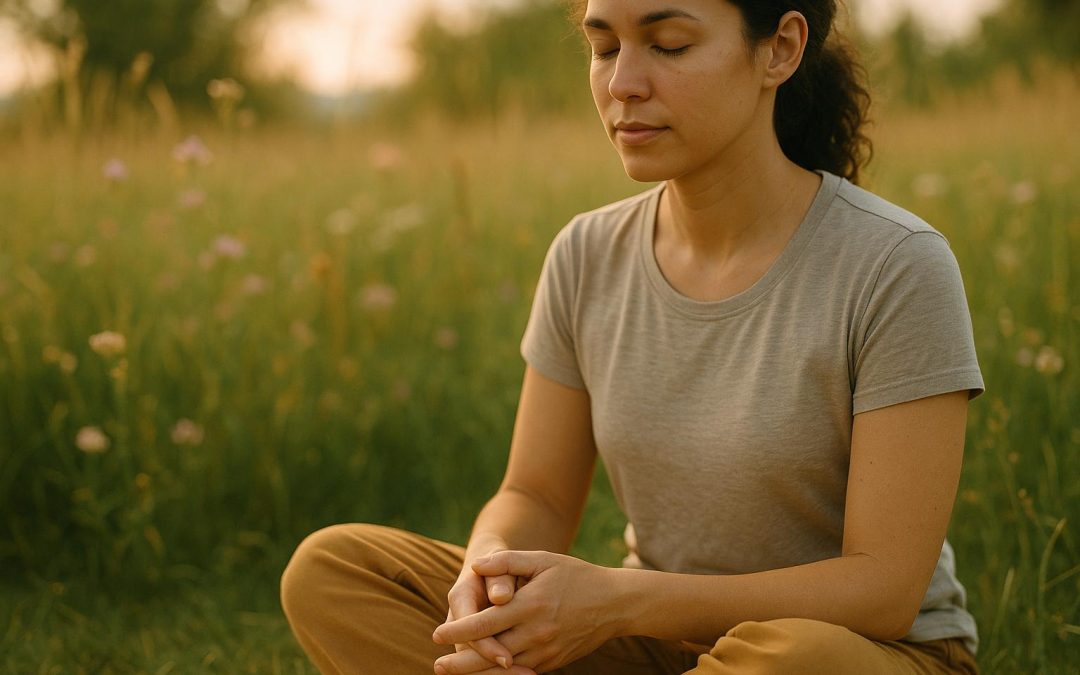
When you’re completely drained, meditation can feel overwhelming. But mindfulness doesn’t have to involve sitting in silence. Simple practices like focused breathing, grounding exercises, light movement, and sensory awareness can help you recharge without requiring much effort. These techniques work by calming your stress response, improving focus, and boosting energy.
Key Practices to Try:
- Breathing Techniques: Short exercises like diaphragmatic breathing or the 4-7-8 method can quickly calm your mind and body.
- Grounding in Nature: Walking barefoot, mindful hiking, or listening to natural sounds can ease stress and restore balance.
- Gentle Movement: Light stretching, slow walking, or even shaking off tension can help refresh your energy.
- Engaging Your Senses: Noticing textures, sounds, or visual details in your surroundings keeps you present and reduces mental fatigue.
No fancy tools or prior experience are needed – just a few minutes of these practices can make a difference, even on your busiest days.
Why You Feel Drained and How Mindfulness Helps
What Causes Energy Depletion?
Feeling drained goes beyond just being tired – it’s a deeper kind of fatigue that can hit you physically, mentally, or emotionally. Physically, it might show up as constant tiredness, headaches, or muscle weakness that doesn’t go away with rest. Mentally and emotionally, it can cloud your focus, make decisions feel impossible, and leave you irritable or unmotivated.
There are several reasons why this happens. Chronic stress, for example, raises cortisol levels, which chips away at your energy reserves. Not getting enough sleep is another big factor – did you know that about 1 in 3 Americans don’t clock the recommended 7 to 8 hours a night? Add to that workplace stress, relationship issues, and the constant flood of mental stimulation, and it’s no wonder so many feel depleted. This exhaustion doesn’t just affect your day-to-day – it has serious consequences. For instance, driver fatigue is linked to 20% of motor vehicle accidents.
Recognizing these energy drains is the first step toward finding practical ways to recharge, including mindfulness techniques that don’t require meditation.
Mindfulness Without Meditation
Mindfulness isn’t just about sitting quietly with your eyes closed. As Josephine Atluri, a certified life coach and mindfulness expert, explains:
"A common misconception is that mindfulness is synonymous with meditation. Meditation is just one modality of mindfulness. There are various ways to practice mindfulness, such as journaling, breathwork, soundbaths, yoga, and visualization, to name a few."
Engaging in mindfulness through activities like movement or sensory awareness can activate your parasympathetic nervous system, which helps shift your body from a state of stress to a state of calm. These approaches are simple and accessible, designed to break negative cycles and bring back focus – no meditation cushion required. For example, a study with preschoolers found that even a short sensory activity improved their awareness of their bodies and breathing.
Relax and restore: Yoga, breathwork & mindfulness
Simple Breathing Exercises for Quick Relief
When you’re feeling drained, your breath can become a powerful tool to help restore your energy. On days when meditation feels like too much effort, simple breathing techniques can offer a practical and effective alternative. Controlled breathing can spark physiological changes that naturally boost your energy levels and help you feel more balanced.
Robert J. Snyder, a respiratory therapist at University Hospitals, explains the science behind it:
"Certain breathing techniques have been proven to enhance the functioning of the heart and lungs, improve mental wellness, increase energy and concentration, and promote better sleep."
Interestingly, breathwork has been shown to improve mood and lower respiratory rates more effectively than mindfulness meditation. This means you can enjoy the benefits without needing the same level of mental focus – perfect for when you’re already feeling exhausted.
Here are two simple breathing techniques designed to deliver quick energy and calm without requiring extended meditation.
2-Minute Focused Breathing
This technique relies on diaphragmatic breathing to increase oxygen flow and improve nutrient delivery to your cells, giving you a natural energy boost. It also activates your parasympathetic nervous system, which promotes relaxation without requiring long periods of stillness.
To try it, start by lying down with your knees bent or sitting in a comfortable position. Place one hand on your chest and the other on your stomach, just below your rib cage. Slowly inhale through your nose, allowing your stomach to rise while keeping the hand on your chest as still as possible.
Aim for slow, steady breaths – about six cycles per minute. This means each breath cycle should last around 10 seconds: inhale for 4 seconds and exhale for 6 seconds. Research shows that this pacing improves oxygen exchange more effectively than faster, irregular breathing.
Practice for just 2 minutes, and you may start to notice sharper focus and a gentle boost in energy.
Long Exhales for Instant Calm
When stress feels overwhelming, extended exhalations can help your body quickly shift into a more restorative state. Long exhales stimulate the vagus nerve, which plays a key role in activating your body’s rest-and-recovery system.
One effective method is the 4-7-8 technique: inhale through your nose for 4 seconds, hold your breath for 7 seconds, and then exhale slowly through your mouth for 8 seconds. Repeat this cycle 4–5 times.
This approach helps lower cortisol levels, easing muscle tension and encouraging a sense of calm. It also improves carbon dioxide exchange, which enhances blood flow and supports energy levels.
A study found that participants who practiced slow breathing with extended exhalations over 12 weeks experienced significant reductions in psychological stress compared to those using equal inhale-exhale rhythms. With about 12% of U.S. adults already incorporating deep breathing into their health routines, it’s clear how accessible and effective these methods can be.
If you’re looking for a simpler option, just focus on making your exhale longer than your inhale. For example, you could breathe in for 4 counts and exhale for 6–8 counts. This flexible approach works well when you’re too tired for structured techniques but still want to feel the calming effects.
Grounding Exercises in Natural Settings
When you’re too drained to meditate, turning to nature can be a soothing alternative. Grounding exercises allow you to reconnect with the present by immersing yourself in the natural world. Studies suggest that spending at least 20 minutes outdoors can significantly ease stress and promote overall well-being, with 120 minutes per week being the sweet spot for optimal benefits.
Science backs up nature’s calming effects. For instance, one study revealed that people walking among trees scored 20% higher on memory tests compared to those walking in urban environments. Let’s dive into how you can integrate nature-based grounding practices into your routine.
Catherine Morey-Nase, founder of The WellBeing Corner, puts it beautifully:
"Stopping and consciously engaging our senses when out hiking not only calms and grounds us – relaxing both mind and body – but it also deepens our connection to the natural world. Mindful hiking is really about remembering to stop and smell the roses (or the eucalyptus, as the case may be)."
Focused Walking on Nature Trails
Mindful walking turns a regular stroll into a revitalizing experience. This practice encourages you to engage your senses and focus on your surroundings. Before starting, take a moment to center yourself and clear your mind of distractions.
As you walk, try the "snapshot" method: pause occasionally to focus on something that catches your attention – a vivid flower, a bird’s song, or the texture of tree bark. You can also use the Five Senses exercise: identify 5 things you can see, 4 you can hear, 3 you can touch, 2 you can smell, and 1 you can taste. This simple yet effective practice helps anchor you in the moment while easing anxiety and encouraging creative thought.
Walking in nature offers more than just a mood boost. It can lower blood pressure, reduce stress hormones, and even improve breathing, all of which support better heart health. Walking in silence can amplify these effects, allowing you to fully absorb your surroundings and gain a fresh outlook on life’s challenges.
Barefoot Connection to Earth
For a deeper connection, try barefoot grounding. Walking barefoot on natural surfaces like grass, sand, or soil creates a direct link between your body and the earth’s electric charge. This practice, known as earthing, is thought to help balance energy and restore vitality.
Grounding provides real health benefits. Research shows that absorbing electrons from the earth can help neutralize free radicals, potentially reducing inflammation, lowering cortisol levels, and alleviating pain and fatigue. Studies have also linked barefoot grounding to improved mood, better energy levels, and enhanced cardiovascular health. For example, research published in the Journal of Inflammation Research and the Journal of Alternative and Complementary Medicine highlights how grounding can ease pain and inflammation while improving heart rate variability – a key marker of heart health.
To get started, simply remove your shoes and walk barefoot on a natural surface for 15–30 minutes. If you’re new to this, begin with shorter sessions and gradually increase your time. Beyond its grounding effects, walking barefoot can also strengthen muscles, improve posture, and restore your natural walking gait.
Tony Riddle, a proponent of natural living, captures the essence of grounding:
"By combining nature immersion with breathwork and barefoot grounding practices we can access what I consider the closest we will ever get to a panacea. This life-giving trifecta possesses an ability to radically transform our stress induced, urbanite frequency and have us buzzing high on a natural vibration from the outside in and the inside out."
Grounding is refreshingly simple and accessible. Whether you’re mindfully walking through a forest trail or feeling the earth beneath your bare feet, these practices require nothing more than a willingness to slow down and connect with the natural world around you.
sbb-itb-77c7b55
Using Your Senses to Stay Present
When meditation feels overwhelming or out of reach, sensory awareness can be a powerful alternative. It’s a straightforward way to center your attention and quiet a busy mind – perfect for those moments when energy feels low.
Listening to Nature Sounds
Tuning into natural sounds is a simple yet effective way to calm your mind and reduce stress. Research has shown that these sounds not only lower stress hormones but also improve mood and cognitive function. A 2017 study published in Scientific Reports found that listening to bird songs and flowing water enhanced attention, boosted working memory, and lifted emotions. Interestingly, water sounds are particularly effective for overall well-being, while bird songs are excellent for relieving stress.
To try this, find a quiet spot outdoors and close your eyes. Start by identifying the loudest sound around you – maybe the rustling of leaves or distant traffic. Gradually shift your attention to softer, subtler sounds. This exercise helps your body move from tension to relaxation. Studies even suggest that forest sounds, which average about 51.1 dB, can be significantly more calming than urban noise at 73.0 dB. Even a brief five-minute session can refresh your mind and recharge your energy.
Noticing Visual Details in Nature
Your sense of sight can also play a key role in mindfulness. Observing nature’s beauty has been linked to reduced stress and heightened positive emotions. Research shows that gazing at a scenic view for just 40 seconds can help your brain shift into a more relaxed state. Additionally, spending 20 to 30 minutes in a natural setting can lead to a noticeable drop in cortisol levels, the hormone associated with stress.
Start by focusing on the details around you. Look for the many shades of green in a single tree or the intricate patterns on a leaf. Notice the movement in your surroundings, whether it’s swaying branches, rippling water, or the play of light through the clouds. Even a short walk in nature has been shown to improve memory and attention by up to 20%.
Feeling Natural Textures
Touch is another powerful way to ground yourself in the present moment. Engaging with natural textures not only heightens sensory awareness but can also release oxytocin, a hormone that promotes calm and relaxation.
You can start by running your fingers over the leaves of a plant, feeling their smooth or rough surfaces. Hug a tree and notice the texture of its bark, or walk barefoot on soft grass and cool earth. Even sitting quietly outdoors and feeling the wind against your skin can serve as a tactile mindfulness practice.
The key is to observe these sensations without judgment. Let yourself simply experience the textures, temperatures, and movements. This kind of gentle awareness can spark feelings of wonder and joy, which are essential for emotional balance and well-being.
Light Movement to Boost Energy
Feeling drained? Light movement can help restore your energy without putting extra strain on your body. Gentle activities improve blood flow, clear lactate buildup, and recharge your system. Unlike high-intensity workouts, these movements focus on connecting your body and mind, helping you stay aware of your physical state without overexerting yourself.
Here are some simple practices that combine mindful breathing with movement.
Simple Stretching with Breath
Pairing gentle stretches with deep, intentional breathing can work wonders for your energy levels. Diaphragmatic breathing – where you breathe deeply into your belly – enhances oxygen flow to your cells, giving both your body and mind a natural boost. When you add stretching, you can tackle physical tension and mental stress at the same time.
"Exercising replenishes energy, lowers stress, and makes us stronger." – The Physiotherapy and Rehabilitation Centres
Take the Crescent Stretch: lift one arm overhead, lean to the opposite side, and breathe deeply. Or try the Doorway Stretch: place your forearm against a doorframe, step forward, and open your chest while maintaining steady, controlled breaths.
For any stretch, use diaphragmatic breathing to amplify the benefits. Place one hand on your chest and the other on your belly. Inhale slowly through your nose, feeling your belly expand. Then exhale through your mouth, letting your belly contract toward your spine. This breathing technique activates your parasympathetic nervous system, which helps lower your heart rate and ease physical and mental stress.
If stretching feels insufficient, consider adding a slow, mindful walk to your routine.
Slow, Intentional Walking
Mindful walking, whether indoors or outside, can help you reconnect with your body and calm your mind. Walking is simple, requires no equipment, and is one of the easiest ways to incorporate light movement into your day. A 15-minute walk combined with deep, rhythmic breathing can reduce blood pressure and promote relaxation .
"Regular exercise will make you feel less tired in the long run, so you’ll have more energy." – NHS
To make your walk mindful, focus on syncing your breath with your steps. For example, inhale over four steps and exhale over the next four. Pay attention to how your feet touch the ground, the swing of your arms, and the gentle rotation of your torso. This rhythmic breathing not only enhances relaxation but also supports your cardiovascular system through the baroreflex mechanism.
Short walking breaks throughout the day can make a big difference. Even a quick loop around your home or office can help. The NHS suggests aiming for 2 hours and 30 minutes of moderate aerobic activity each week, and starting with 15-minute walks is a great way to build the habit.
Gentle Shaking and Movement
When you need something even simpler, gentle shaking can help release tension and stagnant energy. This practice doesn’t require intense focus, making it ideal when you’re feeling foggy or stuck.
Start by lightly shaking your hands and arms, letting the movement flow into your torso. You can do this standing or sitting – whatever feels right. The goal is to let the natural vibrations ease tension without pushing your body too hard.
If you’re at work, try desk squats: stand up from your chair, lower yourself as if sitting, but don’t fully sit down. Repeat slowly, staying mindful of your breathing.
Another option is to turn on a favorite song and move to the music. Light dancing or swaying gets your blood flowing and taps into your creative and emotional energy, helping to lift your mood and clear mental fog.
The key is to move at a pace that feels gentle and restorative. These activities should leave you feeling refreshed and centered – not drained or overwhelmed.
Which Practice Works Best for You
The key to finding the right mindfulness practice lies in understanding your energy, time, and environment. What suits you when you’re completely drained may differ from what works during mild fatigue. Take a moment to assess whether you’re feeling restless or deeply exhausted before choosing a practice.
Your energy level is a major factor. For example, if you’re feeling mentally or physically restless, a walking meditation might be more suitable than sitting still. Here’s a quick guide to help you match your current state to the most fitting practice.
Time constraints are another consideration. Even just 1–5 minutes of mindfulness can have a noticeable impact on your nervous system, mental clarity, and overall well-being. You don’t need to carve out hours to feel a difference.
Your environment also shapes what will work best. While quiet, distraction-free spaces with natural elements can enhance mindfulness, you can practice almost anywhere, even in a noisy or busy setting.
| Practice | Time Required | Physical Effort | Best For | Key Benefits |
|---|---|---|---|---|
| 2-Minute Focused Breathing | 1-3 minutes | Minimal | Desk work | Activates the parasympathetic nervous system |
| Long Exhales for Calm | 2-5 minutes | Minimal | High stress, anxiety | Provides quick relaxation |
| 5-4-3-2-1 Grounding | 3-5 minutes | Minimal | Mental fog, overwhelm | Refocuses attention on the present moment |
| Barefoot Earth Connection | 5-15 minutes | Low | Outdoor access needed | Offers grounding and sensory reset |
| Nature Sound Listening | 5-10 minutes | Minimal | Any quiet space | Promotes calm and restores attention |
| Simple Stretching with Breath | 5-10 minutes | Low-Moderate | Physical tension | Combines movement with breath awareness |
| Mindful Walking | 10-20 minutes | Moderate | Restlessness, mental clarity | Supports cardiovascular health with rhythmic breathing |
| Gentle Shaking | 2-5 minutes | Low | Stagnant energy, office settings | Relieves tension and boosts circulation |
If you’re pressed for time, quick energy boosters can help. The One-Minute Pause is a simple yet effective way to reset your mind and body in just 60 seconds. Breathwork techniques like box breathing (inhaling for 4 counts, holding for 4, exhaling for 4, and holding for 4) or the 4-7-8 method (inhaling for 4 counts, holding for 7, and exhaling for 8) are also excellent options.
For a more restorative experience, consider practices that engage multiple senses. A brief body scan, splashing cold water on your face, inhaling a calming essential oil, or gazing out a window to observe natural details can help you feel grounded.
Movement-based practices like shoulder rolls, neck stretches, or a short walking meditation are particularly effective in combating decision fatigue or burnout.
Your environment plays a role too. If you don’t have easy access to nature, visualization techniques can be a great alternative. Imagine yourself in a peaceful natural setting – research shows that even visualizing nature can promote calm and improve focus.
Start with a practice that feels manageable and adjust as your energy shifts throughout the day. Unlike mindlessly scrolling through social media or simply stepping away from your desk, a mindful break is an intentional act that brings you back to the present moment.
Mindfulness is about paying attention purposefully, in the moment, and without judgment. Experiment with different techniques and find what resonates with you as your needs and circumstances evolve.
Conclusion: Making Mindfulness Part of Your Day
Mindfulness is something you can weave into your daily life without needing to carve out extra time or master formal meditation techniques. It’s about finding simple ways to reconnect with the present moment, even during life’s busiest days.
Start small – just a few minutes each day can make a difference. Instead of aiming for perfection, focus on consistency. Look for opportunities to pair mindfulness with things you already do. For example, take a deep breath before answering a call, or practice a grounding exercise while waiting in line. Setting a specific time for mindfulness and using reminders, like phone alarms, can help make it a habit.
When stress sneaks in, the STOP technique can be a lifesaver: Stop, take a breath, observe your feelings and surroundings, then proceed with intention. Feeling overwhelmed? Shift your focus to your breath or notice the sensation of your feet firmly on the ground – it’s a quick way to anchor yourself.
Practicing mindfulness in nature can amplify its benefits. Imagine walking the serene trails or standing near the breathtaking 100-foot waterfall at Elohee Retreat Center. The combination of mindful exercises and nature’s calming energy offers a perfect setting for recharging and self-discovery.
Be kind to yourself as you practice. Missed days and wandering thoughts are part of the journey, not setbacks. Even a single mindful breath or a quick grounding exercise contributes to your well-being and helps restore your energy.
The beauty of mindfulness is that it doesn’t have to feel like another item on your to-do list. It’s about turning everyday moments into opportunities for calm and clarity. With these simple practices, you can find balance and peace – even on days when meditation feels out of reach.
FAQs
How can I easily add mindful practices to my busy day?
Mindfulness doesn’t have to be a big production – it can easily fit into the little moments of your day. Take waiting at a stoplight or standing in line, for instance. Instead of reaching for your phone, try focusing on your breath. Feel the rise and fall of your chest or the air moving in and out of your nose. When walking, notice the sensation of your feet connecting with the ground. And when you eat, truly experience your meal – pay attention to the flavors, textures, and even the temperature, without letting distractions steal the moment. These small shifts take just seconds but can leave you feeling more centered and refreshed as you go about your day.
What are some easy breathing techniques to help restore energy when I’m feeling exhausted?
When you’re running on empty, give deep belly breathing a shot. Breathe in slowly through your nose for 4 seconds, letting your belly expand, and then exhale completely through your nose for another 4 seconds. Keep this up for 1–2 minutes, and you might just feel more centered and energized.
Another easy option is the 4-7-8 technique. Here’s how it works: inhale through your nose for 4 seconds, hold that breath for 7 seconds, and then exhale slowly through your mouth for 8 seconds. This simple practice can settle your nerves and leave you feeling calm yet refreshed.
Both of these methods take just a couple of minutes and can bring a sense of balance, even on those jam-packed days.
How can spending time in nature help reduce stress and restore your energy, and what are some simple ways to try it?
Spending time outdoors can work wonders for reducing stress and recharging your energy. Engaging with nature helps you reconnect with the world around you, which can soothe your nervous system, lift your mood, and even improve your sleep – all essential for feeling more balanced and refreshed.
Here are some simple ways to ground yourself in nature:
- Go barefoot on grass, sand, or soil to physically connect with the earth.
- Get your hands dirty by gardening or simply pressing your palms into the soil.
- Relax on the ground by sitting or lying down to unwind and recharge.
- Take a dip in a natural body of water, like a lake or the ocean, for a calming experience.
Even on your busiest days, these small actions can help you feel more centered, relaxed, and revitalized.
Recent Comments