
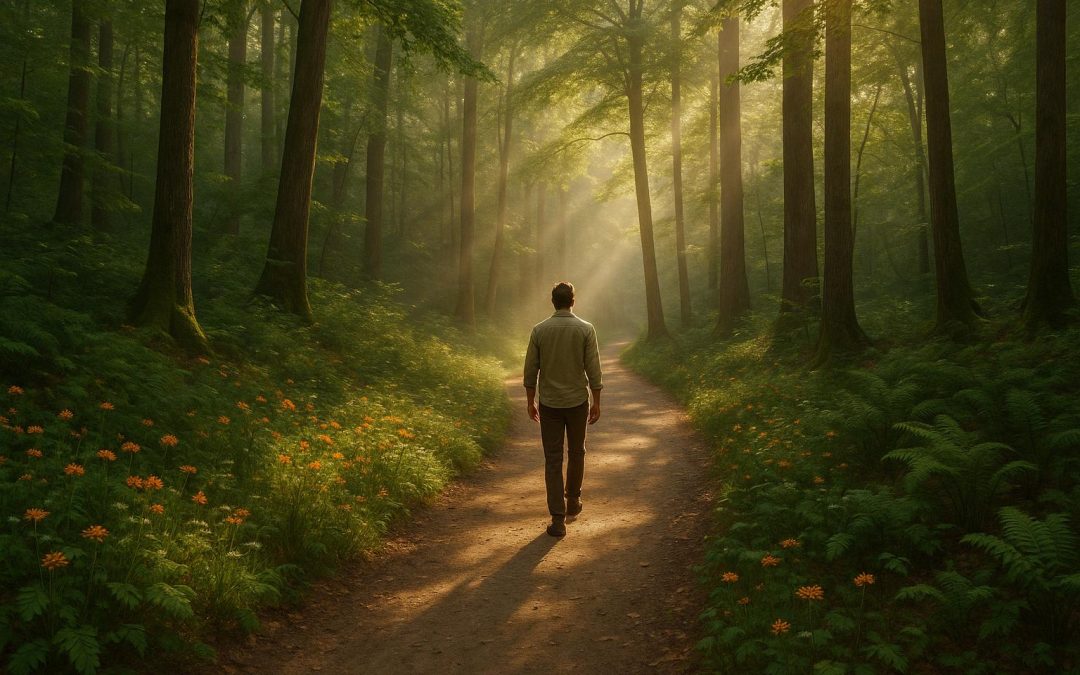
Feeling stressed or overwhelmed? Nature might be the solution you need. Studies show that spending just two hours a week in nature can significantly improve your emotional well-being. From lowering stress to boosting mood, nature offers simple, proven ways to heal emotionally.
Here’s a quick summary of the 10 ways nature supports emotional healing:
- Forest Bathing: Breathing in tree-released compounds (phytoncides) reduces stress and boosts immunity.
- Engaging All Five Senses: Fully immersing in nature through sight, sound, smell, touch, and taste relieves stress and sharpens focus.
- Sunlight Exposure: Regulates sleep cycles, increases serotonin, and combats seasonal depression.
- Grounding (Earthing): Walking barefoot on natural surfaces balances your body’s energy and reduces stress.
- Waterfall Therapy: Negative ions from waterfalls uplift mood and reduce depression symptoms.
- Hiking: Combines physical activity with mental rejuvenation, reducing anxiety and improving focus.
- Awe from Landscapes: Experiencing vast natural beauty shifts perspective and reduces overthinking.
- Natural Elements Indoors: Adding plants, natural light, and water features promotes calm and recovery.
- Nature Journaling: Writing or sketching outdoors combines mindfulness with emotional expression.
- Guided Ecotherapy: Structured therapy in nature helps address anxiety, depression, and trauma.
Key takeaway: Whether it’s a walk in the park, grounding in your backyard, or a retreat to a natural setting, connecting with nature is a powerful, accessible way to improve your emotional health. Start small – step outside, notice your surroundings, and let nature work its magic.
Ecotherapy: Nature’s Prescription for a Healthy Mind
1. Forest Bathing and Phytoncides
Forest bathing, or Shinrin-yoku as it’s called in Japan, is a practice that highlights how nature can nurture emotional well-being. Developed in Japan during the 1980s, this approach encourages people to connect deeply with the forest environment through all five senses.
Science backs up the benefits of this practice. Forest bathing does more than just calm the mind – it strengthens the immune system, too. A key player in this process is phytoncides, which are natural antimicrobial compounds released by trees. When you breathe them in, these compounds work wonders: they lower cortisol levels, ease stress and anxiety, and even stimulate serotonin production, helping to regulate mood and combat depression.
Studies have shown that forest therapy can significantly reduce cortisol (the stress hormone), enhance immune function by boosting cancer-fighting proteins and cells, and help regulate blood pressure and blood sugar levels.
"The intent of forest bathing is to put people in touch with present-moment experience in a very deep way. The sights, sounds and smells of the forest take us right into that moment, so our brains stop anticipating, recalling, ruminating and worrying."
– Susan Albers, PsyD, Clinical Psychologist
Different trees bring unique emotional benefits:
| Tree Species | Ecological Impact | Emotional Benefit |
|---|---|---|
| Native Oaks | Support wildlife, improve soil health | Instills a sense of stability and connection |
| Pine Varieties | Absorb carbon, release phytoncides | Reduces stress, boosts the immune system |
| Birch | Aid reforestation, offer aesthetic beauty | Creates an uplifting atmosphere, lifts mood |
The beauty of forest bathing lies in its accessibility. There’s no need for fancy gear or special training – just 15 minutes can make a difference. Take slow, mindful steps, focus on your breathing, and engage your senses. Feel the roughness of tree bark, listen to the rustling leaves, and breathe deeply to soak in the healing effects of phytoncides.
What’s even more incredible is how long the benefits last. In one study, participants who spent three days and two nights forest bathing experienced increased natural killer (NK) cell activity that persisted for over 30 days. And if visiting a forest isn’t always possible, diffusing essential oils derived from trees at home can offer some of these benefits.
This growing body of evidence explains why nature-focused retreats, like the Elohee Retreat Center, are becoming popular for emotional healing and renewal.
2. Using All Five Senses in Nature
Stepping into nature and immersing yourself with all five senses can profoundly deepen your connection to the world around you. Beyond the practice of forest bathing, engaging your senses brings you into the present moment, offering emotional relief and clarity. Science backs this up – research shows that sensory engagement can ease stress and enhance overall well-being.
A 2014 review of nearly 19,000 studies found that mindfulness-based stress reduction programs significantly reduced symptoms of anxiety, depression, and pain. Nature, with its rich sensory cues, naturally amplifies these benefits.
Each sense plays a distinct role in this experience. Sight sparks curiosity and wonder as you notice the intricate patterns on tree bark or the way sunlight filters through leaves. Sound anchors you in the moment, whether it’s the rhythmic chirping of birds, the rustle of wind in the branches, or the gentle murmur of a stream. As James described:
"The soundscape, you can suddenly hear some owls, or you notice the wind moving some leaves or how the stream moves and finds its way. It is just something that really encapsulates the moment and just makes you happy that you are just there in that moment."
Your sense of smell is directly tied to the emotional centers of your brain. A 2014 study found that scents like beeswax and fresh summer air were associated with feelings of happiness. The subtle fragrances of blooming flowers or pine trees can calm the mind, sharpen focus, and lift your mood. Touch provides grounding – whether it’s feeling the roughness of tree bark, the softness of moss, or the coolness of morning dew. And finally, taste completes the sensory experience, whether it’s the sweetness of wild berries or the freshness of edible herbs.
"Nature’s presence frees your mind for deeper clarity." – Jodie M. Smith, APRN, C.N.P., D.N.P., M.S.N., Mayo Clinic Nurse Practitioner
One way to fully engage with your surroundings is through the 5-4-3-2-1 grounding technique. In nature, this method becomes even more powerful: identify 5 things you can see (like the shifting shades of green or wildlife), 4 things you can feel (bark, grass, air temperature, or a gentle breeze), 3 things you can hear (birdsong, rustling leaves, or water), 2 things you can smell (flowers or pine), and 1 thing you can taste (fresh air or a safe edible plant). A 2015 study showed that just an hour of grounding exercises in nature could improve mood and reduce anxiety and depression. Connections Health Solutions reported in March 2025 that walking through green spaces helps restore focus and emotional balance, thanks to the sensory reset provided by nature’s sights, sounds, and smells.
Unlike meditation, which often requires practice, nature effortlessly guides your awareness. The environment itself becomes your teacher, offering a constantly changing symphony of sensory input that anchors you in the present moment and fosters healing.
Places like the Elohee Retreat Center, with its 220 acres of diverse ecosystems, forest trails, and the soothing sound of waterfalls, provide a perfect setting for full sensory immersion.
3. Sunlight for Better Sleep and Mood
Sunlight does more than brighten our surroundings – it plays a key role in keeping our internal rhythms on track. Exposure to natural sunlight helps regulate your circadian rhythm, the internal clock that dictates when you feel awake and when it’s time to wind down. This, in turn, can improve both your sleep quality and emotional health.
Morning sunlight, in particular, sends signals to the hypothalamus in your brain, essentially "waking up" your body and preparing it for a restful night ahead. To put it in perspective, daylight provides around 100,000 lux, far surpassing even the most advanced light therapy devices.
"Many people today are working remotely or are in offices with little natural light exposure. Many of these same people may tend to struggle with sleeping at night and are unaware of how a few changes to their lifestyle may help them begin to improve their sleep. Finding lifestyle habits to prioritize early morning and daytime sun exposure can help to improve sleep later that night." – Jamie Zeitzer, PhD, Stanford University Professor
Sunlight also has a direct impact on mood by boosting serotonin production. Known as the "happy hormone", serotonin helps you feel calm and focused. When serotonin levels drop, the risk of developing major depression with a seasonal pattern – commonly referred to as seasonal affective disorder (SAD) – increases. SAD affects about 5% of adults annually.
Studies reinforce the connection between sunlight and mental health. For instance, research from Brigham Young University found that people report higher levels of mental health distress during seasons with limited sunlight. Interestingly, sunlight’s influence on mood appears stronger than other environmental factors like temperature or rainfall. On a cellular level, sunlight impacts over 1,000 genes in at least 60 different cell types. A study in Shandong Province, China, involving 787 operating room nurses revealed that those with more sun exposure scored significantly better on the Kessler 10 scale for mental health.
The World Health Organization (WHO) suggests spending 5–15 minutes in the sun, 2–3 times a week, with exposed skin to reap vitamin D benefits. For maintaining a healthy circadian rhythm, aim to get outside within the first hour of waking, spending 30 to 45 minutes in direct sunlight without wearing sunglasses.
Making small adjustments to your daily routine can significantly increase your sunlight exposure. Consider taking a morning walk, enjoying breakfast on your porch, or simply opening your windows to let natural light in. If stepping outside isn’t feasible, light therapy lamps can serve as a temporary alternative, though they don’t offer all the benefits of real sunlight.
For those looking to immerse themselves in nature, places like Elohee Retreat Center provide trails and open spaces that allow you to soak up morning sunlight – helping to regulate both your sleep and mood.
4. Grounding Practices in Nature
Walking barefoot on natural surfaces, often called grounding or earthing, is a simple yet impactful way to reconnect with the earth. This practice allows your body to absorb electrons directly from the ground, offering potential benefits for both physical and emotional health.
The earth has a natural negative electrical charge, and when your bare feet touch grass, soil, or sand, electrons flow into your body. These electrons are thought to help neutralize free radicals, which may contribute to improved well-being.
"In our increasingly digital world, it’s important that we ‘go touch grass,’ meaning that we need to physically connect with the Earth, a concept also known as ‘grounding.’"
- Tayla Holman, Author
Studies suggest that grounding can significantly reduce stress levels and even boost serotonin, the "happy hormone" that sunlight is also known to enhance.
You can easily incorporate grounding into your daily life. Spend 30 minutes standing, walking, or lying on grass, soil, or sand. Whether it’s a barefoot morning walk, outdoor yoga without shoes, or simply lying on the ground to read or meditate, these small changes can make a difference.
"Walking barefoot on natural surfaces can help balance the body’s electrical charge and reduce the impact of chronic stress. Many people report feeling calmer, more centered, and less anxious after spending time with their bare feet on the ground."
If you’re looking to deepen your practice, try gardening with your hands directly in the soil, pressing your palms into grass, or even swimming in natural waters. During winter, brief contact with snow can also provide grounding benefits.
For those unable to practice outdoors, there are indoor alternatives like grounding mats, bed sheets, under-desk mats, or specially designed grounding shoes that maintain an electrical connection with the earth. These tools can complement the restorative effects of outdoor grounding when nature isn’t accessible.
At the Elohee Retreat Center, which spans 220 acres, you can experience grounding in its finest form. Walk barefoot along forest trails or connect with the earth near the serene waterfall canyon – an ideal setting to embrace this ancient practice and its healing potential.
5. Waterfall Therapy and Negative Ions
When water crashes down in a waterfall, it creates something magical – negative ions. These invisible, odorless particles are found in abundance near waterfalls, mountains, and beaches. To put it into perspective, these areas can have tens of thousands of negative ions, compared to just a few dozen typically found indoors.
This phenomenon, known as the Lenard Effect, was first identified in 1905. It explains how the force of crashing water releases these ions, which are known to naturally uplift mood.
"The action of the pounding surf creates negative air ions and we also see it immediately after spring thunderstorms when people report lightened moods."
- Michael Terman, PhD, Columbia University
Research has shown that negative ions can trigger biochemical reactions in the body, boosting serotonin levels. This, in turn, helps reduce stress and symptoms of depression. In fact, one study found that individuals with winter depression experienced up to a 61% improvement in their symptoms when exposed to negative ions. It’s a natural and accessible way to support emotional well-being.
"Generally speaking, negative ions increase the flow of oxygen to the brain; resulting in higher alertness, decreased drowsiness, and more mental energy."
- Pierce J. Howard, PhD, author of The Owner’s Manual for the Brain: Everyday Applications from Mind Brain Research
The best part? You don’t need fancy equipment to enjoy these benefits. Simply spending time near waterfalls, creeks, or riverbanks can do the trick. Even taking a shower near a water feature can expose you to these healing ions.
For those seeking a deeper experience, the 100-foot waterfall canyon at Elohee Retreat Center offers the perfect setting for waterfall therapy. The powerful cascade creates an abundance of negative ions, while the surrounding 220 acres of trails let visitors explore other water features. This serene environment blends the mood-enhancing effects of negative ions with grounding practices and sensory immersion, creating a powerful recipe for emotional healing.
"Waterfalls. Nature’s best drug. Free, no prescription needed, no harmful side effects. Who wouldn’t want to take that medicine?"
sbb-itb-77c7b55
6. Hiking and Walking on Nature Trails
Hiking on nature trails is a fantastic way to combine physical activity with mental rejuvenation. It offers a unique kind of emotional relief that simply can’t be matched by walking city streets or using treadmills.
When you tackle uneven terrain on hiking trails, your body works harder – burning 28% more energy compared to walking on flat ground. This extra effort doesn’t just strengthen your muscles; it also triggers the release of endorphins, those feel-good chemicals that lift your mood. At the same time, it lowers cortisol levels, the hormone linked to stress.
A 2015 Stanford University study highlighted just how impactful walking in nature can be for our mental health. Participants who spent 90 minutes in a natural setting were less likely to ruminate on negative thoughts. Plus, the act of disconnecting from technology during these walks boosted creative problem-solving by an impressive 50%.
"Walking just in itself has shown to reduce levels of anxiety and depression and actually can be preventative in some cases of depression. But there’s even more evidence now that’s doing it in nature and natural surroundings improves that those results even further. Something about being in nature is calming to humans."
The mental benefits of hiking go hand in hand with the physical changes your body experiences during these walks. Natural environments activate the parasympathetic nervous system, which helps shift your body from a stress state to one of recovery. As you move along the trail, your brain relaxes, resulting in physical effects like lower blood pressure and a slower heart rate.
Even a simple 10-minute walk on an easy trail during your lunch break can help reduce stress and gradually build your endurance. The trick is to start small – choose trails that match your current fitness level and increase the difficulty as you become more comfortable.
"Being or in a natural setting can change the way that we think and that affects our emotions and it reduces our anxiety levels and our stress levels."
- UNC Health
For those seeking even more benefits, places like the Elohee Retreat Center offer the perfect backdrop for therapeutic hiking. With miles of trails spanning 220 acres, Elohee provides a serene environment filled with diverse ecosystems. The changing scenery keeps your mind engaged, while the steady rhythm of walking promotes mindfulness and helps you stay present. Whether you’re looking for a gentle stroll or a challenging hike, these trails offer an incredible opportunity to blend physical activity with emotional balance.
What makes trail hiking especially appealing is its accessibility. Unlike gym memberships or pricey equipment, nature trails are free to use and provide a natural boost to mental health. Research shows that spending just 20 minutes in nature can lower cortisol levels by an average of 21.3%. It’s a simple yet powerful way to clear your mind, reduce stress, and refocus – all while staying active.
7. Awe from Natural Landscapes
Building on the calming effects of nature, experiencing awe can profoundly enhance emotional healing by shifting your perspective. Imagine standing at the base of a towering mountain, gazing across the endless expanse of the ocean, or watching the sun dip behind rolling hills. These moments of awe don’t just captivate – they actively reduce stress and broaden your outlook. This emotional shift can even trigger deeper physical benefits.
"Awe is the feeling of being in the presence of something vast that transcends your current understanding of the world."
- Dacher Keltner
When awe strikes, it’s not just your emotions that change – your brain does, too. Studies reveal that awe can lower stress, reduce overthinking, and release feel-good chemicals like dopamine and oxytocin, all while calming inflammation.
One fascinating study found that visitors to Yosemite National Park experienced significantly more awe than those at Fisherman’s Wharf. These participants even drew self-portraits that were about 33% smaller, suggesting a reduced focus on themselves. Natural wonders like jagged mountain peaks, dramatic coastal cliffs, and serene desert landscapes are particularly effective at sparking this powerful emotion.
"Awe dissolves the boundaries between self and nature, easing ego and connecting us to greater forces that surround us in the world and the larger universe."
- Jonah Paquette
The benefits of awe don’t end when the moment passes. People who regularly experience awe are more resilient in the face of stress and tend to act with greater generosity and cooperation. Research even shows that those who frequently feel awe have lower levels of interleukin-6 (IL-6), a marker linked to inflammation.
For those seeking a deeper connection with nature, places like Elohee Retreat Center offer an incredible backdrop. Nestled within 220 acres of diverse ecosystems, the retreat features awe-inspiring sights like a 100-foot waterfall canyon and panoramic mountain trails.
The beauty of awe is that it’s all around us – you don’t need to travel far to experience it. Everyday moments, like watching a sunset or noticing intricate cloud patterns, can be just as powerful. Even simple practices, like taking a weekly 15-minute walk in nature, have shown remarkable results. Older adults who tried this for eight weeks reported feeling more positive and less distressed. For anyone navigating trauma, grief, or life’s big transitions, these small moments of awe can offer a sense of perspective and healing that’s truly transformative.
8. Natural Elements in Healing Spaces
Bringing nature into your environment can transform it into a peaceful retreat that nurtures emotional recovery. From natural light to greenery, water features, and organic materials, these elements can turn any indoor space into a haven of calm and renewal.
The effects of incorporating nature are profound. Studies reveal that adding plants to a workspace can significantly enhance emotional well-being. In healing spaces, this translates to quicker emotional recovery and reduced stress.
"Our surroundings have a direct impact on our immune function, stress response, and overall well-being. The more we design our environments to align with natural patterns and human psychology, the better we can promote healing."
- Dr. Esther Sternberg, Physician and Author of Healing Spaces: The Science of Place and Well-Being
Natural Light
Natural light is a cornerstone of any healing space. Windows that offer views of the outdoors can lower blood pressure, slow heart rates, and improve mental clarity. If your space lacks sufficient natural light, try using mirrors or reflective surfaces to amplify light, or arrange seating near existing windows to make the most of it.
Greenery and Indoor Plants
Adding plants is one of the easiest ways to uplift your environment. Even a few potted plants can brighten your mood. Research from the University of Exeter found that plants in office settings boosted productivity by 15%, while Texas A&M University studies show that greenery reduces stress and enhances well-being. Whether it’s a small fern on your desk or a lush indoor garden, plants bring life and positivity to any space.
Water Features
Water has a unique ability to soothe the mind. The sound or presence of water can lower heart rates and reduce stress. Marine biologist Wallace J. Nichols explains:
"That our brains are hardwired to react positively to water and that being near it can calm and connect us, increase innovation and insight, and even heal what’s broken"
A tabletop fountain or even the gentle sound of flowing water can create a tranquil atmosphere.
Natural Materials
Incorporating natural materials like wood deepens the connection to the outdoors. Wood with visible grain patterns has been shown to relax the autonomic nervous system. Dima Stouhi highlights this versatility:
"Wood can be applied in all types of interior spaces (offices, hotels, restaurants, and houses) and still provide the same visual and emotional connection with nature"
Pair these materials with an earth-toned color palette to further reduce stress and create a sense of harmony.
For a more immersive experience, spaces like Elohee Retreat Center showcase how natural elements can be seamlessly integrated into healing environments. Spread across 220 acres, Elohee blurs the boundaries between indoor comfort and the restorative power of nature.
"Patients recovering in rooms with natural views and well-designed spaces report lower pain levels, reduced stress, and improved overall satisfaction with their treatment experience."
- Dr. Roger Ulrich, Environmental Psychologist
You don’t need to overhaul your entire space to create a healing environment. Simple changes – dedicating a corner for relaxation, surrounding yourself with plants, optimizing natural light, and adding a water element – can make a big difference. These thoughtful additions allow nature’s healing qualities to support emotional recovery in a space designed for peace and well-being.
9. Nature Journaling for Emotional Expression
Nature journaling offers a unique way to connect your surroundings with your emotions. It blends the calming effects of being outdoors with the therapeutic benefits of expressive writing, creating a powerful tool for emotional clarity and healing.
Studies have shown that journaling can help reduce stress, anxiety, and depression while sharpening observational skills and memory. When paired with time spent in nature, these effects become even more pronounced. For instance, a meta-analysis revealed that incorporating journaling into treatment plans led to a 6% decrease in PTSD symptoms and a 9% drop in anxiety.
This simple yet impactful practice not only helps ease emotional tension but also fosters a deeper bond with the natural world.
Getting Started with Nature Journaling
Nature journaling is both straightforward and meaningful. Start by finding a peaceful spot outdoors – perhaps under a tree, near a stream, or in a park. Take a few moments to observe your environment. Watch how the light filters through leaves, listen to birdsong, or notice the movement of clouds. Then, translate these observations into words, sketches, or even paintings. Let your creativity flow as you connect with your surroundings.
Artist Rhiannon Collins, a devoted nature journaler, highlights the practice’s transformative impact:
"It really takes you away from daily worries, and it’s also a wonderful way to remind me about the bigger picture and that I have so much to be grateful for."
She further shares, "Through drawing we learn to see", describing the process as "a mindful, rewarding practice" that helps her regain perspective.
What to Include in Your Nature Journal
Your nature journal can be as simple or detailed as you like. Choose a quiet spot, observe closely, and jot down what you see, hear, or feel. Add sketches or drawings to capture the essence of your surroundings. Most importantly, include personal reflections – how does what you’re observing make you feel? This combination of observation and introspection can help you uncover patterns in your emotions and thoughts.
The Emotional Benefits
Nature journaling creates a safe space for emotional exploration. Expressive writing can be an effective way to process trauma and reduce symptoms of anxiety and depression. When paired with the soothing influence of nature, it can also inspire gratitude and a deeper appreciation for the world around you.
For those looking to immerse themselves further in this practice, places like Elohee Retreat Center provide an ideal setting. With its 220 acres of diverse landscapes and miles of trails, Elohee offers endless opportunities to document your emotional journey while connecting with the changing scenery.
Even dedicating just 5–10 minutes a day to journaling can make a noticeable difference in your emotional clarity. Choose a notebook and pen that feel comfortable to use, and remember – this isn’t about creating perfect art. It’s about expressing yourself and finding a connection between your inner world and the healing power of nature. Let your thoughts flow freely, and allow the process to deepen your awareness while amplifying nature’s calming effects.
10. Guided Ecotherapy Sessions
Guided ecotherapy sessions tap into the healing power of nature to support emotional well-being, all under the guidance of a trained professional. Unlike casually spending time outdoors, these sessions are carefully structured to help participants connect more deeply with the natural world while addressing specific mental health concerns. As Patricia Hasbach, PhD, a Licensed Professional Counselor and Clinical Psychotherapist, puts it: "Ecotherapy is one tool that you have to draw on to strengthen and deepen the work that you’re doing with your clients or your patients".
So, what exactly happens during these sessions? Participants might engage in activities like forest walks, meditation, or gardening, all led by facilitators who incorporate nature as an active element of the therapeutic process. Techniques such as grounding exercises, gentle physical movements, and mindfulness practices are often used to help participants remain present and connected. These intentional activities provide a structured pathway to emotional and mental benefits.
The results speak for themselves. Studies reveal that 65%–80% of people participating in ecotherapy report feeling better, with even just five minutes in nature helping to regulate the sympathetic nervous system. A 2019 study published in Science Advances by Gregory Bratman, PhD, and his team found that spending time in nature boosts happiness, enhances overall well-being, and fosters positive social interactions. Similarly, research from Germany highlights how gardening can help reduce depression by promoting a sense of autonomy.
For those looking for a more immersive experience, retreat centers like Elohee Retreat Center offer guided ecotherapy programs across their expansive 220-acre property. These programs are designed to address a range of mental health challenges – such as anxiety, depression, PTSD, and addiction – while providing the support many people need. After all, studies show that 30% to 50% of individuals struggle to maintain regular nature-based practices on their own.
As Jodie M. Smith, APRN, C.N.P., D.N.P., M.S.N., from Mayo Clinic observes: "Being present in nature doesn’t ask or require anything of us, so it frees up our mind to think more deeply and clearly about things". This unique combination of expert guidance and the restorative power of nature creates a setting where emotional healing and personal growth can truly thrive.
Conclusion
Nature offers a profound and scientifically supported path to emotional healing and personal growth. From the calming effects of phytoncides released by trees to the mood-boosting negative ions near waterfalls, the natural world provides countless ways to nurture mental well-being. As the Mental Health Foundation emphasizes:
"Our relationship with nature – how much we notice, think about and appreciate our natural surroundings – is critical in supporting good mental health and preventing distress"
The benefits of connecting with nature are undeniable. Regular exposure to green spaces can help build emotional resilience, alleviate anxiety and depression, and spark feelings of calm, joy, and creativity. Research even shows that children who grow up with limited access to green spaces face a 55% higher risk of mental health challenges later in life compared to those surrounded by nature. Dr. Lisa Nisbet from Trent University puts it beautifully:
"You can boost your mood just by walking in nature, even in urban nature. And the sense of connection you have with the natural world seems to contribute to happiness even when you’re not physically immersed in nature"
The beauty of nature-based healing lies in its accessibility. You don’t need to venture into remote wilderness to feel its effects. A simple stroll in a local park, planting a small garden, or practicing mindfulness outdoors can make a noticeable difference. Even listening to the sounds of nature or surrounding yourself with plants at home can help you tap into this restorative power.
For those seeking a more immersive experience, places like Elohee Retreat Center provide structured opportunities to explore nature’s healing potential. Activities such as guided ecotherapy, waterfall meditation, or quiet walks along forest trails create a supportive environment for emotional growth and self-discovery.
But you don’t have to wait for a retreat to start. Begin with what’s around you – watch the birds outside your window, feel the warmth of the sun on your skin, or take a slow, mindful walk in your neighborhood. As Dr. Cynthia Frantz from Oberlin College reminds us:
"Spending time in nature has cognitive benefits, but it also has emotional and existential benefits that go beyond just being able to solve arithmetic problems more quickly"
Your journey toward emotional healing can start with something as simple as stepping outside and noticing the world around you. Let nature guide you, one step at a time.
FAQs
How can I practice forest bathing if I don’t live near a forest?
You don’t have to live near a forest to experience the calming effects of forest bathing. Start by exploring local parks, gardens, or any green space nearby – even a tree-lined street works. Take time to notice the details around you, listen to the sounds of nature, and focus on slow, mindful breathing.
If getting outside isn’t an option, you can still bring a bit of nature into your life. Add a few plants to your home, play recordings of soothing natural sounds like birdsong or running water, or close your eyes and imagine yourself in a peaceful outdoor setting. Even small, intentional moments spent connecting with nature can bring a sense of calm and emotional balance to your day.
How can I quickly connect with nature using all five senses?
Engaging with nature through your senses, even for just a few minutes, can be both grounding and rejuvenating. Here’s how you can connect with each sense in simple and meaningful ways:
- Sight: Step outside and take in the scenery. Notice the vibrant colors of flowers, the intricate patterns on leaves, or the way sunlight dances through the trees. Let your eyes explore the beauty around you.
- Sound: Close your eyes and listen. Hear the birds chirping, the rustle of leaves in the breeze, or the gentle flow of a nearby stream. Let these natural sounds calm your mind.
- Touch: Reach out and feel your surroundings. Run your hand over the rough bark of a tree, let your feet sink into soft grass, or dip your fingers into a cool stream. Experience the textures of the earth.
- Smell: Breathe deeply and take in the scents around you. The earthy aroma of soil, the crispness of pine, or the sweet fragrance of blooming flowers can transport you to a place of calm.
- Taste: Savor a snack or drink outdoors. If you’re familiar with local plants, you might even safely sample an herb or edible leaf to deepen your connection to the environment.
Even these small sensory experiences can foster a stronger bond with nature and boost your emotional well-being.
What are some simple ways to get more sunlight if I work indoors most of the day?
If you spend most of your day inside, there are simple ways to soak up a bit more sunlight and feel better overall:
- Work near windows: Set up your desk or workspace close to a window to take advantage of natural light streaming in.
- Step outside regularly: Take short breaks to go outdoors during the sunniest times of the day, even if it’s just for a quick stroll.
- Brighten your space: Keep curtains or blinds open, use mirrors to bounce sunlight around the room, and opt for light-colored walls to make your space feel brighter.
- Bring the outdoors in: Add some sun-loving indoor plants to your space. They’ll not only thrive in the light but also make your environment feel more serene and alive.
These small changes can help lift your mood, boost your energy, and bring a touch of the outdoors into your daily routine, even when you’re stuck inside.
Recent Comments