
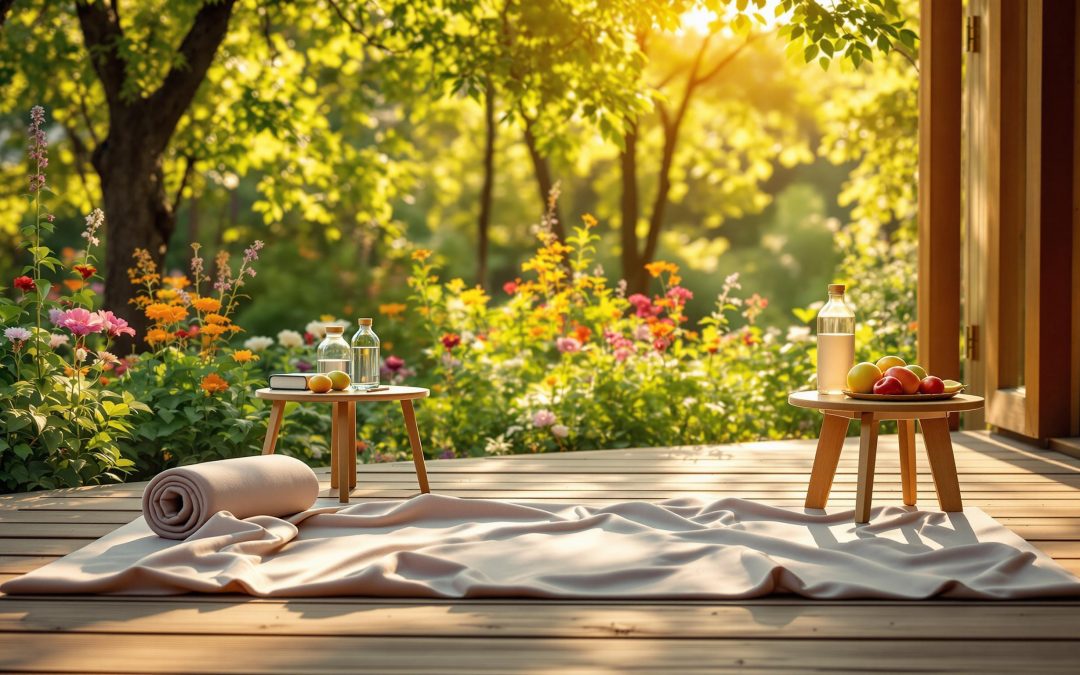
Your first wellness retreat is a chance to relax and reconnect with yourself. Here’s a quick guide to help you prepare:
- Set Goals: Write down what you want to achieve – stress relief, better health, or personal growth.
- Practice Meditation: Start with 5-10 minutes daily to ease into the retreat’s reflective atmosphere.
- Pack Smart: Bring essentials like toiletries, comfortable clothing, hiking boots, a journal, and weather-appropriate gear.
- Adjust Your Diet: Reduce caffeine, alcohol, and processed foods a few weeks before. Focus on fresh fruits, vegetables, and lean proteins.
- Stay Active: Walk daily, try light yoga, and break in any new footwear.
- Improve Sleep: Create a bedtime routine – avoid screens, keep your room cool, and relax before bed.
- Unplug: Reduce screen time gradually and set communication boundaries for the retreat.
A wellness retreat is about stepping away from daily stress and focusing on yourself. With these steps, you’ll be ready to fully embrace the experience.
A Guide to Planning a SOLO RETREAT: Rest, Reflect & Renew
Mental Preparation Steps
Getting your mind ready can make your retreat much more rewarding. By setting clear goals and practicing mindfulness ahead of time, you’ll be better equipped to fully embrace the experience.
Write Down Your Goals
Turn your retreat into a meaningful journey by reflecting on what you want to achieve. Think about why you’re taking this time for yourself and what outcomes you hope for.
"Purposefully deciding your reasoning for your time away and what you hope to get out of it can turn a mindless vacation into a more intentional, fruitful one."
Here are some goal categories to guide your planning:
| Goal Category | Examples to Consider |
|---|---|
| Personal Growth | Managing stress, exploring self-awareness, emotional healing |
| Physical Health | Building fitness habits, learning about nutrition, weight management |
| Relationships | Strengthening self-connection, improving communication |
| Life Changes | Navigating career shifts, adopting new habits, lifestyle changes |
Jotting down your goals in a journal can help you stay on track and see your progress.
Start Basic Meditation
Getting into meditation before your retreat can help you ease into its reflective atmosphere. Dr. Gary Soffer, a Yale Medicine pediatric allergist, explains:
"People should be aware that meditating is not as hard as they think it is, and that no one is a ‘bad meditator.’ The most important thing is that meditation is about paying attention – beyond that, it’s a matter of keeping it simple."
Here’s how to start a simple meditation routine:
- Pick a time that works for you.
- Begin with short sessions, around 5-10 minutes.
- Set up a quiet, comfortable space.
Focus on your breathing. If your mind wanders, gently guide it back to your breath. Amber Battishill, Creator of Mommy Gone Healthy, offers this encouragement:
"Remember this is a practice, not perfection! Be kind to yourself and your new practice."
For extra help, try beginner-friendly apps like Calm, Headspace, or Insight Timer. Once your mind is in the right place, you’ll be ready to prepare for the next steps of your retreat.
What to Pack
Plan your packing carefully to make the most of your retreat.
Must-Have Items
Here’s a quick checklist of essentials:
| Category | Items to Bring |
|---|---|
| Personal Care | Medications, toiletries, sunscreen, bug spray |
| Hydration | Reusable water bottle |
| Wellness Tools | Journal, sleep aids |
"Nature is an incredibly healing atmosphere for any travel experience. This is especially true when you are prepared. Nothing ruins an enjoyable moment like too many bug bites or a sunburn." – Sara Quiriconi, Wellness Travel Expert
Don’t stop at essentials – pack a few extras for added comfort.
Comfort Items
These items can make your retreat more enjoyable:
- A cozy travel blanket for outdoor meditation
- Earplugs and an eye mask for better sleep
- A personal journal to jot down thoughts or reflections
- Photos of loved ones for emotional support
- CBD balm or muscle relaxants to ease physical tension
Now, let’s focus on what you’ll need for outdoor adventures.
Outdoor Activity Gear
Be ready for any weather or activity with the right gear:
"Layering is important, and don’t forget your rain gear." – Canyon Ranch
Here’s what to pack for outdoor comfort:
| Weather Protection | Activity Gear | Footwear |
|---|---|---|
| Sun hat with brim | Moisture-wicking layers | Broken-in hiking boots |
| Rain jacket | Long-sleeved UV shirts | Supportive walking shoes |
| SPF clothing | Breathable pants | |
| Sunglasses |
sbb-itb-77c7b55
Physical Readiness Tips
Get your body ready with these tips to make the most of your retreat.
Food and Diet Changes
Start adjusting your diet about a month before your retreat:
- 4+ weeks out: Cut out alcohol and reduce foods that may cause inflammation.
- 2 weeks out: Limit caffeine, chocolate, and other stimulants.
- 72 hours out: Avoid foods with quinine, like grapefruit and tonic water.
Focus on eating:
- Complex carbs
- Leafy greens and other vegetables
- Fresh fruits
- Nuts and seeds
- Lean proteins
- Healthy fats
Changing your diet is a great first step. Adding light physical activity to your routine will help even more.
Exercise Preparation
Pair your diet changes with daily movement to build stamina:
- Go for walks and gradually increase your distance.
- Incorporate stretching or light yoga.
- Try simple strength exercises.
- Break in any hiking boots you plan to use.
Sleep Schedule Adjustment
Getting quality sleep is just as important as diet and exercise. Adjust your routine to improve rest before your retreat:
- Keep your room cool (64–66°F).
- Use blackout curtains to block light.
- Try a white noise machine if needed.
"Sleep is an essential component of our health, and something we need to put just as much effort into as our diet and exercise." – Mountain Trek
Here’s a pre-sleep routine to follow starting two weeks before your retreat:
- 8 hours before bed: Avoid caffeine.
- 2 hours before bed: Finish your last meal.
- 90 minutes before bed: Take a warm bath.
- 60 minutes before bed: Turn off electronics.
- 30 minutes before bed: Meditate or journal.
"Being surrounded by nature has been shown to have numerous mental health benefits, promoting relaxation and reducing stress"
Reducing Screen Time
Cut Back on Devices
Spending less time on screens can reduce stress and prepare your mind for the calm of retreat life. Start cutting back gradually before your retreat to ease the adjustment.
Set up areas in your home where devices are off-limits – like your bedroom, dining table, or meditation corner. These spaces help you build habits that align with the retreat environment.
"Like breaking any habit, you need to know that putting down your phone may be uncomfortable. The benefits include less anxiety, more space, more time to ground, deeper connection, and more creativity." – Coby Kozlowski, Kripalu Schools teacher-trainer and a certified life coach
Here are some steps to help reduce screen time:
- Start your day without devices for the first hour.
- Take 15-minute breaks where you avoid screens.
- Stop using devices an hour before bedtime.
- Keep mealtimes free of screens.
Blue light from devices can interfere with your sleep by disrupting serotonin and melatonin levels. Cutting back on screen time helps your body find its natural rhythm, making it easier to settle into retreat life.
With fewer digital distractions, you’ll also be better equipped to set clear communication boundaries during your retreat.
Set Communication Plans
After reducing your device use, create a plan to manage communication during your retreat. This helps protect your experience from outside interruptions.
"We all want to feel connected. Often, people rely on their devices to get plugged into life. But the truth is that it doesn’t fulfill us in the ways we long for. To me, it is critical to unplug, in order to actually plug in." – Coby Kozlowski
Here’s how you can set up a communication plan:
- Choose one or two people as emergency contacts.
- Inform colleagues with an auto-reply about your availability.
- Consider temporarily deactivating social media accounts.
- Use "Do Not Disturb" mode, allowing only emergency contacts to reach you.
"Misuse and overuse of the senses create imbalance in the nervous system. Every time you engage on email or social media, it stimulates the circuits in your brain and nervous system, activating the stress response and making it difficult to rest and restore." – Erin Casperson, Dean of the Kripalu School of Ayurveda
Fill the time you’d normally spend on screens with activities that help you unwind and reset:
- Read a physical book.
- Journal your thoughts.
- Take a walk outdoors.
- Practice simple breathing exercises.
- Create something artistic.
Building Connections
Meeting Other Participants
Focus on being present to form real connections with others. These interactions can greatly enhance your retreat experience.
Take advantage of natural moments to connect – switch up where you sit, arrive early for group activities, or use breaks to strike up meaningful conversations.
"The sacred pause is where all true integration takes place." – Christabel, Founder Breath of Bliss Academy
Consider jotting down your thoughts in a journal during breaks. Being offline not only deepens your mindfulness practice but also helps you engage more fully with the group. Treat these interactions as an integral part of your journey.
Outdoor Activities
Deepen your connections through shared outdoor experiences. Activities in nature often create opportunities for genuine conversations and stronger bonds.
Here’s how to prepare for outdoor activities:
- Pack layers, rain gear, and sturdy footwear.
- Bring a reusable water bottle and stay present instead of focusing on taking photos.
- Follow any safety instructions provided by facilitators.
Be open and flexible – check in with facilitators as needed or embrace spontaneous moments. After the retreat, consider keeping in touch with the friends you’ve made to continue building the supportive community you started.
Conclusion
Key Takeaways
Preparing for your first retreat involves thoughtful planning. Here’s what to focus on:
- Mental Preparation: Set clear intentions and start meditating.
- Physical Readiness: Prioritize good sleep and a balanced diet.
- Digital Detox: Plan communication limits and reduce screen time.
- Packing Smart: Bring what you need for both practicality and comfort.
"Retreats are unique because they’re a transformational journey. It’s something you embark on with a purpose… You don’t just go to a place and leave; you bring back tools to implement in your daily life. The retreat is about YOU. It gives you dedicated space to grow individually or alongside the support of a group." – Laura Montesanti, founder and managing director at Synergy
These steps help ensure your retreat is meaningful and focused on growth.
Taking the First Step
Start your journey today. Dr. Sanam Hafeez, psychologist and Columbia University faculty member, highlights:
"Being surrounded by nature has been shown to have numerous mental health benefits, promoting relaxation and reducing stress"
A wellness retreat is a chance to invest in yourself. Contact Elohee Retreat Center to book your experience. With expert facilitators and a peaceful natural setting, it’s the perfect place to recharge and grow.
Recent Comments