
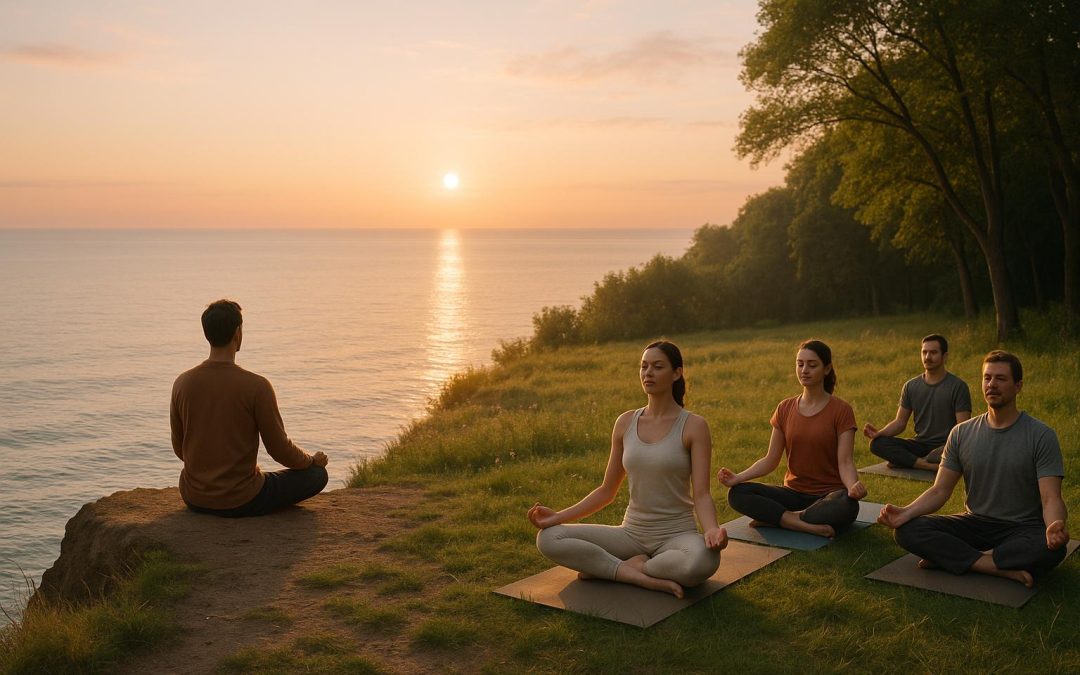
When choosing a wellness retreat, the decision often comes down to group retreats or solo retreats. Here’s a quick summary to help you decide:
- Group Retreats: Best for those seeking connection, shared experiences, and professional guidance. Activities are structured, and you’ll bond with others in a supportive environment.
- Solo Retreats: Ideal for self-reflection, personal growth, and flexibility. You control your schedule and enjoy uninterrupted time in solitude.
Quick Comparison:
| Aspect | Group Retreats | Solo Retreats |
|---|---|---|
| Cost | $500–$2,500 per person | $1,000–$5,000+ |
| Duration | 3–7 days | 2–14 days |
| Activities | Guided group sessions | Self-directed practices |
| Support | Professional guides & peers | Limited staff support |
| Best For | Building connections, learning | Deep introspection, flexibility |
Key Takeaway:
Choose a group retreat if you thrive in structured, social environments. Opt for a solo retreat if you need privacy and time to focus inward. Both options can transform your well-being – pick what aligns with your goals.
Ep28 Dream Yoga, Solo Retreat Guide, & Unlocking the Human Potential – Glenn Mullin
What Group Retreats Offer
Group retreats bring together structured guidance and a sense of community, creating an environment that can greatly boost your wellness journey. In fact, research indicates a 12% improvement in overall well-being within just two weeks of attending a group retreat. Here’s how these retreats help foster meaningful connections and personal growth.
Building Connections with Others
One of the key benefits of group retreats is the opportunity to connect with others who share similar goals and experiences. These connections often evolve into long-term support networks that encourage continued personal development.
"Sharing your story with a group of individuals on the same journey as you creates deep bonds and a sense of community. The result is often a supportive network that continues to walk by your side long after the retreat has ended." – Journey Tree Healing
Studies show that group bonding can increase feelings of connectedness by an impressive 131% within just two weeks.
Professional Guidance and Programs
Retreats are carefully designed by skilled facilitators to provide a safe and encouraging space for personal growth. With small group sizes – typically no more than 10 participants – everyone has the chance to be heard and supported.
Activities are thoughtfully curated to promote both individual and group development, including:
- Wellness practices: Meditation, yoga, and mindfulness exercises
- Workshops: Seminars focused on self-discovery and skill-building
- Outdoor experiences: Group hikes and nature-based mindfulness
- Healing sessions: Sound therapy and other therapeutic practices
These activities not only help participants grow individually but also strengthen group cohesion.
Learning from Fellow Participants
Another standout feature of group retreats is the chance to learn from others. Hearing different perspectives and sharing experiences creates a collaborative environment that can inspire personal breakthroughs.
Here’s how group settings encourage growth:
- Listening to others’ stories sparks new insights and ideas
- Shared vulnerability fosters trust and deeper emotional work
- Group discussions offer alternative ways to view challenges
- The collective energy of the group enhances the retreat’s impact
Many participants report feeling less stressed and more supported, thanks to the mutual understanding and compassion that naturally develop in these spaces.
What Solo Retreats Offer
Solo retreats provide a chance to step away from the busyness of life and focus entirely on personal growth and self-reflection. In a peaceful, private setting, they encourage mindfulness and a deeper connection with both your inner self and the natural world.
Time for Self-Discovery
One of the greatest benefits of a solo retreat is the freedom to explore your thoughts and emotions without external distractions. Without the influence of social pressures, you can truly focus on yourself. This quiet time allows you to process feelings, cultivate mindfulness, and gain a better understanding of who you are. It’s also an opportunity to build emotional strength and resilience on your own terms.
Setting Your Own Schedule
Another highlight of solo retreats is the ability to design your day around what feels right for you. There’s no need to follow a group’s pace or schedule – you’re in charge. This flexibility not only boosts your confidence but also reinforces your dedication to personal development.
"The mere fact that you can do it, while adhering to the regime, and staying to the end without going crazy or leaving, is something in and of itself. Apart from the quality of what happened there, you at least did that and you’re not relying on any authority figure or the group or what other people will think." – Jane Dobisz
Here’s an example of how a solo retreat day might look:
| Time | Activity | Purpose |
|---|---|---|
| Dawn | Meditation & Yoga | Start the day with calm focus |
| Morning | Nature Walks & Journaling | Reflect and process thoughts |
| Afternoon | Art or Creative Practice | Tap into self-expression |
| Evening | Contemplative Practices | Wind down and integrate ideas |
Personal Time in Nature
Nature often serves as the perfect companion during a solo retreat. Spending time outdoors can be both healing and energizing, offering a sense of renewal that’s difficult to find elsewhere.
"Even without any [awareness] training, we’ve found that spending a week alone in the woods has the equivalent effect of spending time in a meditation retreat." – John Milton
"Some of my happiest moments have been by myself in the woods. The wilderness has a timeless quality; it also helps us be more aware of the immensity of things, especially at night. It’s harder to be quite so neurotic in nature." – Joseph Goldstein
Whether it’s a walk in the woods or simply sitting quietly in a natural setting, these moments can bring a profound sense of peace and wonder. For those new to solo retreats, starting with shorter experiences is often recommended. These nature-immersive retreats offer a refreshing contrast to the shared energy of group settings, paving the way for a unique journey toward wellness and self-awareness.
sbb-itb-77c7b55
Direct Comparison: Group vs. Solo
Here’s a breakdown of the main differences between group and solo retreats to help you decide which option fits your needs.
Cost and Experience Breakdown
| Aspect | Group Retreats | Solo Retreats |
|---|---|---|
| Average Cost | $500–2,500 per person | $1,000–5,000+ |
| Typical Duration | 3–7 days | 2–14 days |
| Accommodation | Shared or private rooms | Private rooms/cabins |
| Meals | Communal dining | Individual or flexible dining |
| Activities | Scheduled group sessions | Self-directed practice |
| Support | Professional guides & peer support | Limited staff support |
| Schedule | Fixed daily program | Flexible personal schedule |
Costs can vary widely depending on location, amenities, and the specific program. For instance, some group retreats start at approximately $1,125 per person per night.
While these logistical details are important, the real deciding factor is often your personality and what you’re hoping to achieve.
Who Benefits Most from Each Type
The choice between group and solo retreats largely depends on your personal preferences and goals. Group retreats emphasize connection and shared growth, while solo retreats offer space for deeper self-exploration.
Group Retreats Are Ideal For:
- People seeking a sense of community and shared experiences
- Those navigating similar life changes alongside others
- Individuals who thrive with structured daily programs
- Anyone who benefits from peer encouragement and accountability
Solo Retreats Are Ideal For:
- Independent individuals who enjoy self-reflection
- Those processing personal challenges or transitions
- People who value complete freedom in their schedule
- Anyone needing uninterrupted time for introspection
Interestingly, research suggests preferences are fairly balanced: about one-third of participants choose solo retreats, while another third opt for group settings with guided support. This highlights how both formats cater to different, yet equally valuable, wellness goals.
Making Your Choice
After understanding the differences between retreat types, it’s time to focus on what suits you best. Use the following considerations to guide your decision.
Key Questions to Consider
Social Preferences and Energy
- Do you feel recharged by social interactions?
- Are you comfortable opening up and sharing personal experiences?
- Would you rather spend time in private reflection?
Schedule and Structure
- Do you thrive with a set schedule or prefer a more flexible approach?
- How much structure do you want in your daily routine?
- Would guidance help you stay focused on your goals?
Life Context
- Are you seeking solitude to work through personal challenges?
- Do you need a break from daily distractions?
- Are you looking for new perspectives from others who share similar experiences?
Take a moment to reflect on these questions and connect your answers to your retreat goals.
Matching Goals to Retreat Types
| Goal | Best Retreat Type | Why It Works |
|---|---|---|
| Nervous system reset | Solo | You control the environment entirely. |
| Processing past trauma | Solo | Provides a safe, private space for emotional work. |
| Building new connections | Group | Encourages meaningful social interactions. |
| Learning specific practices | Group | Offers direct guidance and peer learning. |
| Deep self-reflection | Solo | Ensures uninterrupted time for introspection. |
| Stress reduction | Either | Depends on personal preferences and needs. |
"For me, a solo retreat is like an alignment check for the soul. It’s a chance to strip away the distractions and noise, to hear your own thoughts, and see what bubbles up."
– Dominique Farrar
Your wellness journey is deeply personal. While some people find healing and growth in group settings, others may uncover profound insights through solitude. The key is being honest about your current needs and how comfortable you feel in different social settings.
Signs You Might Prefer a Solo Retreat:
- You need space to process emotions without outside influence.
- You’re looking to reconnect with a neglected passion.
- You value having full control over your daily schedule.
- You want minimal distractions for focused inner work.
Signs a Group Retreat Could Be Right:
- You’re seeking structured guidance and support.
- You feel energized by shared experiences.
- You want to learn from others’ perspectives.
- You benefit from the collective energy of a healing environment.
Conclusion: Your Next Steps
Starting your retreat journey begins with an honest look at what you need most right now. Both group and solo retreats offer valuable ways to support your wellness, but each caters to different goals and preferences.
Making Your Choice
If you’re drawn to shared experiences and structured guidance, a group retreat may be the right fit. Research shows that group settings can greatly enhance feelings of connection and belonging. On the other hand, solo retreats are ideal for those craving deep introspection and the freedom to shape their own schedule.
"Just giving myself the dedicated space and time to ‘retreat’ every couple of months has allowed me to return to my day-to-day life with increased energy, clarity, and mindfulness."
Steps to Get Started
Here’s how to set yourself up for a successful retreat:
- Plan your retreat at least 2–3 months in advance.
- Define clear goals or intentions for your time away.
- Choose a location that supports your needs, whether it’s a serene natural setting or a cozy space at home.
- Set boundaries to minimize distractions.
- Keep a flexible daily structure to allow for both reflection and spontaneity.
The key is aligning your retreat format with what you need most in this moment. Whether you’re seeking connection with others or a quiet space to recharge, this choice has the power to transform your well-being.
"When you step away to recharge, you come back with more energy, focus, and clarity to handle all the things (and probably with a little more joy, too)."
Your retreat is waiting – pick the path that best supports your growth and take that first step toward renewed energy and focus.
FAQs
How can I choose between a group retreat and a solo retreat for my wellness journey?
Choosing between a solo retreat or a group retreat largely hinges on your personal goals and what you’re hoping to get out of the experience.
If you’re craving some quiet time to reflect, explore your thoughts, or reconnect with yourself, a solo retreat might be just what you need. These retreats give you the space to dive deep into your own mind without distractions, offering an ideal setting for personal clarity and self-discovery.
On the flip side, group retreats bring people together for shared experiences and mutual support. They’re a great option if you enjoy connecting with others, learning from different perspectives, or thriving in a collaborative environment. The collective energy of a group can often inspire growth and provide encouragement.
Ultimately, it comes down to what feels right for you. If solitude and introspection are your priorities, a solo retreat could be the way to go. But if you’re seeking connection and the power of shared experiences, a group retreat might be just the experience you’re looking for.
How do I decide on the right duration and budget for my retreat?
When organizing your retreat, think about how much time you can dedicate, what you hope to achieve, and your budget. Retreats can last anywhere from a weekend to several weeks, so choose a duration that fits your schedule and lets you fully engage in the experience.
When it comes to budgeting, factor in all possible expenses, such as lodging, meals, activities, and travel. Don’t forget to account for extras like tips or optional upgrades. In the U.S., the average retreat costs between $2,000 and $3,000 per person, though prices can vary depending on the location, length, and type of retreat. Focus on selecting an option that supports your wellness goals while remaining within your financial limits.
How can I make the most of a solo retreat for self-reflection and personal growth?
To get the most out of your solo retreat, start by defining what you hope to achieve. Are you looking to unwind, gain mental clarity, or reconnect with the natural world? Once you’ve pinpointed your focus, pick a location that supports those goals – somewhere serene and conducive to reflection.
Plan time for activities that encourage self-discovery, like journaling, meditating, or taking leisurely, mindful walks outdoors. Keep your schedule loose yet intentional, balancing structured practices with quiet, unplanned moments. By approaching your retreat with purpose and crafting an atmosphere that supports your well-being, you’ll create an experience that feels both enriching and deeply restorative.
Recent Comments