
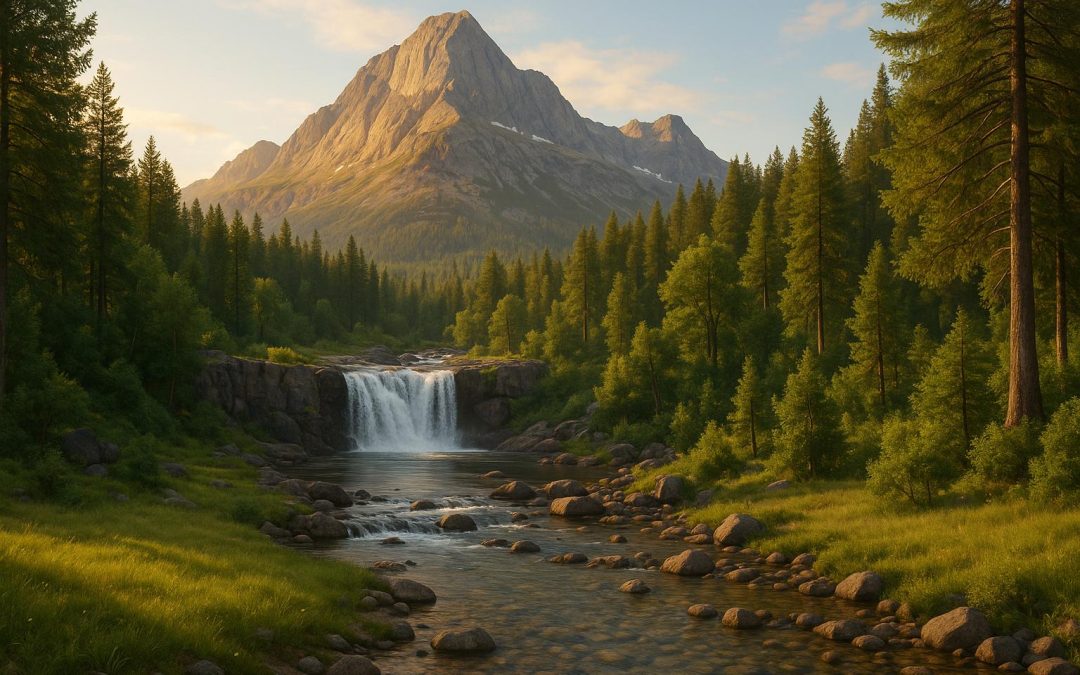
Nature has a unique way of healing both the mind and body. Spending time outdoors – whether in mountains, near waterfalls, or in untamed wild spaces – can reduce stress, improve focus, and boost mood. Here’s why:
- Mountains: Their vastness inspires awe and resilience. Activities like hiking lower stress hormones and provide mental clarity.
- Waterfalls: The rhythmic sounds and negative ions promote relaxation and improve focus.
- Wild Spaces: These untouched areas spark creativity and help process emotions.
Even 20 minutes in nature can lower cortisol levels by 21.3%, while 120 minutes a week outdoors is linked to lasting mental health benefits. From reducing anxiety to improving cognitive function, nature is a powerful tool for mental renewal. Whether it’s a short walk outside or a retreat to places like Elohee in Georgia, reconnecting with nature is a simple yet impactful way to support well-being.
Harness the Healing Power of Nature: Utilize Your Senses
The Science Behind Nature’s Mental Health Benefits
The idea that nature can heal and rejuvenate isn’t just poetic – it’s rooted in decades of scientific research. By examining psychological theories and studies, we can understand why environments like mountains, waterfalls, and untouched wilderness have such a powerful impact on our mental well-being.
Why Nature Has Such an Impact: Key Theories
Three prominent psychological theories explain how natural environments enhance mental health. Each offers a different lens on why spending time outdoors is so beneficial.
The Biophilia Hypothesis proposes that humans are naturally drawn to the natural world due to evolutionary ties. E.O. Wilson, the scientist behind this idea, expressed it beautifully:
"Our existence depends on this propensity, our spirit is woven from it, hope rises from its current".
Dr. Qing Li, an expert from Nippon Medical School in Tokyo, builds on this idea:
"We are ‘hard-wired’ to affiliate with the natural world, and just as our health improves when we are in it, so our health suffers when we are disconnected from it."
Another framework, Stress Reduction Theory (SRT), focuses on the physical effects of nature. Developed by Roger Ulrich, this theory shows how natural settings help the body recover from stress. Measurable outcomes, such as lower blood pressure and slower heart rates, highlight nature’s calming effect in contrast to urban environments.
Lastly, Attention Restoration Theory (ART) highlights the mental benefits of nature. It explains how natural environments engage our involuntary attention – like the way we might be captivated by a flowing stream – allowing our directed attention, which requires effort, to rest and recharge. Unlike the constant demands of urban stimuli, nature provides this "soft fascination", which supports cognitive recovery.
Together, these theories illustrate why a simple hike or a walk in the park can reduce stress, sharpen focus, and fulfill our innate need to connect with the natural world. They also lay the groundwork for the extensive research quantifying nature’s benefits.
What the Research Says About Nature and Mental Health
The mental health benefits of nature are well-documented. A detailed review revealed that 92% of studies showed health improvements when people spent time outdoors, with 98% specifically noting better mental health outcomes.
One of the most striking benefits is stress reduction. Over 40 experimental studies consistently found that time in nature lowers stress, as shown by reduced heart rates, blood pressure, and perceived stress levels. Meta-analyses also confirm that exposure to natural settings decreases cortisol, the hormone linked to stress.
Nature also enhances cognitive function. Studies have shown that time outdoors improves attention, executive function, and mental clarity compared to urban settings. Even brain scans reveal that nature exposure influences the prefrontal cortex, the area responsible for emotional regulation.
Physical health improvements add another layer to mental well-being. Spending time in forests, for example, has been linked to reduced feelings of hostility, anxiety, and depression in individuals dealing with both acute and chronic stress. Blood pressure readings in forest environments are noticeably lower than those taken elsewhere.
Early exposure to green spaces may even protect mental health long-term. A Danish study tracking nearly one million people over 28 years found that children who grew up near green spaces had a reduced risk of developing psychiatric disorders later in life .
Interestingly, not all natural spaces are equal. Research suggests urban forests might be better than urban parks at lowering cortisol, heart rate, and blood pressure. Similarly, "blue spaces", like oceans and rivers, often provide stronger restorative effects than green spaces .
The amount of time spent in nature also matters. People who spent 5–8 hours outdoors on weekends were less likely to experience even mild depression compared to those who spent less than 30 minutes outside. For children, just 20 minutes of daily green space exposure led to almost five times more moderate to vigorous physical activity compared to those with limited outdoor time.
Scientists are uncovering the mechanisms behind these benefits. For instance, plants release phytoncides – antimicrobial compounds that, when inhaled, can lower blood pressure and boost immune function. Soil bacteria like Mycobacterium vaccae may also play a role in reducing anxiety and improving immunity. Other factors, such as fractal patterns in nature, serotonin boosts from sunlight, higher vitamin D levels, and calming natural sounds, all contribute to nature’s healing effects.
This growing body of evidence explains why natural spaces like forests, waterfalls, and oceans aren’t just beautiful – they actively support mental wellness in unique ways. In the next section, we’ll dive deeper into how specific environments contribute to this process.
How Mountains, Waterfalls, and Wild Spaces Help Mental Health
Nature has an incredible way of lifting our spirits. Whether it’s the towering presence of mountains, the soothing flow of waterfalls, or the untamed beauty of wild spaces, each environment offers unique mental health benefits. These natural settings work their magic through distinct psychological processes, reminding us of nature’s role in restoring balance and well-being.
Mountains: Broadening Perspective and Building Resilience
Mountains have a way of making us feel small – in the best possible sense. Their vastness inspires awe, while the challenges they present, like steep trails and unpredictable weather, build resilience. Studies show that activities like hiking in mountainous regions can broaden our perspective and trigger adaptive stress responses, helping us face life’s difficulties with greater strength. In Spain, for instance, 15.8% of the population turned to hiking and mountaineering in 2020, drawn by the mental and physical rewards these activities offer.
The act of hiking itself demands focus, grounding us in the present moment. Pair that with the sweeping, inspiring views, and you’ve got a recipe for mental clarity. Mountains don’t just test us physically – they also encourage us to reflect, reset, and reconnect with ourselves.
Waterfalls: A Natural Source of Calm and Focus
There’s something mesmerizing about waterfalls – the way they cascade, the rhythmic sound of rushing water, the mist that fills the air. These natural wonders are more than just beautiful; they actively calm the mind and body. The sight and sound of waterfalls can lower heart rate and blood pressure while releasing endorphins, those feel-good chemicals that enhance overall well-being.
Interestingly, waterfalls also produce negative ions, which have been linked to increased serotonin levels. This can reduce stress and improve focus, making waterfalls a natural antidote to modern-day anxiety. Research even shows that simply looking at images of waterfalls can boost mood and relaxation while reducing negative emotions compared to urban scenes. The soothing cascade of water influences brain wave patterns, creating a meditative state that quiets mental noise and encourages mindfulness.
For the full effect, experts recommend unplugging from technology and immersing yourself in the moment. Take deep breaths, tune into the sound of the water, and let the experience wash over you. Beyond waterfalls, the wild outdoors offers even more opportunities for emotional healing.
Wild Spaces: Unlocking Creativity and Emotional Recovery
Wild spaces are where creativity thrives. These unstructured environments allow our minds to wander freely, sparking innovative ideas and enhancing problem-solving skills. Research suggests that combining time in nature with creative activities can amplify cognitive function, making it easier to think outside the box.
But wild spaces aren’t just about creativity – they’re also a haven for emotional recovery. The open, untamed quality of these areas provides the perfect backdrop for processing complex emotions. Engaging in creative pursuits, like painting or journaling outdoors, has been shown to reduce stress, ease negative feelings, and calm the amygdala, the part of the brain linked to anxiety.
Take Ray Johnston, for example. After facing a life-changing medical diagnosis and battling depression, he found healing by immersing himself in music while surrounded by nature. Even simpler activities, like coloring outdoors, can bring comfort and help manage pain.
Wild spaces also encourage connection. Group activities like outdoor art sessions or music gatherings not only strengthen social bonds but also preserve the restorative power of the environment. By embracing the spontaneity and freedom of these spaces, we can unlock creativity and support emotional well-being in ways that feel both natural and deeply fulfilling.
Whether it’s the awe of mountains, the calm of waterfalls, or the inspiration of wild spaces, these landscapes offer a variety of ways to recharge your mind and spirit. Each one provides its own path to mental renewal, helping us navigate life with greater clarity and strength.
sbb-itb-77c7b55
Nature-Based Wellness at Elohee Retreat Center
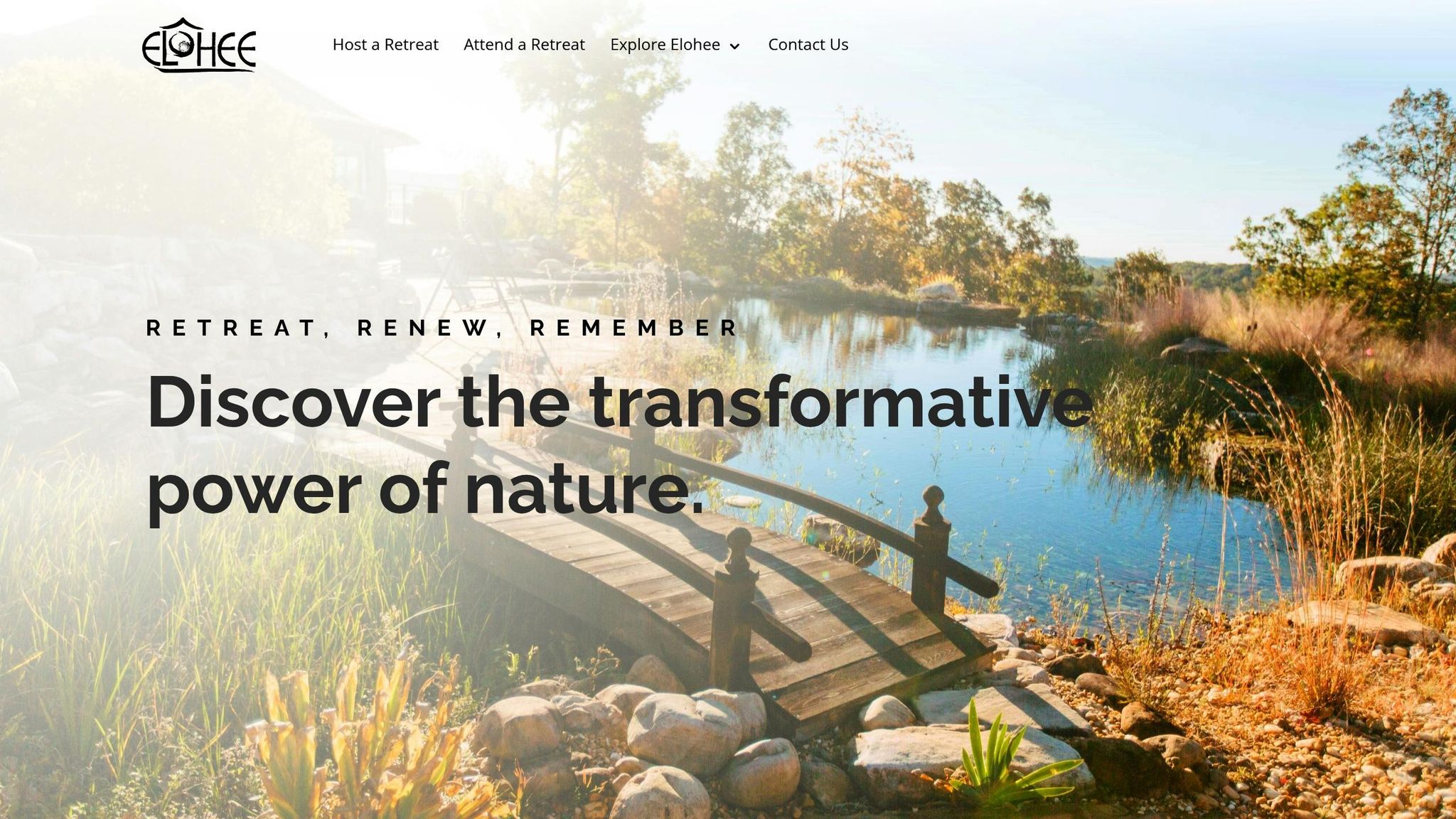
Tucked away in the Blue Ridge Mountains of North Georgia, the Elohee Retreat Center is a haven where the restorative power of nature takes center stage. Just a short drive from major cities, this 220-acre sanctuary is home to diverse ecosystems that create an ideal environment for mental and emotional renewal [25,32]. Elohee offers a variety of activities and programs that tap into the natural world’s ability to heal and rejuvenate.
"Here at Elohee Retreat Center, we invite you to a tranquil oasis of self-discovery, growth, and holistic wellness."
Eve Cook, the center’s founder, was inspired to create Elohee after experiencing the transformative effect of these mountains during her personal battle with Refractory Hodgkin’s Lymphoma. Her journey became the foundation for the center’s mission.
Nature Activities and Programs
Elohee’s programs are thoughtfully designed to help guests engage with the natural world in meaningful ways. The center’s location in the mountains, surrounded by waterfalls and untouched landscapes, provides the perfect backdrop for activities that promote focus, resilience, and emotional balance. Guests can explore four miles of hiking trails that wind through forested valleys and open ridges, offering a chance to reconnect with the outdoors.
One of the highlights is the 100-foot waterfall canyon, a serene spot where meditation sessions help calm the mind and restore inner peace [25,28]. The practice of forest bathing is another key offering. Guests are encouraged to wander through the sanctuary’s lush surroundings, leaving behind the distractions of technology to embrace the rhythms of nature. This unstructured time in the forest sparks creativity and supports emotional healing.
Elohee also hosts unique retreats that blend nature’s healing power with personal growth. For example, the "Lift the Burden of Empathy and Embrace Your Power" retreat, scheduled for October 31 – November 2, 2025, combines workshops with guided nature experiences, offering access to hiking trails and the waterfall. Similarly, the Rest & Relaxation Weekend in July 2024 showcased Elohee’s holistic approach, featuring yoga, meditation, guided hikes, evening bonfires, and optional massages or Reiki sessions – all designed to help participants fully immerse themselves in nature-based wellness.
Facilities Built for Nature Connection
Elohee’s facilities are purposefully designed to complement its outdoor experiences, creating spaces that deepen the connection to the natural world. The center features three main areas – the sanctuary, Bald Mountain center, and the Thanksgiving House – each thoughtfully integrated into the environment. Together, these spaces can accommodate up to 50 overnight guests.
"Elohee’s structures are built to embrace the specific eco-niche of its surroundings. This conscious partnership with the Earth aids in personal transformation by connecting us with its inherent healing energies."
Mandala Hall, the center’s main gathering space, offers breathtaking views of the surrounding mountains and valleys. It serves as a venue for workshops and group activities, fostering mental clarity and inspiration [26,35]. For smaller, more intimate sessions, the Forest Studio provides a secluded setting surrounded by nature, encouraging creativity and emotional recovery.
The Thanksgiving House, Elohee’s original structure, is a six-bedroom retreat nestled within a Rich Cove Forest. It features stunning views of the waterfall canyon from the house and its back patio. Guests staying in the En Suite Bed and Bath can enjoy a private balcony overlooking the falls, while the Stone Patio, complete with an outdoor fireplace, offers a peaceful spot to relax to the sound of cascading water [25,33,34].
At Bald Mountain, the center’s primary retreat area, guests are treated to panoramic views of the mountains and access to reflective spaces designed for meditation and recovery. Cottages tucked among the trees provide cozy accommodations that blend seamlessly with the natural surroundings. The reflection pond, set against the backdrop of the mountains, offers a tranquil space for quiet contemplation, combining the soothing presence of water with awe-inspiring vistas [25,32,34,35].
How to Add Nature to Your Daily Routine
You don’t need to overhaul your entire lifestyle to experience the calming and restorative effects of nature. Simple, everyday changes can help you build a deeper connection with the natural world and improve your mental well-being. Even brief moments outdoors can have a noticeable impact.
Here’s how you can incorporate nature into your daily life without much effort.
Easy Ways to Connect with Nature
Start your morning outdoors. Begin your day with a short walk outside. Morning sunlight and gentle movement can set a positive tone for your day and support your overall well-being. Research has found that as little as 10 minutes in nature can significantly improve mood and reduce stress levels in college students. Gen Meredith, Associate Director of the Master of Public Health Program, highlights this:
"It doesn’t take much time for the positive benefits to kick in – we’re talking 10 minutes outside in a space with nature."
Practice mindful observation. Take a few moments during your day to step outside and focus on the natural world around you. Listen to birds, notice the shifting clouds, or observe tiny details like leaves rustling in the wind. This type of gentle focus, often called "soft fascination", can help restore your attention and combat mental fatigue.
Turn everyday activities into outdoor experiences. Simple changes, like taking phone calls in a park, eating meals outside, or meditating in your backyard, can increase your exposure to nature and enhance your day-to-day routine.
Bring the outdoors inside. If getting outside isn’t always an option, bring elements of nature indoors. Add plants to your workspace, place fresh flowers in your home, or position your desk near a window with a view of greenery. Even photos or videos of nature can have a calming effect, though spending time outdoors is always more impactful.
Get creative in nature. Let the outdoors inspire your creativity. Try drawing, painting, writing, or taking photographs during your time outside. Combining creative activities with time in nature can fuel your imagination and support emotional well-being.
Exercise in green and blue spaces. Skip the gym and take your workout to a park, trail, or waterfront. Whether you’re walking, running, or cycling, exercising in natural settings has been shown to reduce stress and improve mood.
Start a small garden. Even if space is limited, you can create a mini-garden. Plant herbs on your windowsill, grow vegetables in pots on your balcony, or join a community garden. Caring for plants, even on a small scale, can deepen your connection to nature.
Give back to the environment. Participate in activities like litter-picking walks, volunteering for conservation projects, or planting native seeds in your area. These actions not only strengthen your relationship with nature but also help protect it for future generations.
Lisa Nisbet, PhD, a psychologist at Trent University, underscores the accessibility of nature’s benefits:
"You can boost your mood just by walking in nature, even in urban nature. And the sense of connection you have with the natural world seems to contribute to happiness even when you’re not physically immersed in nature."
By incorporating these habits into your routine, you can enjoy the steady mental and emotional benefits that nature provides.
Why Nature Retreats Work
While small, daily interactions with nature are powerful, immersive nature retreats take these benefits to the next level. Spending extended periods in places like mountains, forests, or near waterfalls can amplify the restorative effects of nature.
Retreats often combine the soothing presence of natural settings with structured activities like meditation by waterfalls, resilience-building hikes, and forest bathing. These experiences promote personal reflection, encourage community bonding, and help reset your stress levels.
Led by professional facilitators, these retreats ensure that activities are tailored to participants’ needs, making it easier to integrate nature-based practices into your everyday life once you return home. Whether it’s a weekend getaway or a longer escape, these immersive experiences can leave a lasting impact on your well-being.
Conclusion: Start Your Nature Healing Journey
The message is simple: spending time in mountains, near waterfalls, or in wild spaces can deeply enhance your mental and emotional well-being. Mountains offer perspective, waterfalls bring calm and focus, and wild spaces inspire creativity and emotional recovery. Nature, in all its forms, is a powerful companion on the path to wellness.
Studies back this up. Just 20 minutes in a park or 120 minutes of nature exposure per week can significantly improve your mood and overall well-being. Research also highlights that children with limited access to green spaces are at a 55% higher risk of developing mental health challenges compared to those with abundant exposure to nature.
Starting small makes a difference. Incorporate nature into your routine with simple habits like a morning walk, taking a moment to notice the trees and sky, or adding plants to your workspace. Even 5 minutes outdoors can brighten your mood. The key is making it a regular part of your life. Interestingly, the happiness you gain from connecting with nature often lingers, even when you’re back indoors.
If you’re looking to take it further, consider a retreat for a deeper connection. The Elohee Retreat Center in North Georgia, set across 220 acres, offers an immersive opportunity to experience the healing power of mountains, waterfalls, and untouched landscapes.
Whether you choose to start with small daily interactions or dive into an immersive retreat, reconnecting with nature is one of the simplest and most effective ways to support your mental health. Step outside and let nature work its magic.
FAQs
How does spending time in nature support mental health compared to traditional therapy?
Spending time outdoors has been proven to provide meaningful benefits for mental health, often working alongside traditional therapy to enhance its effectiveness. Studies show that being in natural settings – like mountains, waterfalls, or untamed wilderness – can lower stress levels, ease symptoms of anxiety and depression, and boost self-esteem. These environments naturally encourage relaxation and mental clarity, helping people feel more balanced and grounded.
Traditional therapy offers structured support and guidance, but nature adds a restorative element that nurtures emotional healing and personal growth. When combined, outdoor experiences and conventional mental health treatments can create a powerful approach to overall well-being.
How can I connect with nature while living a busy city life?
Incorporating nature into a hectic city lifestyle is more doable than you might think. Start by visiting local parks or community gardens – whether it’s for a brisk walk, a jog, or simply to relax and soak in the greenery. You can also weave nature into your daily life by holding outdoor meetings, practicing yoga in a nearby park, or decorating your home with a small indoor garden filled with plants.
Another way to connect with nature is by engaging your senses. Spend a few moments observing birds, listening to the calming sounds of a fountain, or feeling the textures of leaves and flowers. Even brief, mindful interactions with natural surroundings can work wonders for your mental health. Research consistently shows that spending time in urban green spaces can lower stress, lift your mood, and enhance overall well-being.
How do natural settings like mountains and waterfalls impact our mental well-being?
Spending time in places like mountains, waterfalls, or untamed landscapes can do wonders for your mental health. These natural environments have a way of melting away stress, helping you relax, and sharpening your mind. They work by stimulating your senses and stirring up emotions that lift your spirits. For instance, the soothing sound of a waterfall can bring a sense of calm, while the sheer presence of towering mountains often fills you with awe and a feeling of being part of something bigger.
Studies back this up, showing that being in nature doesn’t just brighten your mood – it also boosts focus and supports overall mental well-being. It taps into something deep within us, a natural craving to connect with the world around us, offering a much-needed break from the pressures of everyday life.
Recent Comments