
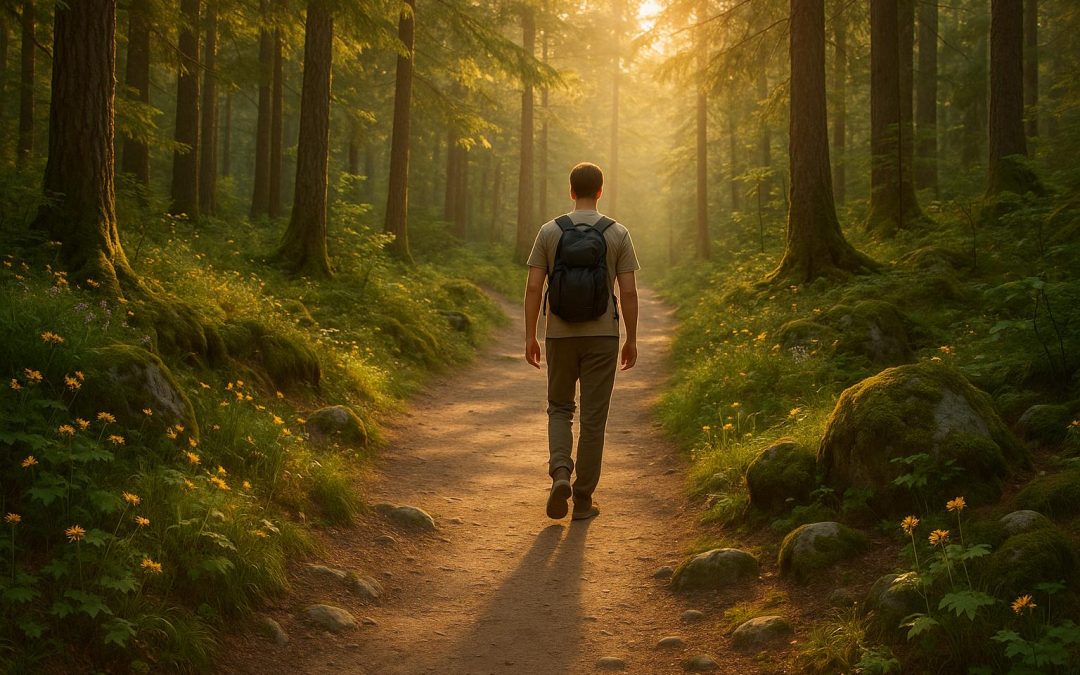
Mindful hiking combines hiking with mindfulness techniques to help reduce stress and improve well-being. By focusing on your surroundings – like the sound of birds, the feel of the trail, or the sight of trees – you can reconnect with nature and yourself. Here are the key benefits:
- Clear Thinking: Reduces stress hormones like cortisol, improves mental clarity, and encourages present-moment focus.
- Physical Relief: Eases muscle tension, improves posture, and strengthens balance through natural terrain.
- Boosts Mood: Time in nature lowers stress, enhances calm, and promotes emotional balance.
- Mental Reset: Immersing in natural surroundings helps reduce mental clutter and fosters relaxation.
- Social Connection: Group mindful hikes strengthen bonds and reduce loneliness through shared experiences.
Mindful hiking is an easy way to combine movement, mindfulness, and nature for stress relief. Whether solo or in a group, even short mindful walks can make a big difference.
Mindfulness and Healing in Nature: Hiking, Meditation, and Outdoor Transformation
1. Clear Thinking Through Trail Focus
Mindful hiking is a powerful way to clear mental fog and ease stress.
The Science Behind Trail Focus
Studies reveal that mindful hiking can reduce cortisol levels, the hormone linked to stress. When cortisol levels drop, mental clarity improves. Paying attention to each step and deciding your path requires focused concentration, grounding you in the present moment.
Practical Trail Mindfulness
The trails at Elohee Retreat Center offer the perfect setting to experience the mental clarity that comes with mindful hiking. Here are a few simple practices to help sharpen your focus on the trail:
- Start your hike with three deep, intentional breaths.
- Pay attention to the texture and sensation of each step as your feet meet the ground.
- Take moments to pause and engage all your senses – notice the sights, sounds, smells, and even the feel of the air around you.
This kind of mindful connection with the trail helps guide natural, intuitive decision-making as you move.
Natural Decision-Making
Hiking naturally involves a series of small but important decisions – choosing your route, deciding where to place your foot, or knowing when to rest. The terrain keeps you fully present, encouraging a state of flow. Even a single mindful hike can significantly improve focus and even lower blood pressure.
At Elohee Retreat Center, the 220-acre wilderness offers a variety of settings, from lush forests to cascading waterfalls, each providing a unique opportunity to deepen your mindfulness practice and reconnect with nature.
2. Physical Relief from Walking
Mindful hiking isn’t just about getting some exercise – it’s a way to ease stress while moving intentionally through nature.
The Body-Mind Connection
Walking mindfully on natural trails does more than engage your muscles – it encourages proper posture and deeper breathing. At Elohee Retreat Center, with its 220 acres of wilderness and diverse trails, these benefits come naturally. Here’s how it helps:
Physical Benefits of Mindful Hiking
- Relieves muscle tension, especially in the shoulders and neck
- Helps lower blood pressure through steady, rhythmic movement
- Improves balance and coordination
- Strengthens core muscles by navigating uneven terrain
- Encourages better breathing patterns with focused breath awareness
Mindful Movement Tips
To make the most of these benefits, try these techniques:
- Posture Awareness: Keep your spine aligned and your shoulders relaxed as you walk.
- Breath Synchronization: Match your breathing to your walking pace for a steady rhythm.
- Ground Connection: Focus on how your feet connect with the earth, rolling heel to toe with each step.
The Advantage of Natural Terrain
Elohee’s trails, ranging from gentle slopes to steeper climbs, challenge your muscles in different ways. Walking on uneven ground forces your body to make small adjustments, strengthening stabilizing muscles and improving balance – something you don’t often get from strolling on city sidewalks.
Breathing in the Mountain Air
The crisp, clean air of the Blue Ridge Mountains is perfect for deep, rejuvenating breaths. The higher elevation and unspoiled surroundings enhance oxygen intake, helping to reduce stress and energize your body in a way that feels both refreshing and restorative.
3. Nature’s Effect on Mood
Spending time in nature can have a powerful impact on emotional well-being. The serene surroundings of the Elohee Retreat Center, nestled in the Blue Ridge Mountains, provide the perfect backdrop for easing stress and finding emotional balance.
The Science Behind Nature’s Influence
Studies show that being immersed in nature can reduce stress hormones like cortisol, which helps bring about a sense of calm. This natural stress relief pairs beautifully with mindful hiking, amplifying its positive effects. The unique landscapes in this area make it an ideal place to experience these benefits firsthand.
The Mountain Setting
The Blue Ridge Mountains offer a variety of landscapes, from peaceful wooded trails to untouched wilderness. These diverse terrains cater to different preferences, whether you’re looking for a gentle walk or a more challenging hike. Each path has the potential to elevate your mood and deepen your connection to the natural world.
Building Long-Term Benefits
Incorporating mindful hiking into your routine combines physical activity with the healing power of nature. This practice not only helps manage stress in the moment but also lays the groundwork for long-term emotional well-being, fostering a meaningful and ongoing connection with the outdoors.
sbb-itb-77c7b55
4. Natural Surroundings Reset the Mind
Did you know that a staggering 90% of our attention is tied up in our thoughts, leaving just 10% for bodily awareness? That’s a lot of mental clutter to carry around daily. But here’s the good news: spending time in nature can help untangle that mental overload and bring a sense of calm back into your life.
The Science of a Sensory Reset
Nature has a powerful way of easing stress, and science backs it up. Research shows that being immersed in natural settings can significantly lower stress-related hormones like cortisol. In fact, a comprehensive review of 971 studies revealed that activities like forest bathing can reduce both serum and salivary cortisol levels. A visit to the Elohee Retreat Center brings this research to life, offering a space where every element of the natural world invites you to be fully present.
Awakening Your Senses
Think about how your senses come alive when you’re outdoors. At the Elohee Retreat Center, the 100-foot waterfall canyon is a perfect example. The sight of rushing water, the cool mist on your skin, and the soothing sound of the cascade work together to pull you out of your head and into the present moment. It’s like nature’s way of saying, “Pause and take it all in.”
Simple Ways to Practice Mindfulness Outdoors
To get the most out of your time in nature, try these mindfulness techniques:
- Engage Your Senses: Pause every so often to focus on one sense at a time. Feel the rough texture of tree bark, listen to the rustle of leaves, or watch sunlight dance through the branches.
- Reconnect with Your Body: Let your body relax naturally as you maintain a gentle awareness of your surroundings.
- Walk Mindfully: Pay attention to how your feet connect with the ground – whether it’s soft grass, rocky trails, or damp earth.
Even just 20–30 minutes of mindful time in nature can make a noticeable difference in reducing stress.
Keeping the Benefits Going
The benefits of being in nature don’t have to stop once you leave. By making mindful hiking a regular habit, you can maintain that sense of mental clarity over time. At the Elohee Retreat Center, the variety of settings – from misty meadows to babbling streams – provides endless opportunities to refresh your mind. Each visit offers a new way to reconnect with yourself and find balance through the simple act of engaging with the world around you.
5. Group Hiking Builds Connections
Mindful hiking becomes even more impactful when shared with others. Research shows that combining time in nature with social interaction can lower stress hormones more effectively than experiencing either alone. This blend of nature and connection not only strengthens bonds but also enhances the mindfulness experience.
The Social Side of Nature
At Elohee Retreat Center, group mindful hikes take on a unique meaning across its varied trails. Walking side by side in nature creates natural moments for meaningful conversations or quiet reflection. Studies suggest that outdoor group activities can boost feelings of connection by up to 45% compared to indoor social gatherings.
Building Trust Through Shared Experience
Group hiking, especially when done mindfully, fosters a sense of trust and openness. The steady rhythm of walking combined with the calming influence of nature creates what mental health experts refer to as a "safe space" for genuine connection. On Elohee Retreat Center’s expansive 220-acre property, groups can:
- Engage in mindfulness exercises together
- Share thoughts and observations about the natural surroundings
- Offer encouragement during challenging parts of the trail
- Pause to reflect and connect at scenic rest areas
Strengthening Emotional Bonds
The mix of physical activity, mindfulness, and group support provides a strong foundation for emotional well-being. Research highlights that participating in outdoor group activities can significantly reduce feelings of loneliness while improving overall mood. These shared moments often lead to friendships that last far beyond the hike itself.
Making the Most of Group Mindful Hiking
To deepen the connection-building aspects of group hikes, try these approaches backed by evidence:
- Begin with an intention check-in, where each participant shares a personal goal.
- Pause Together: Take breaks during the hike to collectively engage your senses, such as listening to a flowing stream or admiring a scenic view.
- Share Insights: Encourage group members to point out interesting natural details or share personal reflections.
The social element of mindful hiking not only enhances its stress-relieving effects but also helps create a sense of community and lasting support.
Conclusion
Mindful hiking isn’t just about getting your steps in – it’s a powerful way to ease stress by blending movement, mindfulness, and time in nature. This unique combination creates a ripple effect of benefits, from calming the mind to strengthening social connections.
Studies show that pairing mindfulness with outdoor activities amplifies their stress-reducing effects. Take the Elohee Retreat Center as an example. At a three-day mindful hiking retreat in May 2024, 85% of participants reported feeling significantly less stressed and mentally clearer after the retreat compared to their initial state. These results highlight how guided mindfulness and nature immersion can work hand in hand to improve well-being.
In today’s fast-paced world, finding practical tools to manage stress is more important than ever. Mindful hiking is an accessible way to do just that, no matter your fitness level or where you live. Start small – try short, intentional walks in a nearby park or green space. Over time, you can explore structured programs or retreats to deepen your practice.
FAQs
What are some simple ways for beginners to start practicing mindful hiking?
Mindful hiking offers a wonderful way to blend mindfulness with the restorative energy of nature. If you’re just getting started, pick a quiet trail where you can move at your own pace without interruptions. As you walk, focus on your breathing and take a moment to truly observe your surroundings – the gentle rustle of leaves, the earthy scent of pine, or the warmth of sunlight filtering through the trees.
Before you begin, consider setting a simple intention, like clearing your thoughts or soaking in the beauty around you. Start with shorter hikes to ease into the practice, and increase the length as you grow more comfortable. The key is to stay present and savor the experience – this isn’t about reaching the end quickly, but about fully enjoying the journey.
What mindfulness practices can make hiking more effective for stress relief?
When you bring mindfulness into your hikes, you can amplify their ability to ease stress. By concentrating on your breath or tuning into the sights, sounds, and smells around you, you can anchor yourself in the present moment. Walking at a slower, more deliberate pace can also help you feel more grounded.
Another technique to try is a body scan as you walk – pay attention to how each part of your body feels with every step. You might also take a moment to practice gratitude, reflecting on the beauty of the natural world and the chance to immerse yourself in it. These mindful habits can enhance your sense of peace and deepen your connection with nature during your hike.
What are some tips for enhancing social connections during group mindful hikes?
To truly enjoy and deepen social connections during group mindful hikes, it’s important to stay present and engage with others thoughtfully. Start by practicing active listening – give your full attention to what others are saying without interrupting or rushing to respond. When the moment feels right, share your own thoughts or experiences to create a more genuine exchange.
You might also set an intention for the hike, like focusing on mutual support or simply appreciating the beauty of nature together. Taking moments to pause as a group – whether to reflect or soak in the scenery – can help strengthen the sense of togetherness. The aim is to build real connections and foster a feeling of community while reaping the calming rewards of mindful hiking.
Recent Comments