

Biophilic design connects people with nature by integrating natural elements into built spaces. For wellness retreats, this approach creates calming environments that promote healing and relaxation. Key principles include:
- Natural Elements: Add plants, water features, and natural materials like wood and stone to enhance well-being.
- Natural Light and Airflow: Use large windows, skylights, and cross-ventilation to boost mood and regulate sleep.
- Organic Forms and Sensory Features: Incorporate natural shapes, textures, and sounds to create immersive, soothing spaces.
- Indoor-Outdoor Harmony: Blur boundaries with features like open courtyards, rooftop gardens, and infinity pools.
- Eco-Friendly Practices: Use reclaimed materials, renewable energy, and sustainable practices to reduce environmental impact.
- Mindfulness Spaces: Design yoga pavilions, meditation rooms, and quiet corners with natural views.
Why it matters: Studies show biophilic design reduces stress by 20%, improves mood, and enhances cognitive performance. It also supports sustainability, making retreats more energy-efficient and environmentally conscious.
Biophilic design isn’t just aesthetic – it’s a way to create spaces that heal, inspire, and connect us to nature.
Laity Lodge Cedar Brake: A Biophilic Retreat | Overland Partners

Core Principles of Biophilic Design
When it comes to creating retreat centers that genuinely connect people with nature, a few guiding principles can make all the difference. These principles aim to shape environments that promote relaxation, reduce stress, and support overall well-being. At the heart of this approach are three key categories: Nature in the Space, Natural Analogues, and Nature of the Space. Let’s dive into how natural elements, light and airflow, and organic forms can bring these ideas to life.
Using Natural Elements
Bringing nature indoors is a powerful way to create spaces that soothe and inspire. Plants and other natural features are not just decorative – they’re tools for wellness. Research shows that direct interaction with greenery can significantly reduce stress.
Indoor plants, for example, do more than brighten a room. They help purify the air and create a serene, lush environment. This can help guests feel more grounded and focused, making it easier for them to embrace their wellness journey.
Water features also play a key role in fostering calm. The sound of running water has a naturally soothing effect.
"Adding water features, the sounds of running or splashing water, views of exterior water features, and pictures of waterbodies can add calm and connect people with nature."
- Kelly Walowski, Global Account Consultant for Ambius
Natural materials like wood, stone, bamboo, and rattan also help establish a tactile connection to nature. Pairing these materials with soft, cozy textures – such as wool or cotton – adds warmth and comfort. One study even found that people experienced less anxiety in a wooden room compared to a standard space. A great example of this principle in action is McLennan Design’s work on HMTX’s World Headquarters, where exposed timber not only met stringent sustainability standards but also created a space deeply tied to nature.
And it’s not just about what you see or touch – ambient conditions like lighting and airflow are just as crucial.
Natural Light and Airflow
Natural light isn’t just nice to have – it’s essential. It helps regulate our circadian rhythms, improves mood, and even boosts productivity. Retreat centers can maximize daylight by incorporating large windows, skylights, and reflective surfaces that amplify natural light throughout the space.
Fresh air is equally important. Designing for natural ventilation – like creating spaces with cross-ventilation – keeps air fresh without relying too much on mechanical systems. This not only enhances comfort but also gives guests a sense of connection to the natural world. Adjusting thermal comfort and airflow can further create an environment where guests feel at ease and in tune with nature.
The Fifth + Tillery workspace, designed by Gensler, offers a great example of this approach. Its design includes an entry plaza shaded by trees and social areas that seamlessly bridge indoor and outdoor spaces.
"We started with designing a workplace that featured ample daylighting and access to nature and fresh air, which are proven strategies for supporting employee mental health and well-being. After studying skylights, lightwells, and atriums we posed a question to the client: What if we just turn the building inside out?"
- Michael Waddell, a design director in Gensler’s Austin office
Natural Forms, Patterns, and Sensory Features
The final principle focuses on incorporating organic shapes, patterns, and sensory experiences. Spaces designed with natural geometries often feel more inviting and familiar. Engaging multiple senses – through natural sounds, textures, colors, and even scents – creates a truly immersive environment.
Designers can echo natural patterns and processes in everything from pathways to furniture arrangements. For instance, Stantec’s redesign of the UC Davis Health Administrative Services Building used preserved moss and lichen, crafted into Greenmood Rings and Circles, to bring greenery into the space while adhering to restrictions on live plants.
When thoughtfully applied, these principles can transform any space into a sanctuary that nurtures the mind, body, and spirit. By weaving nature into every detail, designers create environments where people can truly reconnect with the natural world.
Using Biophilic Design in Wellness Retreats
Incorporating biophilic design into wellness retreats involves creating spaces that seamlessly blend nature with comfort. By following key principles, these retreats can offer guests an environment that nurtures both body and mind.
Connecting Indoor and Outdoor Spaces
The best wellness retreats erase the boundaries between indoor and outdoor areas, creating harmony between the two. Features like large sliding doors open up interiors to gardens and patios, while balconies with potted plants, cozy seating, and soft lighting let guests enjoy nature without leaving their comfort zone.
Open courtyards act as natural gathering spots, filling central spaces with daylight and fresh air. Rooftop gardens offer tranquil areas where guests can take in scenic views surrounded by greenery. Expansive windows bring the outdoors in, flooding spaces with sunlight and fresh air. Infinity pools, designed to blend with the surrounding landscape, not only provide a stunning visual element but also deepen the connection to nature.
Choosing eco-conscious materials further strengthens this bond with the natural world.
Eco-Friendly Materials and Practices
Sustainability is a key component of biophilic design in wellness retreats. Using reclaimed wood, for example, adds character to the space while reducing the need for new resources. Recycled materials, like repurposed stone for pathways or metal for fixtures, enhance the retreat’s environmental responsibility.
Some retreats take sustainability to the next level with innovative construction techniques. Latvia’s Blue Clay Country Spa, for instance, uses rammed earth construction for thermal efficiency and a closer connection to nature. The spa incorporates water features, edible gardens, and landscaped courtyards to create a welcoming and eco-conscious atmosphere.
Passive design strategies – such as optimizing building orientation, enhancing natural ventilation, and using thermal mass – help reduce energy use while maintaining comfort. Renewable energy sources, like solar panels or geothermal systems, further lower the environmental impact and cut operational costs. Additionally, many retreats grow their own organic produce or collaborate with local farmers to provide fresh, seasonal meals.
Waste reduction is another important focus. Practices like composting, comprehensive recycling, and eliminating single-use plastics demonstrate a commitment to environmental care.
Spaces for Mindfulness and Healing
Beyond eco-friendly construction, wellness retreats must also create spaces that encourage mindfulness and healing. Thoughtful design can foster a sense of calm and well-being by engaging the senses and promoting relaxation. Yoga pavilions surrounded by lush greenery immerse participants in the soothing sounds, scents, and breezes of nature. Studies show that continuing yoga practice after a retreat can reduce anxiety by 20%.
Meditation rooms with carefully placed windows and reflective surfaces create an environment ideal for deep relaxation. Research suggests that biophilic spaces can boost mood by 75% and improve cognitive function by 60%.
Water features – such as fountains, ponds, or streams – add a calming auditory element to the retreat experience. As Dr. Esther Sternberg, physician and author, explains:
"Our surroundings have a direct impact on our immune function, stress response, and overall well-being. The more we design our environments to align with natural patterns and human psychology, the better we can promote healing." – Dr. Esther Sternberg
Spa areas benefit from neutral, earth-toned color schemes that evoke tranquility and a connection to nature. Materials like wood and stone provide tactile experiences that help guests stay grounded, while uncluttered spaces encourage mental clarity. Quiet corners with views of forests, mountains, or water offer private spots for reflection and relaxation. In fact, studies show that patients recovering in rooms with natural views experience less pain and stress compared to those in standard settings.
sbb-itb-77c7b55
Case Study: Elohee Retreat Center
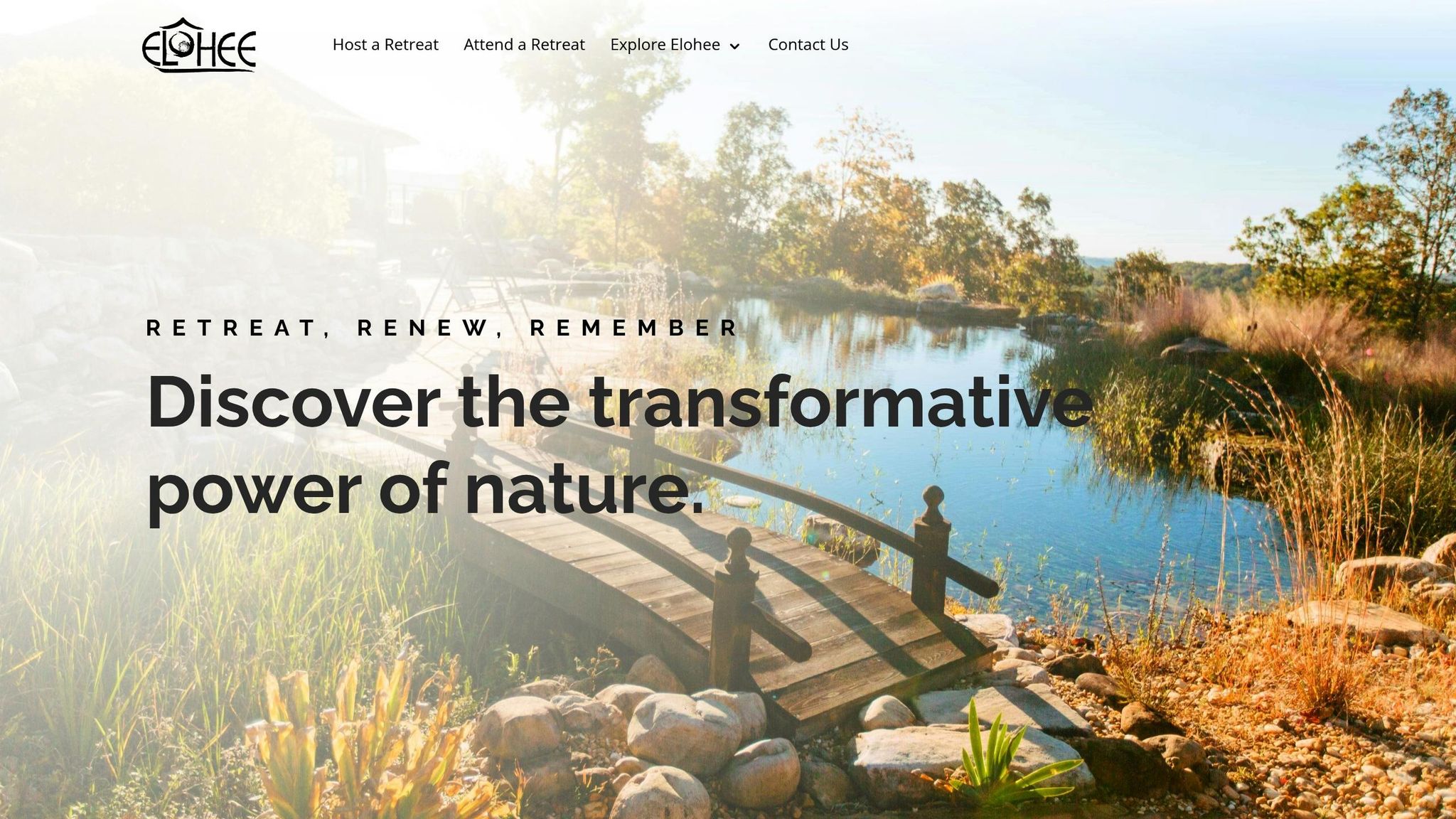
Elohee Retreat Center is a shining example of how biophilic principles come to life in wellness design. Tucked away in the Blue Ridge Mountains of North Georgia, this retreat blends natural elements with thoughtful design to encourage healing and personal growth.
Nature-Inspired Features at Elohee
Spread across 220 acres of untouched land, Elohee emphasizes the importance of preserving natural ecosystems in its design approach. A stunning 100-foot waterfall canyon acts as a centerpiece, offering soothing sounds that help ease stress and invite relaxation. Guests can wander through miles of trails that twist and turn through the diverse Appalachian forests, reconnecting with the calming rhythms of nature. In October 2017, the center hosted a Biomimicry Thinking Immersion Workshop led by Jamie Dwyer and Erin Rovalo from Biomimicry 3.8. Participants engaged in activities like nature journaling and collaborative design challenges inspired by the surrounding environment. Panoramic mountain views add to the retreat’s charm, offering both sweeping vistas and quiet spots for personal reflection. These natural elements aren’t just a backdrop – they’re seamlessly woven into the retreat’s overall design.
Facilities Built for Complete Wellness
Elohee’s architecture is thoughtfully designed to harmonize with its natural surroundings. Thanksgiving House, for example, offers guests uninterrupted views of the landscape, reinforcing the retreat’s focus on blending indoor and outdoor spaces. The spa facilities use natural materials and earthy tones that mirror the nearby forest, creating spaces that encourage mindfulness and relaxation. Retreat facilities like Mandala Hall, Forest Studio, and Bald Mountain are versatile spaces designed for programs centered on stress reduction, trauma recovery, and personal transformation. With accommodations for up to 50 overnight guests, Elohee ensures a comfortable and intimate experience. Dining services further connect guests to the environment by featuring ingredients sourced from on-site organic gardens, linking wellness to sustainable practices.
Building Connection and Environmental Care
Elohee’s commitment to environmental care is central to its mission. The retreat operates a rainwater-harvesting system that serves as its main water supply, while a passive irrigation network supports the lush surroundings. Habitat restoration projects, native plant landscaping, and pollinator meadows enhance the connection between the retreat and its natural environment. On-site, an essential oil garden and multiple food production areas – including an organic kitchen garden, polyculture orchard, and a garden for culinary, tea, and medicinal plants – demonstrate regenerative practices that connect visitors directly with the land.
The founders describe the retreat as:
"It’s more than just a retreat center; it’s a heartfelt dream woven into reality, a sanctuary where every soul can find solace, healing, and a sense of belonging."
This vision extends beyond individual wellness, fostering a sense of community and environmental stewardship. Located just 90 miles from Atlanta and Greenville, SC, Elohee provides urban populations with an easily accessible escape into nature. Its location perfectly aligns with its mission to merge wellness with the natural world.
Benefits and Impact of Biophilic Design in Retreats
Biophilic design blends wellness and sustainability, offering a way to improve guest experiences while addressing ecological concerns. By integrating natural elements into retreat spaces, this approach elevates personal well-being and promotes environmental responsibility.
Health and Mental Benefits
The health advantages of biophilic design are well-documented. One standout benefit is stress reduction – research shows that environments featuring natural elements can significantly lower cortisol levels and reduce blood pressure by up to 10%. Beyond physical health, these spaces also boost mental performance. Natural views and greenery have been linked to improved attention spans, better working memory, and enhanced problem-solving skills.
"Biophilic design has profound benefits to engaging our senses and supporting emotional wellbeing: reduced cortisol levels (a marker of our body’s stress response), increased kindness, improved learning engagement and increased social connectivity", explains Bonnie Casamassima.
This impact is especially relevant today. A Kaiser Health Network report revealed a sharp rise in anxiety and depression among adults, jumping from 11% in early 2019 to 41% in the summer of 2020. Natural light plays a pivotal role in boosting mood, as confirmed by a 2024 systematic review in the Journal of Environmental Psychology. Across 33 studies, daylight consistently elevated mood, while workplaces with abundant natural elements reported a 15% higher sense of well-being and a 6% productivity increase. Similarly, a University of Melbourne study found that adding plants to sterile office environments boosted productivity by 15%.
But the benefits of biophilic design extend far beyond individual well-being.
Environmental and Guest Experience Impact
Biophilic design doesn’t just create beautiful spaces – it also promotes sustainability and enhances guest satisfaction. Unlike conventional retreat designs that prioritize comfort alone, biophilic spaces balance human needs with ecological considerations. This is crucial, as buildings and infrastructure account for at least 40% of global greenhouse gas emissions. By incorporating natural ventilation, daylighting, and passive heating and cooling, biophilic retreats often achieve significant energy savings.
"When you can prove that an investment in biophilic design will reap tangible long-term rewards for the client such as reductions in water and energy consumption, lower maintenance costs, and improved employee and guest health and wellbeing, the upfront investments are easily recognized to be worthwhile", notes WATG.
For guests, the experience is transformative. Travelers increasingly seek destinations that prioritize both personal wellness and environmental care. Biophilic retreats create an inviting atmosphere that encourages social connections and fosters a deeper appreciation for nature. This connection can even inspire guests to adopt greener habits in their everyday lives.
To highlight the advantages, let’s compare biophilic design with standard retreat design.
Biophilic vs. Standard Retreat Design Comparison
| Aspect | Biophilic Design | Standard Retreat Design |
|---|---|---|
| Stress Reduction | Cortisol levels drop significantly; blood pressure reduced by up to 10% | Limited stress relief through conventional measures |
| Cognitive Performance | 15% increase in creativity; enhanced attention span and problem-solving | Standard cognitive function without nature-based enhancement |
| Energy Consumption | Reduced through natural lighting, ventilation, and passive climate control | Higher energy use from artificial systems |
| Guest Well-being | 15% higher sense of well-being; improved mood and reduced mental fatigue | Basic comfort without measurable wellness improvements |
| Environmental Impact | Lower carbon footprint; supports local ecosystems and biodiversity | Higher environmental impact; minimal ecological consideration |
| Guest Engagement | Deeper emotional connection; increased likelihood of return visits | Surface-level satisfaction without lasting impact |
| Productivity Benefits | 15% increase in productivity; 6% improvement in overall performance | No measurable productivity enhancement |
| Long-term Value | Reduced maintenance costs; improved guest and staff health outcomes | Higher operational costs; standard health outcomes |
The comparison makes it clear: biophilic design delivers better results across the board. Retreats designed with sustainability in mind consume less energy and water, produce less waste, and leave a smaller carbon footprint. These spaces often incorporate renewable energy, efficient waste systems, and eco-friendly materials, conserving resources and reducing pollution.
"Biophilic design has the power to transform the entire ‘feel’ of a building, blurring the lines between your world and the natural world – and in turn increasing your productivity, creativity, and overall sense of wellbeing", explains 1 Hotels.
Conclusion
Biophilic design isn’t just a passing fad; it’s a powerful approach that prioritizes wellness and sustainability. Studies show that incorporating natural elements can increase productivity by 15%, reduce stress by 20%, and lower blood pressure by 10% . These benefits directly impact how we feel, think, and recover, making biophilic principles a game-changer for creating spaces that truly support well-being.
From maximizing natural light and adding living walls to using environmentally friendly materials and blending indoor and outdoor spaces, the strategies we’ve discussed offer practical ways to enhance any retreat. Whether you’re starting from scratch or upgrading an existing space, simple choices – like incorporating plants, opening up views to nature, or adding water features – can significantly elevate a retreat’s ability to heal and restore.
"Contact with the natural world is not just beneficial for our well-being, but essential to it", says social ecologist Stephen Kellert.
This insight feels especially urgent as we face rising rates of anxiety and depression. For instance, nearly 50% of frontline healthcare workers report high stress levels, while about 25% experience anxiety and depression. By integrating biophilic principles, retreat spaces can serve as sanctuaries where nature’s healing power complements intentional wellness practices.
The future of wellness retreats lies in balancing human needs with care for the planet. More and more, guests are looking for experiences that not only rejuvenate their minds and bodies but also reflect their values around sustainability. Biophilic design meets these expectations, creating spaces that inspire mindfulness, deepen connections, and align with ecological responsibility.
For those eager to experience the impact of nature-centered design, the way forward is straightforward: choose retreats that harness natural light, feature local materials, rely on renewable energy, and foster meaningful interactions with the environment. These aren’t just places for a temporary escape – they can inspire a shift in how we live, work, and coexist with the planet.
Biophilic design has shown its ability to seamlessly merge environmental responsibility with human well-being. Spaces designed with nature in mind promote health, sustainability, and a deeper connection to the world around us. The real question isn’t whether biophilic design works – it’s how quickly we can embrace these principles to create the healing, sustainable retreats our world urgently needs.
FAQs
How does biophilic design in retreats help reduce stress and improve well-being?
Biophilic design in retreats works wonders for reducing stress and enhancing well-being by weaving natural elements into the space. By incorporating things like natural light, lush greenery, and organic materials, these environments create a soothing and restorative atmosphere that helps people feel more connected to nature. This connection can ease stress, elevate mood, and encourage relaxation.
Time spent in these carefully designed spaces can also sharpen mental clarity and aid in managing anxiety. With a focus on comfort and a sense of security, biophilic retreats provide a serene setting where individuals can relax, recharge, and reconnect with themselves – all while being surrounded by the calming influence of nature.
How can I incorporate biophilic design principles into a small wellness retreat?
Incorporating biophilic design into a small wellness retreat can turn it into a peaceful, nature-inspired haven. Start by letting in plenty of natural light through large windows, skylights, or lightweight curtains that allow sunlight to flow freely into the space. Bring in greenery with potted plants, hanging gardens, or even a compact living wall to create a direct connection to the natural world.
Choose natural materials like wood, stone, or bamboo for furniture, flooring, or decorative accents. These materials add warmth and a sense of grounding. If possible, include views of outdoor landscapes, such as a garden, forest, or water feature, to amplify feelings of calm and connection. To enhance the mood further, incorporate natural sounds – a small fountain or soft recordings of birdsong and flowing water can create a soothing ambiance.
These straightforward design choices can help craft a wellness retreat that nourishes both mind and body, even in a smaller space. A great example of this approach is the Elohee Retreat Center in North Georgia. Surrounded by lush forests and featuring a stunning 100-foot waterfall, it offers cozy, thoughtfully designed spaces that encourage healing and personal renewal.
How does biophilic design in retreats support sustainability and protect the environment?
Biophilic design in retreats emphasizes the use of natural, eco-friendly materials like reclaimed wood, bamboo, and stone. These choices not only minimize environmental impact but also offer durability with a smaller ecological footprint compared to synthetic materials.
By integrating natural elements – such as sunlight, water features, and native plants – energy efficiency gets a boost. For instance, utilizing natural light cuts down on the need for artificial lighting, and incorporating native plants helps preserve local ecosystems. These design strategies foster a deeper connection with nature while supporting environmental well-being over time.
Recent Comments